Adrien Renoir
Adrien Renoir is a grower in Verzy Grand Cru on the northern Montagne de Reims. He began taking responsibility for the family domaine in 2014 and progressively moved the estate toward organic farming, parcel-by-parcel vinification and a stronger emphasis…
Editorial profile
Adrien Renoir is a grower in Verzy Grand Cru on the northern Montagne de Reims. He began taking responsibility for the family domaine in 2014 and progressively moved the estate toward organic farming, parcel-by-parcel vinification and a stronger emphasis on the identity of Verzy. The producer is currently certified for organic agriculture by Ecocert.
Current specialist sources distinguish between broader family holdings of roughly seven hectares and the smaller core used for Adrien Renoir's domaine bottlings. The most consistent modern picture is about six hectares in Verzy, with around five hectares of the best Verzy Grand Cru parcels supplying the wines bottled under Adrien's name.
Why this producer matters
Renoir's range gives an unusually clear progression from village-level interpretation to grape and parcel specificity. Le Terroir brings together Verzy material, Le Cépage focuses on Pinot Noir, Les Années introduces the dimension of a reserve system begun in 2013, and the parcel wines isolate Chardonnay, Pinot Noir and Meunier from individual old-vine sites.
That structure is especially revealing in Verzy, a Grand Cru strongly associated with Pinot Noir. Renoir's Chardonnay from Les Montants and the very small Meunier component represented by Les Vignes Goisses broaden the picture beyond the village's dominant grape.
Vineyards and farming
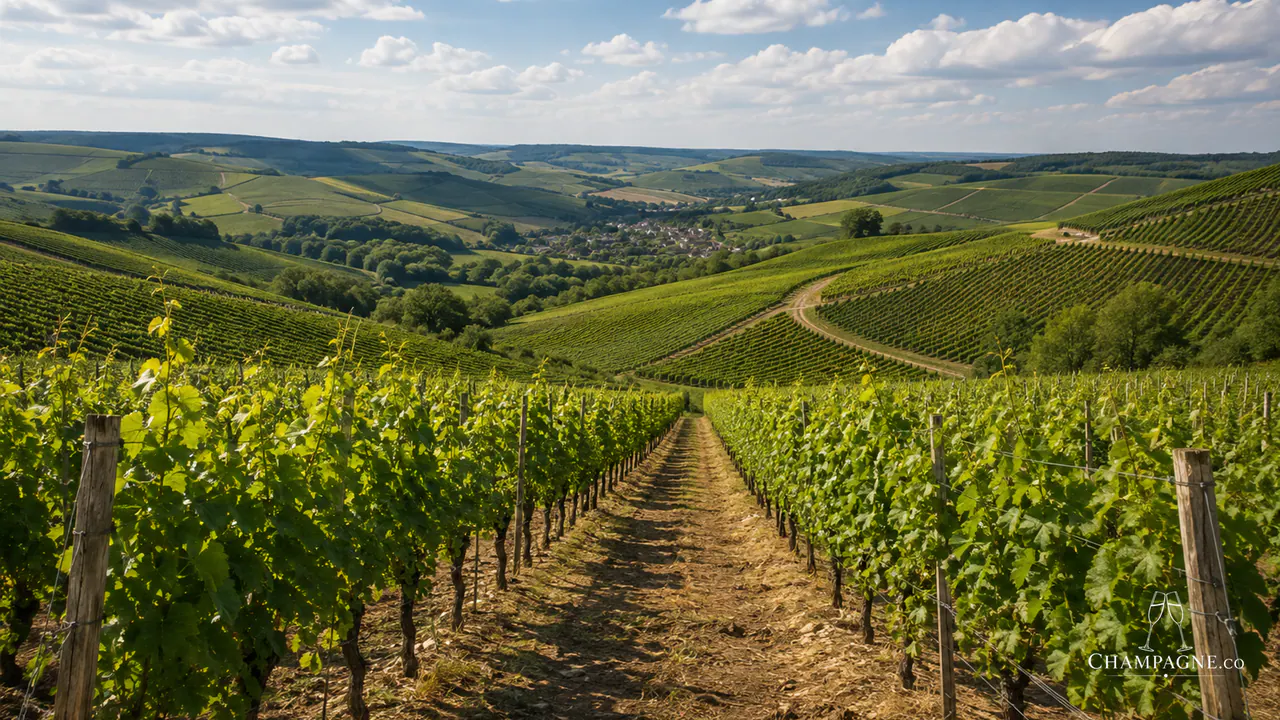
The core domaine is centred on Verzy Grand Cru. Tatler's current Champagne guide places the broader holding at seven hectares, six in Verzy, while stating that the domaine bottlings come from about five hectares in Verzy. Ecocert currently lists Adrien Renoir at 19 rue de la Gare, Verzy, with EU organic certification.
The estate is widely described as using biodynamic practices, but organic certification and biodynamic practice are not the same thing. The defensible current position is that the domaine is organically certified and also works with biodynamic methods; no separate biodynamic certification is assumed.
Winemaking and cellar approach
Current specialist and importer documentation describes spontaneous fermentation with native yeasts and extensive use of neutral oak for fermentation and ageing. Larger foudres are used for reserve wines, and the cellar approach is generally low-intervention.
The important point for the range is that these methods support several different levels of expression rather than one fixed house recipe. Base year, vintage, dosage and disgorgement vary between releases and are particularly important for wines such as Le Terroir, Le Cépage and Les Années.
Champagne.co analysis
Adrien Renoir is best understood as a Verzy producer working at progressively finer resolution. Le Terroir establishes the village frame; Le Cépage narrows it to Pinot Noir; Les Années adds reserve history; and the three parcel wines isolate individual grape-and-site combinations.
That progression gives the range coherence without making it uniform. Pinot Noir remains central, but Chardonnay and Meunier are not side notes: they show how individual Verzy parcels can diverge from the village's dominant identity. The result is a catalogue where parcel, grape, reserve age and disgorgement all matter to understanding the bottle in front of you.
Buying guidance
- For the clearest introduction: start with Le Terroir.
- For Pinot Noir: Le Cépage gives the most direct varietal reading before moving to Les Épinettes.
- For reserve depth: Les Années is the key wine; check the exact disgorgement because successive releases differ.
- For Chardonnay: Les Montants is the dedicated parcel Blanc de Blancs.
- For rare Meunier from Verzy: Les Vignes Goisses is the specialist choice.
Loading current Champagne range…
Spotted something wrong? Report a correction
Every report goes to a human review queue. Nothing on this page changes automatically.