Alexandre Filaine
Alexandre Filaine is a tiny Champagne producer in Damery, led by Fabrice Gass. The current French public business register lists CHAMPAGNE ALEXANDRE FILAINE as an active viticultural business at 17 rue Raymond-Poincaré, with a second Damery establishment…
Editorial profile
Alexandre Filaine is a tiny Champagne producer in Damery, led by Fabrice Gass. The current French public business register lists CHAMPAGNE ALEXANDRE FILAINE as an active viticultural business at 17 rue Raymond-Poincaré, with a second Damery establishment added in 2025.
The scale is deliberately small. Current specialist importer material describes around ten separate plots and a little over one hectare of vines, planted principally to Pinot Noir with smaller proportions of Chardonnay and Meunier. The same source describes a highly manual cellar built around old used barrels, native-yeast fermentation, no malolactic fermentation, bottle ageing under cork, hand riddling and hand disgorgement.
Why this producer matters
Filaine is useful as an example of Champagne at micro-domaine scale. Rather than building a broad catalogue around many blends and prestige tiers, Fabrice Gass works with a small vineyard base and a correspondingly limited output. That makes production method and release identity especially important to understanding the wines.
Current public registration also gives a clear contemporary legal identity to a producer that has often been discussed through older specialist profiles. The business remains active in Damery under the Alexandre Filaine name, with Gass as manager.
Vineyard and cellar identity
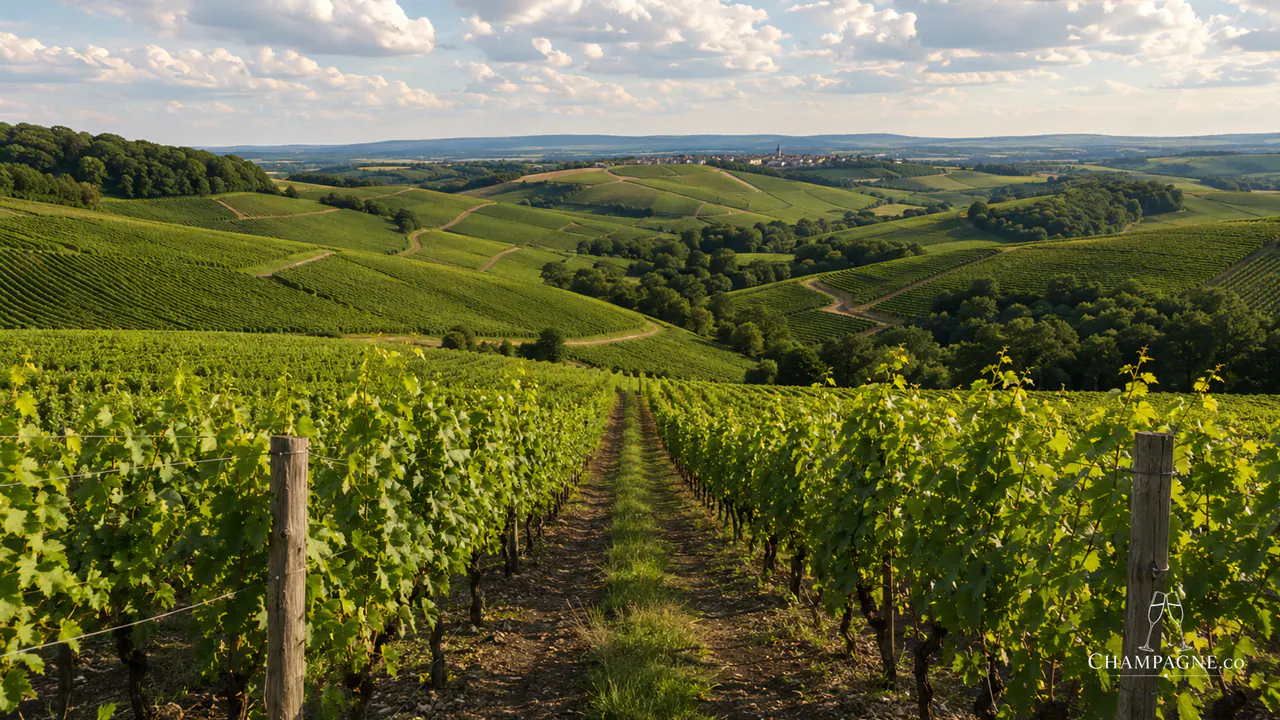
Current specialist documentation places the domaine at a little over one hectare across roughly ten parcels around Damery. Pinot Noir is reported as the largest component, with Chardonnay and Meunier also present.
The cellar approach is unusually traditional. Current importer information describes fermentation in very old used barrels with native yeasts, no malolactic fermentation, no filtration or cold stabilisation, secondary fermentation under cork, and hand riddling and disgorgement. The producer is also described as farming organically, but no current certifier-issued record has been established, so the domaine is not presented here as formally certified organic.
Champagne.co analysis
Alexandre Filaine is best understood through scale and method rather than through a large hierarchy of cuvées. A vineyard base of roughly one hectare and a cellar dependent on hand work make each release a relatively small production event, while the continued use of old barrels and cork ageing gives the domaine a distinct technical identity.
That also makes vintage and release precision important. With so little volume, older named cuvées can remain visible in the secondary market long after a particular bottling has left the active range. The safest comparison is therefore between exact releases rather than between catalogue names assumed to represent permanent recipes.
Buying guidance
- For the most clearly documented current wine: Cuvée Spéciale is the natural starting point.
- For DMY: check the exact release and technical details rather than assuming they match Cuvée Spéciale.
- For Confidence or Sensuum Vertigo: verify current availability and bottle-specific provenance before treating them as active releases.
- For older bottles: base year, disgorgement and storage history matter more than a generic non-vintage label at a producer of this scale.
Loading current Champagne range…
Spotted something wrong? Report a correction
Every report goes to a human review queue. Nothing on this page changes automatically.