André Clouet
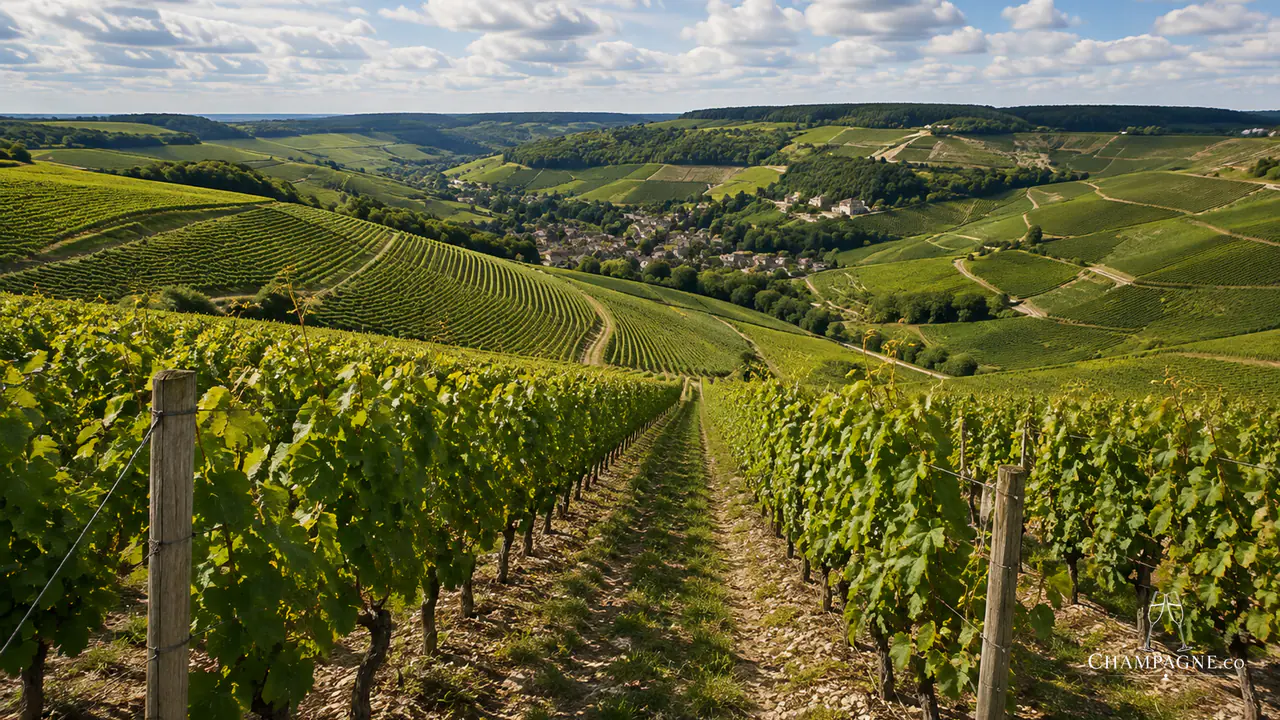
Champagne André Clouet is based in Bouzy, one of the best-known Pinot Noir villages on the Montagne de Reims. The house presents 1741 as the starting point of its family story and today identifies Jean-François Clouet as its public winemaking figure. Its…
Editorial profile
Champagne André Clouet is based in Bouzy, one of the best-known Pinot Noir villages on the Montagne de Reims. The house presents 1741 as the starting point of its family story and today identifies Jean-François Clouet as its public winemaking figure. Its current visitor address is 8 rue Gambetta, 51150 Bouzy.
Bouzy and Pinot Noir provide the clearest way into the producer. The house identifies vineyard places including Les Vaudayants, Les Hautes-Brousses, La Goutte d'Or, Les Varnets, Les Cercets and Les Grelons, while its current range moves from core non-vintage Champagne through rosé, vintage and limited cuvées to still Coteaux Champenois.
The modern catalogue is unusually easy to read as a hierarchy. Grande Réserve and Silver Brut Nature form the principal reference points; Rosé N°3 and Rosé N°5 provide two separate rosé expressions; Millésimé Empire and Dream Vintage carry the vintage programme; and Le Clos, Spiritum 96 and Un Jour de 1911 sit in the exceptional tier.
Why this producer matters
- A long-established Bouzy house whose own history is traced to 1741.
- A strongly Pinot Noir-oriented identity rooted in the Montagne de Reims.
- Several named Bouzy vineyard places are documented by the producer rather than presented as a generic regional story.
- The current range is broader than a single house style, spanning Brut Nature, rosé, vintage Champagne, limited cuvées and Coteaux Champenois.
- Dream Vintage 2018 and Rosé Spiritum 96 remain sufficiently current to feature in the house's present visitor tasting programme.
Bouzy, vineyards and house identity
André Clouet's own vineyard material centres on Bouzy and names individual places including Les Vaudayants, Les Hautes-Brousses, La Goutte d'Or, Les Varnets, Les Cercets and Les Grelons. That named-parcel vocabulary is useful because it ties the house to specific sites rather than to an abstract Montagne de Reims identity.
The house's public presentation is particularly closely associated with Pinot Noir. That emphasis appears repeatedly across the current range, including the two rosés, the Bouzy-linked exceptional wines and the still red Coteaux Champenois. Millésimé Empire broadens the picture: the producer currently presents the 2015 and 2016 releases as equal-part Chardonnay and Pinot Noir blends, linking the Bouzy side of the family story with Côte des Blancs Chardonnay.
Champagne.co analysis
André Clouet is most coherent when read as a Bouzy house that uses a broad range architecture to explore that identity rather than relying on one flagship bottle. Grande Réserve establishes the baseline, Silver removes dosage from the equation, and the two rosés show that the producer deliberately treats rosé as more than a single side category.
The vintage and exceptional wines then add another level of specificity. Millésimé Empire introduces a Chardonnay-Pinot Noir balance, Dream Vintage creates a separate vintage strand, while Le Clos and the other limited wines push the range toward individual-site or long-aged interpretations. The Coteaux Champenois wines are useful context too: they reinforce how important still Pinot Noir from Bouzy remains to the house's wider identity.
The producer's own presentation is unusually theatrical, so the useful editorial task is to separate the verifiable structure underneath it — Bouzy, named sites, Pinot Noir, the current catalogue and release-specific technical facts — from the storytelling used to market individual bottles.
Buying guidance
- First bottle: Grande Réserve is the clearest introduction to the house.
- For zero dosage: Silver Brut Nature is the direct route.
- For vintage Champagne: Millésimé Empire and Dream Vintage are separate strands; check the exact vintage on the bottle.
- For limited wines: Le Clos, Spiritum 96 and Un Jour de 1911 sit above the core range and are most useful when considered by exact release.
- For still Bouzy wine: Versailles Diamant and Versailles Rubis belong to Coteaux Champenois, not the sparkling Champagne category.
Loading current Champagne range…
Spotted something wrong? Report a correction
Every report goes to a human review queue. Nothing on this page changes automatically.