André Heucq
Champagne André Heucq is a family estate in Cuisles, in the Vallée de la Marne, where Alexandre and Fanny Heucq continue the work of the previous generation. The estate is particularly closely associated with Meunier and with the distinctive illite-clay…
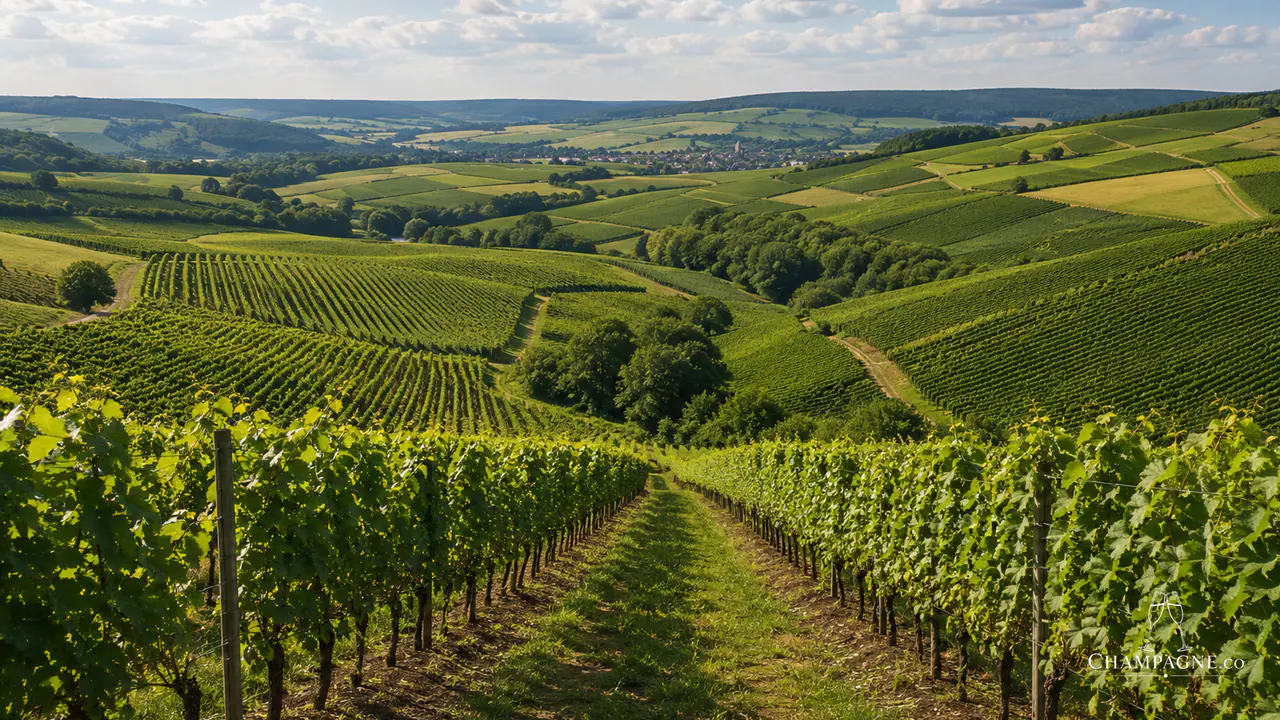
Editorial profile
Champagne André Heucq is a family estate in Cuisles, in the Vallée de la Marne, where Alexandre and Fanny Heucq continue the work of the previous generation. The estate is particularly closely associated with Meunier and with the distinctive illite-clay soils around Cuisles.
The current Association des Champagnes Biologiques record gives a precise picture of the vineyard: 5.70 hectares across 34 plots, with the entire surface certified organic and around 80% planted to Meunier. Chardonnay and Pinot Noir make up the balance. Organic conversion began in late 2014 and the first certified-organic harvest was 2018.
The estate also uses biodynamic practices in the vineyard. Champagne.fr documents measures including grass cover, horse ploughing and biodynamic preparations, while André Heucq's own certification page continues to describe biodynamic certification as in conversion. The useful distinction is therefore clear: the estate is certified organic, while its biodynamic work is part of an ongoing farming approach rather than a completed certification claim.
Why this producer matters
- A family-run Cuisles estate led today by Alexandre and Fanny Heucq.
- 5.70 ha across 34 plots, all certified organic according to the current ACB record.
- Around 80% Meunier, making the grape central to both vineyard identity and the current range.
- The illite-clay soils of Cuisles give the estate a particularly specific terroir story within the Vallée de la Marne.
- Organic certification has applied since the 2018 harvest.
- The range is unusually structured: broad estate wines under Héritage, single-parcel wines under Hommage, special projects and library wines, plus separate Coteaux Champenois and Ratafia.
Vineyards, Cuisles and farming
More than nine-tenths of the estate's vineyards lie within roughly ten kilometres of the domaine, according to André Heucq's current vineyard material.
The current ACB record describes the vineyard as fully organic and records Meunier, Chardonnay and Pinot Noir across the certified surface. The producer combines that organic base with biodynamic practices and soil-focused vineyard work. Champagne.fr additionally records grass cover, horse ploughing, horn manure and horn silica among the estate's current practices.
Winemaking and cellar approach
André Heucq's cellar programme is not built around one vessel or one formula. The producer documents stainless steel for some Héritage wines, barrel fermentation and ageing for several parcel wines, and more unusual vessels or ageing environments for special releases.
The current producer material also describes indigenous-yeast fermentation, low dosage and a low-intervention approach. ACB's current French record states that no sulphur has been added since 2019; because language versions of that record have differed historically, the useful point for the reader is the present low-intervention method rather than attaching the entire estate identity to one start date.
Champagne.co analysis
André Heucq is most interesting when the range is read as a series of increasingly precise views of Meunier and Cuisles. Héritage establishes the estate baseline, while the Hommage wines isolate specific parcels and grapes. The special releases then change the frame again by exploring vessel or ageing environment rather than simply another blend.
That structure makes the producer more than an “organic grower” story. Certification is important, but the stronger editorial identity comes from the combination of a tightly concentrated vineyard base, a high proportion of Meunier, the unusual illite-clay soils of Cuisles and a range that moves deliberately from estate expression to individual parcels and experimental ageing.
Buying guidance
- Best introduction: Héritage Blanc de Meunier gives the clearest first look at the estate's dominant grape.
- For rosé: Héritage Rosé de Meunier keeps the focus firmly on Meunier.
- For unusual cellar methods: H-60 and Cuvée Œuf are the clearest special projects, but their techniques apply to those wines rather than to the estate as a whole.
- For mature releases: Histoires belongs to the library/œnothèque side of the range.
- For still or fortified wine: Coteaux Champenois and Ratafia should be understood separately from sparkling Champagne.
Loading current Champagne range…
Spotted something wrong? Report a correction
Every report goes to a human review queue. Nothing on this page changes automatically.