Antoine Bouvet
Champagne Antoine Bouvet is a small grower project rooted in the Grande Vallée de la Marne, with family vineyards in the Premier Cru villages of Mareuil-sur-Aÿ, Bisseuil and Avenay-Val-d'Or. The modern direction of the domaine was established by Antoine in…
Editorial profile
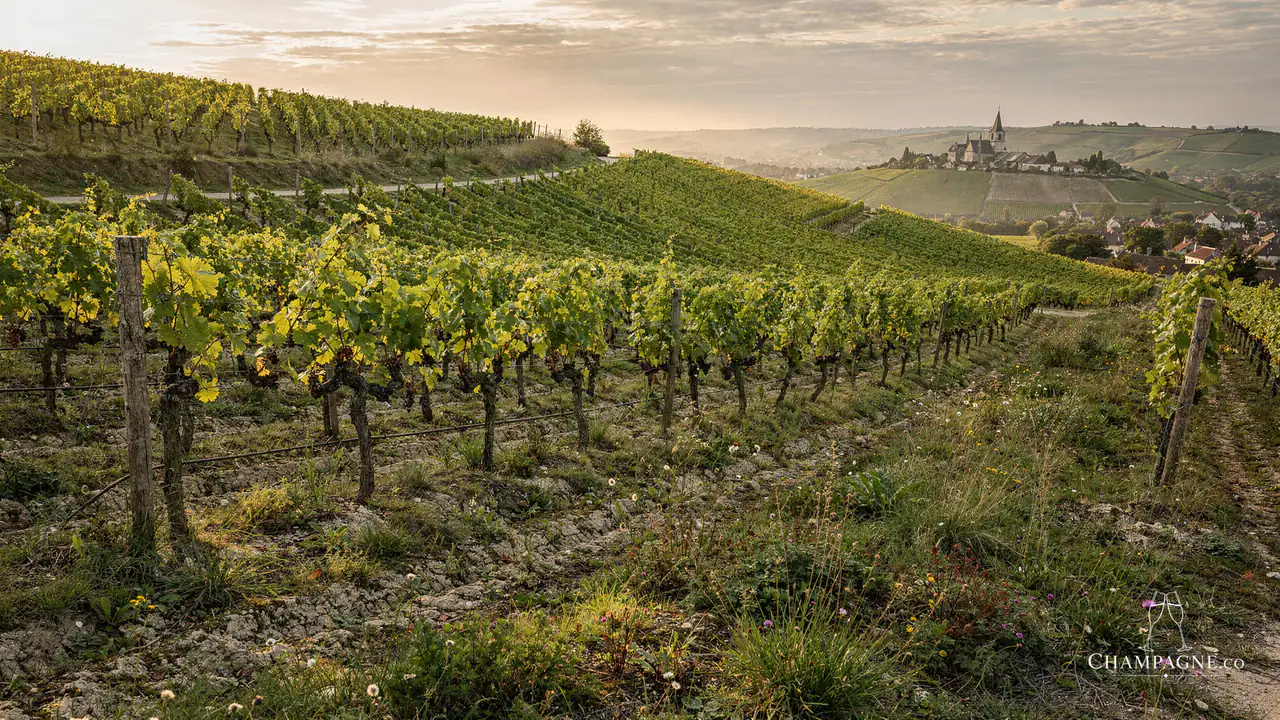
Champagne Antoine Bouvet is a small grower project rooted in the Grande Vallée de la Marne, with family vineyards in the Premier Cru villages of Mareuil-sur-Aÿ, Bisseuil and Avenay-Val-d'Or. The modern direction of the domaine was established by Antoine in the early 2010s after a generation of the family had pursued careers outside wine; his brother Maxime Bouvet has since joined the operation.
Current French corporate records provide a useful present-day anchor. The family viticultural entity DU CLOS MOUTAYER, based in Mareuil-sur-Aÿ, now lists Antoine Bouvet and Maxime Bouvet as co-managers following a 2024 management change. That supports the continuing family-vineyard identity without requiring the public profile to infer an exact relationship between every family hectare and every bottle sold under the Antoine Bouvet label.
The vineyard and cellar approach is deliberately low-intervention. Current specialist material records the abandonment of herbicides from the beginning of Antoine's project, organic and biodynamic trials from 2015, spontaneous fermentation and restrained cellar intervention. No formal organic or biodynamic certification is claimed here without a current producer-specific certifier record.
Why this producer matters
- A small-production family project centred on Mareuil-sur-Aÿ, Bisseuil and Avenay-Val-d'Or, all Premier Cru villages in the Grande Vallée de la Marne.
- Antoine Bouvet represents the modern generation of a family vineyard story associated with his grandfather Guy Bouvet.
- Antoine and Maxime Bouvet are now co-managers of the underlying family viticultural entity according to current French corporate records.
- Vineyard work moved away from herbicides at the beginning of Antoine's project, with organic and biodynamic trials reported from 2015.
- Spontaneous fermentation and a restrained cellar approach are consistently documented by current specialist sources.
- The range is small and release-driven, making village, base year, disgorgement and dosage particularly important when comparing bottles.
Vineyards and farming
The estate is associated consistently with the three Premier Cru villages of Mareuil-sur-Aÿ, Bisseuil and Avenay-Val-d'Or. Current specialist and trade sources place the broader family vineyard base at roughly five hectares, although published figures for the precise surface retained for Antoine's own-label production vary considerably. That distinction is important: the public profile treats the three-village geography as established while avoiding a falsely precise own-label acreage figure.
Wine Scholar Guild reports that herbicides were abandoned when Antoine established the modern project and that organic and biodynamic trials began in 2015. Other current importer and merchant material likewise describes soil cultivation, cover crops and biodynamic-inspired farming. These practices are useful evidence of the direction of travel, but they are not converted into a formal certification claim.
Winemaking and cellar approach
Current specialist material describes spontaneous fermentation and minimal intervention in the cellar. Oak has been an important part of the domaine's modern winemaking, although current bottle listings show that vessel use can vary by release rather than following one immutable recipe.
That release-by-release approach is especially relevant for a producer of this scale. Base year, reserve-wine contribution, grape composition, dosage and disgorgement can change, so the safest way to understand Antoine Bouvet is through individual bottlings rather than through a single permanent technical formula.
Champagne.co analysis
Antoine Bouvet is best understood as a small grower whose identity comes from three neighbouring Premier Cru villages and a deliberately release-specific way of working. The project is not helped by forcing it into a neat acreage statistic or a fixed house recipe: current sources disagree on exactly how much of the broader family holding feeds the own-label wines, while individual bottles can change in base year, reserve contribution and technical detail.
The useful continuity lies elsewhere. Mareuil-sur-Aÿ, Bisseuil and Avenay-Val-d'Or provide the geographic frame; Pinot Noir is particularly visible in Les Monts de la Vallée and Saignée de Bisseuil; and the low-intervention vineyard and cellar direction established in the early 2010s remains a consistent part of the modern domaine. The village-labelled wines then let readers move from that broad family base toward more specific origins.
Buying guidance
- Best introduction: Les Monts de la Vallée is the most consistently documented starting point for the producer.
- For a more specific cuvée: Les Coutures Extra Brut is one of the current flagship references, but check the exact release details.
- For rosé: Saignée de Bisseuil is the clearest route and should be bought by exact harvest/disgorgement.
- For village comparison: Bisseuil and Mareuil releases are useful when available because they narrow the broader three-village estate story.
- For vintage Champagne: choose the current Millésime by exact vintage rather than assuming an older blend or dosage still applies.
Loading current Champagne range…
Spotted something wrong? Report a correction
Every report goes to a human review queue. Nothing on this page changes automatically.