Beaumont des Crayères
Champagne Beaumont des Crayères is a winegrower-founded cooperative house in Mardeuil, in the Marne Valley. Its current history dates the project to 1955, when local growers joined together to create an independent house. The current site identifies…
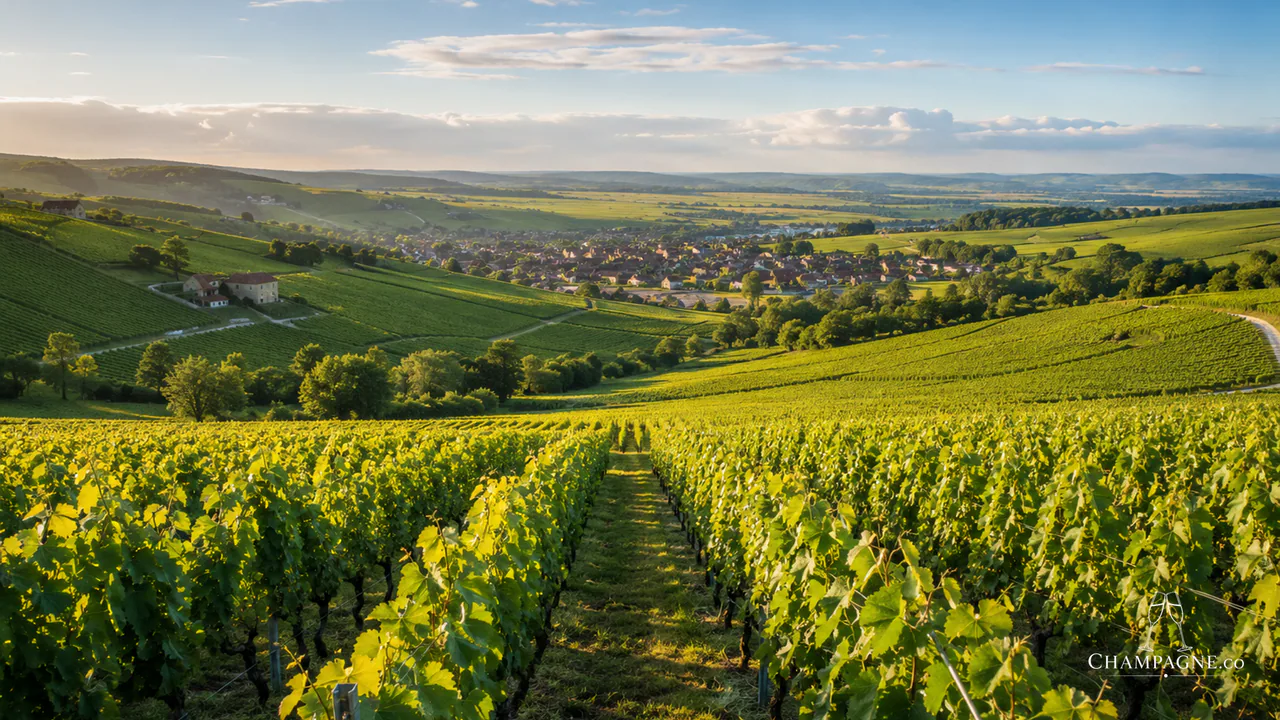
Editorial profile
Champagne Beaumont des Crayères is a winegrower-founded cooperative house in Mardeuil, in the Marne Valley. Its current history dates the project to 1955, when local growers joined together to create an independent house. The current site identifies Gauthier Quatrevaux as cellar master.
Meunier is central to Beaumont's identity, both in the vineyard story and in several of the wines. The house describes its local terroir as chalk-influenced Marne Valley ground and presents its range in two useful families: the blended Grands and the vintage/single-variety Fleurs. That architecture makes it possible to explore the cooperative through both its house blends and more narrowly defined grape or vintage expressions.
Why this producer matters
Beaumont des Crayères offers a clear cooperative perspective on Champagne. It was created by growers rather than as a conventional négociant house, and its public identity remains tied to Mardeuil and the Marne Valley.
The range also gives Meunier more visibility than is common in many house portfolios. Grande Réserve currently uses a Meunier-majority blend, Grand Meunier puts the variety directly in the foreground, and Fleur de Meunier provides a vintage expression. Chardonnay and Pinot Noir receive their own more focused wines elsewhere in the portfolio, so the range can be read as a useful tour through the cooperative's blending and varietal choices.
House and terroir
The cooperative traces its foundation to 1955. Its vineyard narrative emphasises Mardeuil, the Marne Valley, chalky soils and Meunier as the principal variety.
That restraint is important for a cooperative: the scale and membership of a grower collective can change, while the enduring public facts are its Mardeuil base, grower-founded structure and Meunier-led identity.
Winemaking and ageing
Beaumont des Crayères says it has held ISO 22000 certification since 2014. Its current know-how material describes separate vinification of the grape varieties before blending and house ageing targets that exceed the appellation minimums: roughly two to four years for non-vintage wines, around five years for vintage wines and around ten years for prestige cuvées.
Those are house-level operating standards, not guarantees for every historical bottle. Where an individual product page gives a blend, dosage or minimum ageing period, that information belongs to the displayed release.
Champagne.co analysis
The most useful way to understand Beaumont des Crayères is through the combination of cooperative structure and range design. The Grands show how the house assembles its regular blends, with Meunier prominent in the signature Grande Réserve. The Fleurs then narrow the lens towards vintage, variety or prestige.
It also highlights why release discipline matters here: several vintages of the same Fleur can remain visible across official pages at once. The house identity is stable, but the bottle-level data must follow the exact vintage.
Buying guidance
Start with Grande Réserve Brut for the clearest view of the house blend and its Meunier emphasis. Grand Meunier is the obvious next step for readers specifically interested in the variety, while Grand Chardonnay offers the contrasting single-variety route. Grand Nectar is the relevant choice for a sweeter demi-sec style.
For vintage exploration, choose among the current Fleur releases by grape and exact year: Fleur Noire for Pinot Noir, Fleur Blanche for Chardonnay and Fleur de Meunier for Meunier. Fleur de Prestige sits in the vintage/prestige part of the range. Always verify the exact vintage when buying because the live catalogue can contain more than one release of a cuvée.
Loading current Champagne range…
Spotted something wrong? Report a correction
Every report goes to a human review queue. Nothing on this page changes automatically.