Benoît Cocteaux
Champagne Benoît Cocteaux is a family grower based in Montgenost, in the Côte de Sézanne. The current Comité Champagne directory identifies the estate as a récoltant-manipulant working 9 hectares, while the producer describes a vineyard footprint that…
Editorial profile
Champagne Benoît Cocteaux is a family grower based in Montgenost, in the Côte de Sézanne. The current Comité Champagne directory identifies the estate as a récoltant-manipulant working 9 hectares, while the producer describes a vineyard footprint that stretches well beyond Montgenost to Cramant and Chouilly in the Côte des Blancs, Cerseuil in the Marne Valley and Verpillières-sur-Ource in the Côte des Bars.
The estate is led by Hélène and Benoît Cocteaux. Chardonnay is the dominant variety across the domaine, supported by Pinot Noir and Meunier. The result is a portfolio with two complementary identities: a Chardonnay-led house core and a growing set of wines designed to show individual villages, parcels, varieties and vessel choices more explicitly.
Why this producer matters
Benoît Cocteaux is useful for understanding the Côte de Sézanne in a wider Champagne context. The estate is rooted in Montgenost, but it can also draw on fruit from the Côte des Blancs, Marne Valley and Côte des Bars. That unusually dispersed geography lets the range move from broad blends into more focused comparisons of place.
The current catalogue reinforces that direction. Established wines such as L'Alliance, Or Blanc, Rosé d'Hélène, Noir Expression and L'Origine sit beside Éternelle Création, La Grande Colette, the Opus Varius parcel series and still Coteaux Champenois releases under Terre de Genèse. The estate therefore rewards readers who look beyond a single signature cuvée and pay attention to where each wine comes from.
Family and estate identity
The producer traces family winegrowing roots to 1650. A more specific modern milestone comes in 1966, when Eugène Cocteaux moved from Aÿ to Montgenost and established the family operation in the southern Sézannais. Hélène and Benoît later combined their respective winegrowing backgrounds; the producer dates their meeting to 2003 and presents the present Champagne Benoît Cocteaux project as the meeting of those two family traditions.
The current Comité Champagne directory gives a 9-hectare vineyard and Montgenost address, and confirms the grower-producer identity. The estate is also currently listed as Haute Valeur Environnementale (HVE). Its French-language vineyard material says part of the vineyard is in organic conversion, making this an evolving farming programme rather than evidence that the whole estate is organically certified.
Vineyards and terroir
The estate says its vineyard base spans more than 200 kilometres. Its principal locations are Montgenost in the Côte de Sézanne, Cramant and Chouilly in the Côte des Blancs, Cerseuil in the Marne Valley and Verpillières-sur-Ource in the Côte des Bars.
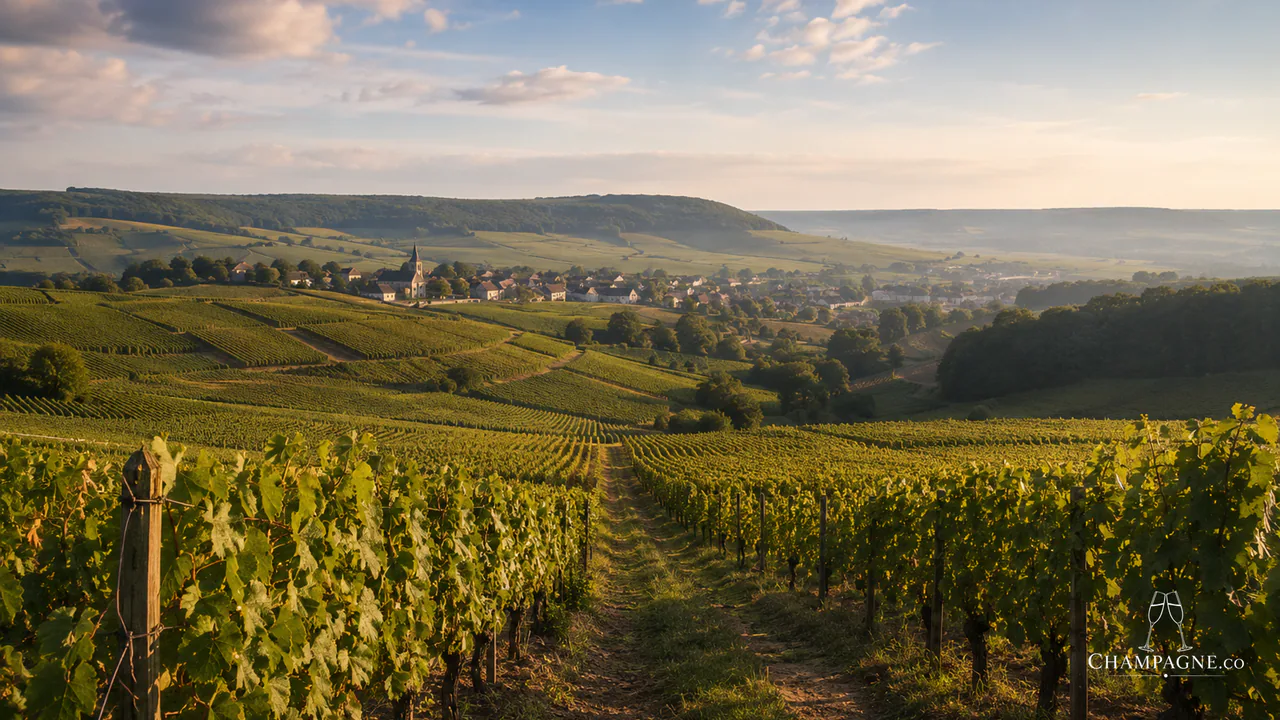
Chardonnay is the dominant grape, with Pinot Noir and Meunier in supporting roles. Montgenost is the centre of gravity, and the producer emphasises the chalk-influenced soils of the Sézannais. The useful distinction is that the portfolio can contrast several Champagne sectors within one family domaine rather than representing only one village or subregion.
Winemaking and cellar approach
Parcel selection begins before harvest. Hélène and Benoît say individual plots are followed separately to determine picking decisions, and clear wines are then directed into different vessels according to their profile.
The cellar uses stainless steel, French oak barrels and larger wooden casks, rather than imposing one vessel regime across every cuvée. The estate has also developed sandstone jars linked to material from the Montgenost parcel Derrière l'Église. Those jars are a specific experimental and production tool within the cellar, not a description of how the entire range is made.
This mixed-vessel approach is most meaningful when paired with the estate's parcel programme: the winemaking is increasingly used to preserve differences between sites rather than simply to create one uniform house recipe.
Champagne.co analysis
The strongest way to read Benoît Cocteaux is as a grower whose identity starts in the Côte de Sézanne but does not end there. Montgenost supplies the family base and much of the Chardonnay-led centre of gravity, while holdings in the Côte des Blancs, Marne Valley and Côte des Bars allow the range to widen geographically.
That makes the portfolio more interesting when approached in layers. The core wines show the estate's blending and Chardonnay emphasis; Éternelle Création adds a reserve-wine dimension; La Grande Colette and Opus Varius then narrow the focus to particular places; Terre de Genèse extends the same parcel curiosity into still wine and different élevage vessels.
The key is specificity. Vintage, parcel and vessel details matter here, and they belong to the exact wine that carries them rather than becoming permanent estate-wide rules.
Buying guidance
Start with Or Blanc for the most direct route into the estate's Chardonnay-led identity, or L'Alliance for a broader introduction to the house range. L'Origine is the more relevant choice for readers looking for the current Brut Nature Chardonnay expression.
For a more site-focused comparison, move to La Grande Colette for Chouilly Grand Cru or choose an Opus Varius bottling by its exact parcel and vintage. Les Terres Austères 2020 is especially useful as a contrast because it shifts both geography and grape variety to Pinot Noir from the Côte des Bars.
Readers interested in the estate's cellar experimentation can compare the exact Terre de Genèse releases: the 2022 jar-aged and 2023 foudre-aged Coteaux Champenois are distinct bottlings. The label and release year are essential when using vintage, vessel or ageing data because those details are intentionally wine-specific.
Loading current Champagne range…
Spotted something wrong? Report a correction
Every report goes to a human review queue. Nothing on this page changes automatically.