Benoît Déhu
Benoît Déhu is a grower in Fossoy, on the western side of the Marne Valley in the Aisne. His work sits within the longer history of Champagne Déhu Père et Fils, which the current Comité Champagne directory describes as a seven-generation winegrowing family…
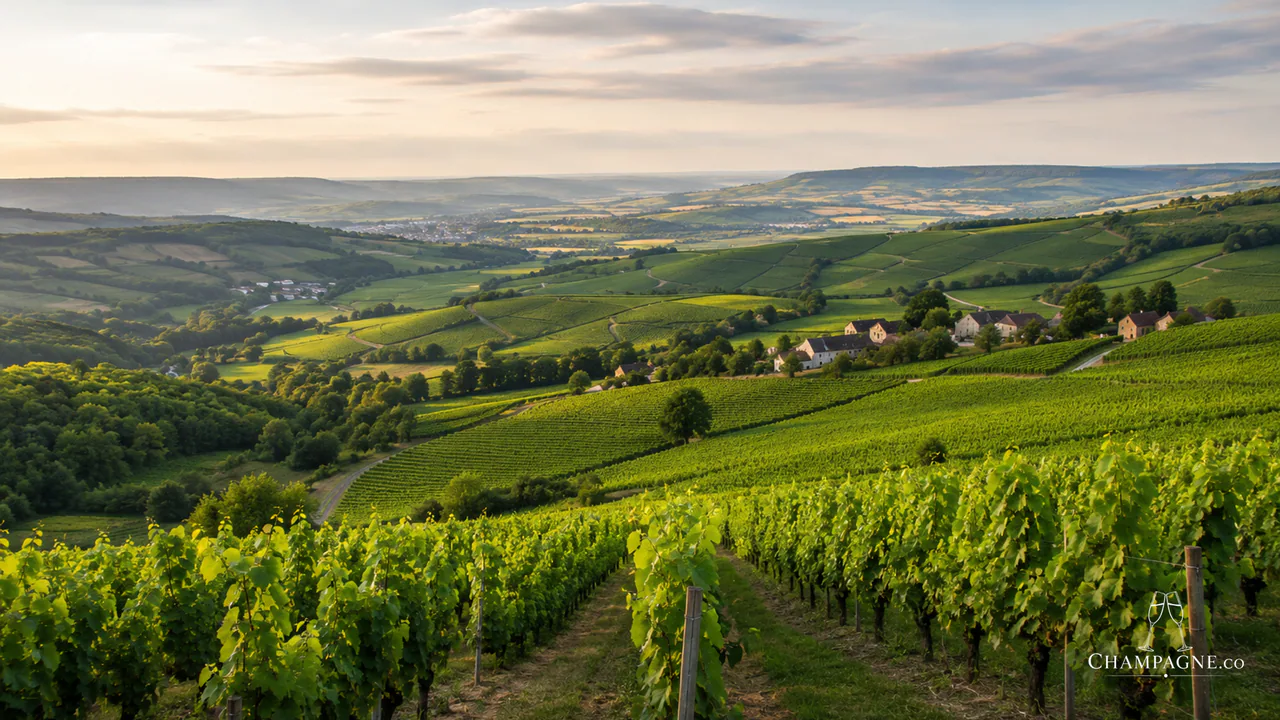
Editorial profile
Benoît Déhu is a grower in Fossoy, on the western side of the Marne Valley in the Aisne. His work sits within the longer history of Champagne Déhu Père et Fils, which the current Comité Champagne directory describes as a seven-generation winegrowing family at 3 rue Saint-Georges in Fossoy.
The modern Benoît Déhu identity is more narrowly documented through the Association des Champagnes Biologiques. Its current record shows a 4.02-hectare vineyard fully certified AB, with Meunier, Pinot Noir and Chardonnay all included in the certified area. The same record dates the organic-certification commitment to 2011 and the first certified-organic harvest to 2014.
Why this producer matters
Benoît Déhu illustrates an important pattern in contemporary Champagne: a grower can emerge from a long-established family house while developing a more tightly defined farming and cellar programme under his own name.
That distinction matters because the historic Déhu Père et Fils range and Benoît Déhu's organic wines are related but not interchangeable. The strongest current evidence supports Benoît Déhu as a small, organically certified grower project within the same Fossoy family base, with a cellar programme centred on barrel vinification and ageing on lees.
Family and estate identity
Champagne Déhu Père et Fils is currently listed by Comité Champagne as a seven-generation family producer in Fossoy. The Benoît Déhu organic record uses the same street address and contact details, confirming the close relationship between the two identities.
For readers, the practical point is simple: Déhu Père et Fils is the broader historic family identity, while Benoît Déhu refers to the more specifically documented modern organic programme. Bottle labels and exact producer names therefore matter when comparing releases.
Vineyards and farming
The Association des Champagnes Biologiques currently records 4.02 hectares for Benoît Déhu and states that 100% of that surface is certified organic. The certified varieties are Meunier, Pinot Noir and Chardonnay.
The certification chronology is also unusually clear: commitment to certification in 2011, followed by the first certified-organic harvest in 2014. Those dates give the estate's organic identity a firm documentary basis without requiring broader assumptions about older family bottlings.
The association record also states annual organic production of 11,000 bottles and says organic wine represents 50% of bottles commercialised by the brand. Those are current programme figures rather than permanent historical statistics, so they are best read as a snapshot of the present documented scale.
Winemaking and cellar approach
The current organic-producer record describes vinification and ageing in oak barrels for ten months on lees. That is the clearest authoritative technical statement available for Benoît Déhu's certified-organic wines.
It also helps explain why the modern project is best treated separately from the broader family Champagne identity. The current evidence supports a small-scale organic programme with a defined barrel-led cellar approach; it does not justify assigning the same élevage regime to every historical Déhu Père et Fils wine.
Champagne.co analysis
Benoît Déhu's significance lies less in portfolio breadth than in the clarity of the modern farming programme. The documented 4.02-hectare organic surface, three certified Champagne varieties and barrel-led cellar work create a concise picture of a grower project with a much narrower focus than the older family identity surrounding it.
That makes Benoît Déhu most interesting as an example of generational evolution. The family continuity in Fossoy is real, but the modern project is defined by a specific certification timeline and a more focused production model. Keeping those layers separate produces a more accurate picture than folding every Déhu wine into one undifferentiated house style.
Buying guidance
Check the exact producer name on the bottle first. A wine labelled under Benoît Déhu belongs to the modern grower programme described here; a Déhu Père et Fils bottle belongs to the wider family range and may follow different farming or cellar specifications.
For Benoît Déhu releases, treat blend, vintage, dosage, parcel and disgorgement information as bottle-specific. The most dependable estate-wide buying signal is the currently documented organic farming and barrel-led élevage rather than an assumed formula across every cuvée.
Loading current Champagne range…
Spotted something wrong? Report a correction
Every report goes to a human review queue. Nothing on this page changes automatically.