Benoît Lahaye
Champagne Benoît Lahaye is a small grower based in Bouzy, on the Montagne de Reims. The current Biodyvin member record gives a 4.5-hectare domaine across Bouzy, Ambonnay and Tauxières, planted principally to Pinot Noir, and notes that the family has…
Editorial profile
Champagne Benoît Lahaye is a small grower based in Bouzy, on the Montagne de Reims. The current Biodyvin member record gives a 4.5-hectare domaine across Bouzy, Ambonnay and Tauxières, planted principally to Pinot Noir, and notes that the family has vinified its own wines since the 1930s.
The estate is one of the better-documented examples of long-term organic and biodynamic viticulture in Champagne. Biodyvin records a move of the whole vineyard into organic farming from 2003, Ecocert certification from the 2007 harvest, biodynamic practice from 2009 and Biodyvin membership from 2010. The domaine remains listed as Biodyvin certified.
Why this producer matters
Benoît Lahaye brings together three strong parts of modern grower Champagne: a clear Bouzy and Ambonnay Pinot Noir identity, a long-established certified farming programme, and a cellar approach that relies heavily on small oak vessels without presenting every wine as one fixed recipe.
Estate and vineyard identity
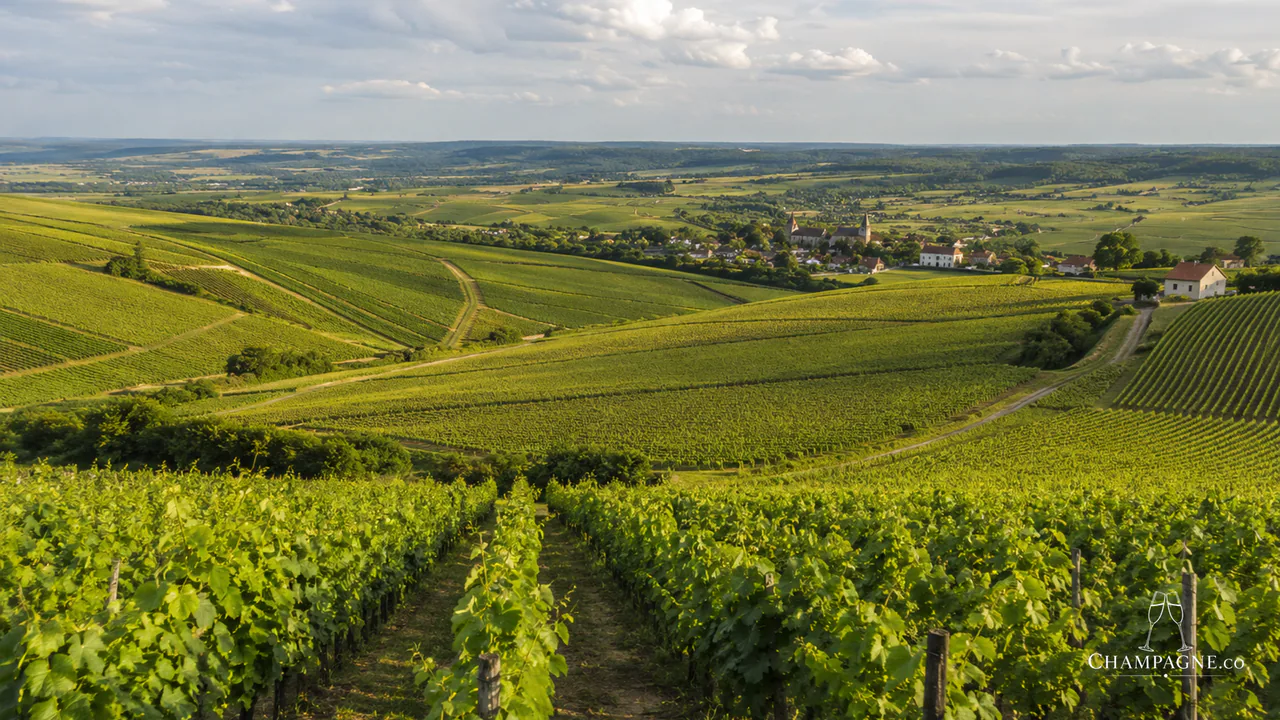
The domaine is based at 33 rue Jeanne d'Arc, Bouzy, an address also carried by the current Montagne de Reims regional park listing. Biodyvin describes 4.5 hectares across Bouzy, Ambonnay and Tauxières and says the vineyard is planted mainly to Pinot Noir.
The same technical record states that the entire vineyard has been grassed since 1995 and that soils are worked to aerate them and manage competition for water. The estate uses its own composts together with permitted organic inputs and plant-based preparations as part of its vineyard programme.
This is a compact estate, so village and parcel identity matter more than broad regional scale. Bouzy supplies the centre of gravity, while Ambonnay and Tauxières extend the domaine's Montagne de Reims perspective.
Organic and biodynamic farming
The current Biodyvin record provides a clear sequence:
- whole-estate conversion to organic farming began in 2003;
- Ecocert certification applies from the 2007 harvest;
- biodynamic practice was added from 2009;
- the estate entered Biodyvin in 2010 and is currently listed as Biodyvin certified.
Since 2010, the estate has also used the draught horse Tamise for vineyard tasks including soil work and the movement of vineyard materials. This is a practical part of the farming programme rather than a decorative house story.
Winemaking and cellar approach
Biodyvin states that most vinification takes place in 228-litre barrels, using natural yeasts. Chaptalisation is avoided except exceptionally, and wines can remain for up to ten months on lees without racking.
Those details describe the domaine's working direction, not a universal technical sheet for every bottle. Dosage, blend, malolactic treatment, vintage, disgorgement and exact élevage remain release-specific and belong with the relevant cuvée.
Champagne.co analysis
Benoît Lahaye is compelling because the estate's identity is unusually coherent without being simplistic. The vineyards are small and concentrated in three Montagne de Reims villages; Pinot Noir is the principal grape; organic and biodynamic farming are long established; and the cellar commonly uses barrel fermentation and extended lees contact.
The estate's continuity also matters: this is not a recent sustainability overlay, but a farming programme with documented milestones stretching back more than two decades.
Buying guidance
Readers drawn to Bouzy and Ambonnay Pinot Noir can use the Pinot-led wines as the clearest entry point, while Brut Nature and parcel-specific releases offer more narrowly defined comparisons.
The strongest estate-wide buying signals are the certified organic/biodynamic vineyard programme and the barrel-led cellar direction. Vintage, dosage, blend and disgorgement remain bottle-specific, so the label and current release information matter when comparing bottles.
Loading current Champagne range…
Spotted something wrong? Report a correction
Every report goes to a human review queue. Nothing on this page changes automatically.