Besserat de Bellefon
Besserat de Bellefon was founded in Aÿ in 1843 and is now based in Épernay. The house’s most distinctive production choice dates to 1930, when Victor Besserat developed the Cuvée des Moines around a gentler prise de mousse intended for Champagne served…
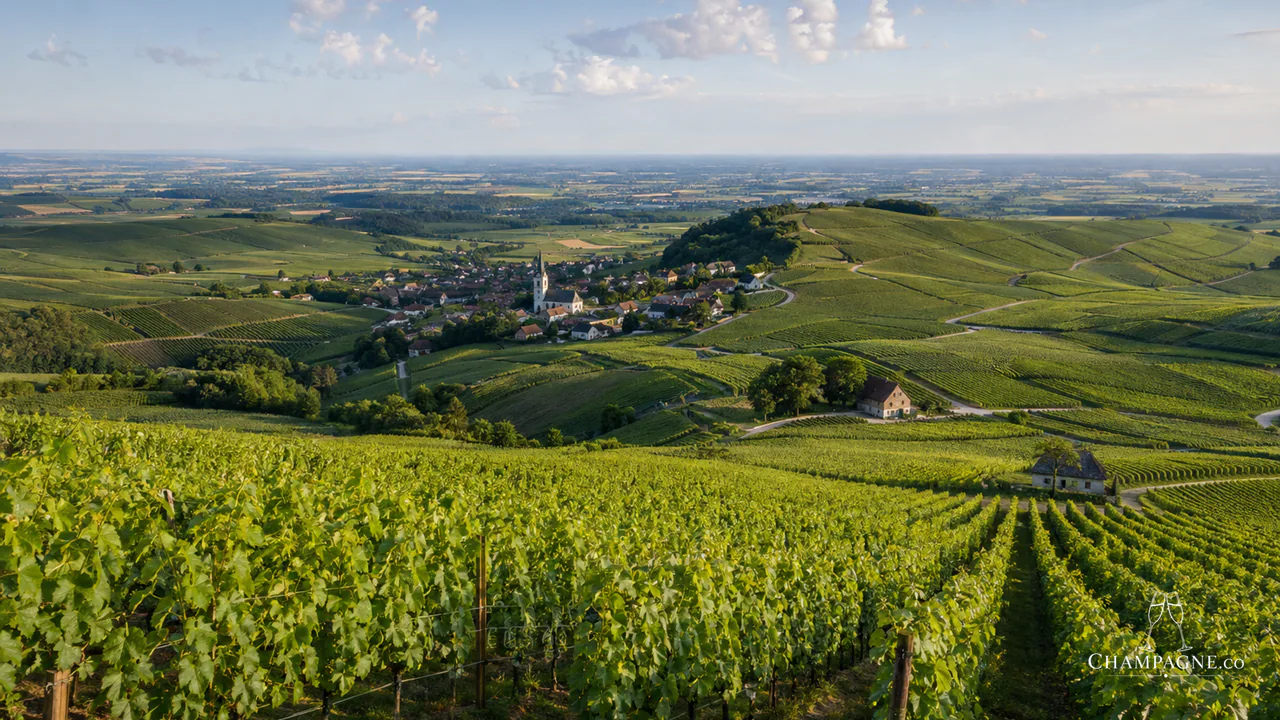
Editorial profile
Besserat de Bellefon was founded in Aÿ in 1843 and is now based in Épernay. The house’s most distinctive production choice dates to 1930, when Victor Besserat developed the Cuvée des Moines around a gentler prise de mousse intended for Champagne served through a meal. That approach remains part of the modern house identity: Besserat de Bellefon uses less liqueur de tirage at bottling to produce lower-pressure effervescence, and its current cuvées are made without malolactic fermentation.
Cédric Thiébault is the house’s cellar master. The contemporary range is organised across Simplicité, Élégance and Liberté, alongside historic and library bottlings. Bleu Brut is the principal introduction, while Blanc de Blancs and Blanc de Noirs sharpen the focus by grape and Grand Cru sourcing. BB 1843 sits at the more ambitious end of the range, using oak in fermentation and ageing while retaining the house’s lower-pressure method.
The physical presence of the house in Épernay has also expanded. A new headquarters, boutique and Champagne bar opened in 2024, followed by three guest suites in 2025. This makes Besserat de Bellefon unusually easy to understand through both its long-established technical signature and its current visitor-facing identity.
Why this producer matters
Besserat de Bellefon is one of the Champagne houses where a specific production decision gives the range a coherent identity. The lower-pressure second fermentation is not simply a historical anecdote: it is still described across the house’s current cuvées and links the modern wines directly to the gastronomic idea behind Cuvée des Moines in 1930.
The decision to avoid malolactic fermentation adds a second consistent thread. The result is a house whose technical philosophy can be followed from its accessible non-vintage wines to its more specialised releases.
House and cellar identity
The house traces its foundation to Edmond Besserat in Aÿ in 1843. The Besserat de Bellefon name followed the 1920 marriage linking the Besserat family with Yvonne de Méric de Bellefon. In 1930, Victor Besserat developed the wine that became Cuvée des Moines in response to a request for Champagne suited to accompanying an entire meal.
Today the house operates from Épernay, with Cédric Thiébault as cellar master. Its sourcing extends across Champagne rather than being presented as a single-estate model. The current house material describes grapes drawn from more than 50 crus, with Premier Cru and Grand Cru villages playing an important role.
The defining cellar method is the use of less liqueur de tirage for the second fermentation, producing less pressure than a conventional Champagne bottling. The house also states that its cuvées do not undergo malolactic fermentation. These are durable house-level practices; individual blend, dosage and ageing figures still need to be treated as release-specific data.
Champagne.co analysis
Besserat de Bellefon is best approached as a house built around texture and structure rather than a single village, grape or estate vineyard. Its sourcing is broad, but its cellar choices are unusually easy to identify. The reduced tirage pressure changes the physical presentation of the mousse, while avoiding malolactic fermentation is intended to retain acidity and freshness. Together, those choices provide a more useful framework for understanding the range than trying to impose one tasting descriptor across every cuvée.
The range then offers different ways into that framework. Bleu Brut shows the broad house model; Extra Brut reduces dosage; Blanc de Blancs and Blanc de Noirs isolate Chardonnay and Pinot Noir from Grand Cru sources; BB 1843 adds an oak dimension. Cuvée des Moines remains important because it explains why the method exists in the first place: the house has long positioned its Champagne around the table as well as the aperitif.
Buying guidance
For a first bottle, Bleu Brut is the clearest introduction because it carries the house method without requiring a specialist or prestige release. Extra Brut is the more obvious choice for buyers specifically looking for lower dosage in the core range.
Choose Blanc de Blancs Grand Cru if the aim is to explore the house through Chardonnay, or Blanc de Noirs Grand Cru for its Pinot Noir interpretation. BB 1843 is the more relevant step up for someone interested in how the house combines its established low-pressure/no-malolactic philosophy with oak handling.
Vintage Cuvée des Moines, Millésime and Réserve Collection bottles are better treated as release-specific purchases. Check the exact vintage, disgorgement or technical sheet where available and confirm current availability rather than assuming that a historic bottling represents the permanent range.
Producer identity
Canonical producer: Champagne Besserat de Bellefon.
Current base: Épernay, France.
Founded: 1843 in Aÿ.
Cellar master: Cédric Thiébault.
Loading current Champagne range…
Spotted something wrong? Report a correction
Every report goes to a human review queue. Nothing on this page changes automatically.