Bolieu
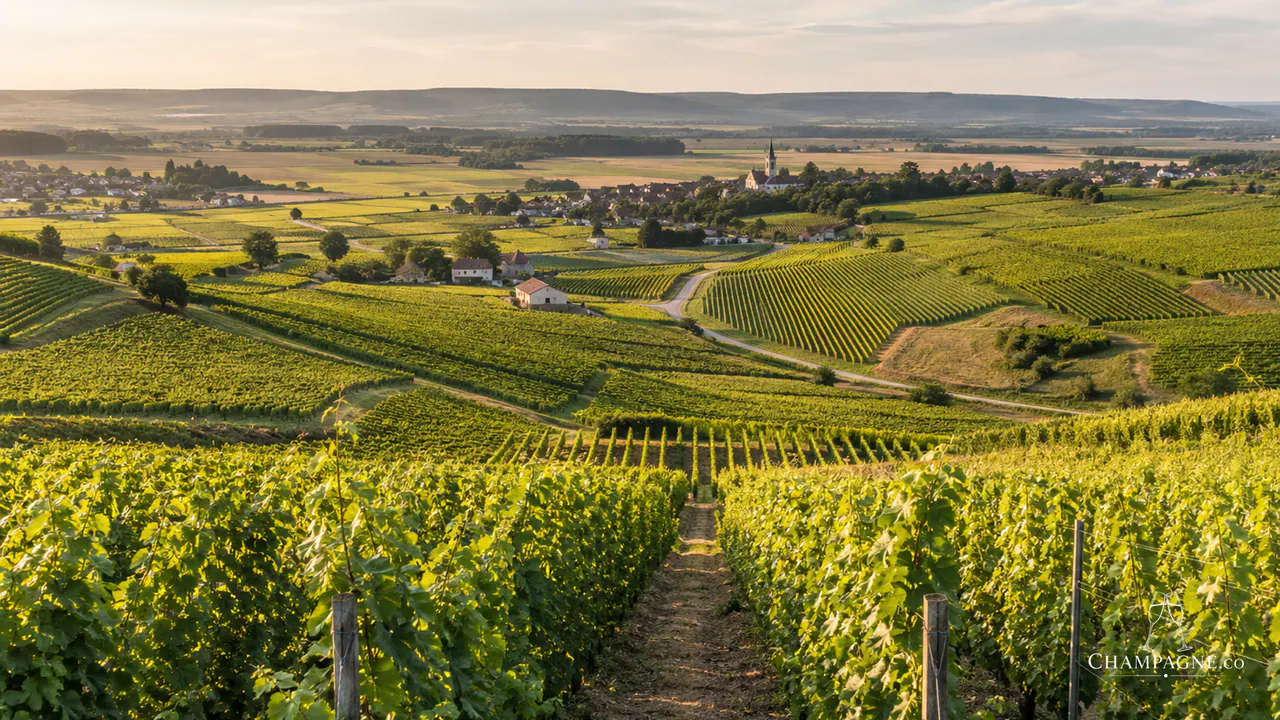
Champagne Bolieu is a family grower in Bassuet, in the Coteaux Vitryats. The name brings together three family lines — Baffard, Ortillon and Beaulieu — and Laurence and Charles Baffard have run the estate since 1998.
Editorial profile
Champagne Bolieu is a family grower in Bassuet, in the Coteaux Vitryats. The name brings together three family lines — Baffard, Ortillon and Beaulieu — and Laurence and Charles Baffard have run the estate since 1998.
Comité Champagne currently records a 6-hectare vineyard planted predominantly to Chardonnay.
Why this producer matters
Bolieu offers a compact view of the Coteaux Vitryats, an eastern Champagne sector where Chardonnay is especially important. The range is small enough to read clearly: a blended introductory wine, pure-Chardonnay expressions, a rosé and a mature vintage reference.
The producer is also a useful example of how family continuity can survive a change of name. Bolieu is not presented as a newly invented house identity; the current name explicitly joins the Baffard, Ortillon and Beaulieu family strands.
Vineyard identity
The estate is based at Bassuet and works a vineyard of about six hectares, with Chardonnay the dominant variety. That grape emphasis is reflected in the range, where both Fleur de Craie and Carnet de Léone are presented as pure-Chardonnay cuvées.
Current official Champagne material describes the estate's approach as environmentally respectful and based on reasoned, nature-protective methods.
Champagne.co analysis
Bolieu's range makes most sense when read through Chardonnay and place rather than through prestige hierarchy. Bassuet and the Coteaux Vitryats provide the geographical anchor, while the cuvées move from a Chardonnay-majority blend to two pure-Chardonnay interpretations with different cellar treatments.
The limited scale is useful here: instead of stretching the profile with unsupported detail, the defensible distinction lies in how a small family estate turns a Chardonnay-dominant vineyard into several clearly different routes — blended, pure-variety, oak-influenced, rosé and mature vintage.
Buying guidance
Pépin de Vigne is the straightforward starting point for the range. Readers wanting a pure-Chardonnay expression should look to Fleur de Craie, while Carnet de Léone is the more relevant choice for exploring the producer's oak-led Chardonnay direction. Cordon de Rosé covers the rosé category. Instant B 2008 is the mature-vintage reference, but its exact blend should not be inferred beyond what a reliable technical source can establish.
Loading current Champagne range…
Spotted something wrong? Report a correction
Every report goes to a human review queue. Nothing on this page changes automatically.