Brice
Champagne Brice is an independent family house based at 22 rue Gambetta in Bouzy, on the Grande Montagne de Reims. The family traces its presence in Bouzy to 1684, while the Union des Maisons de Champagne records the current Brice company as founded in…
Editorial profile
Champagne Brice is an independent family house based at 22 rue Gambetta in Bouzy, on the Grande Montagne de Reims. The family traces its presence in Bouzy to 1684, while the Union des Maisons de Champagne records the current Brice company as founded in 1994. Those are complementary rather than interchangeable dates: one describes the family's local history, the other the modern house entity.
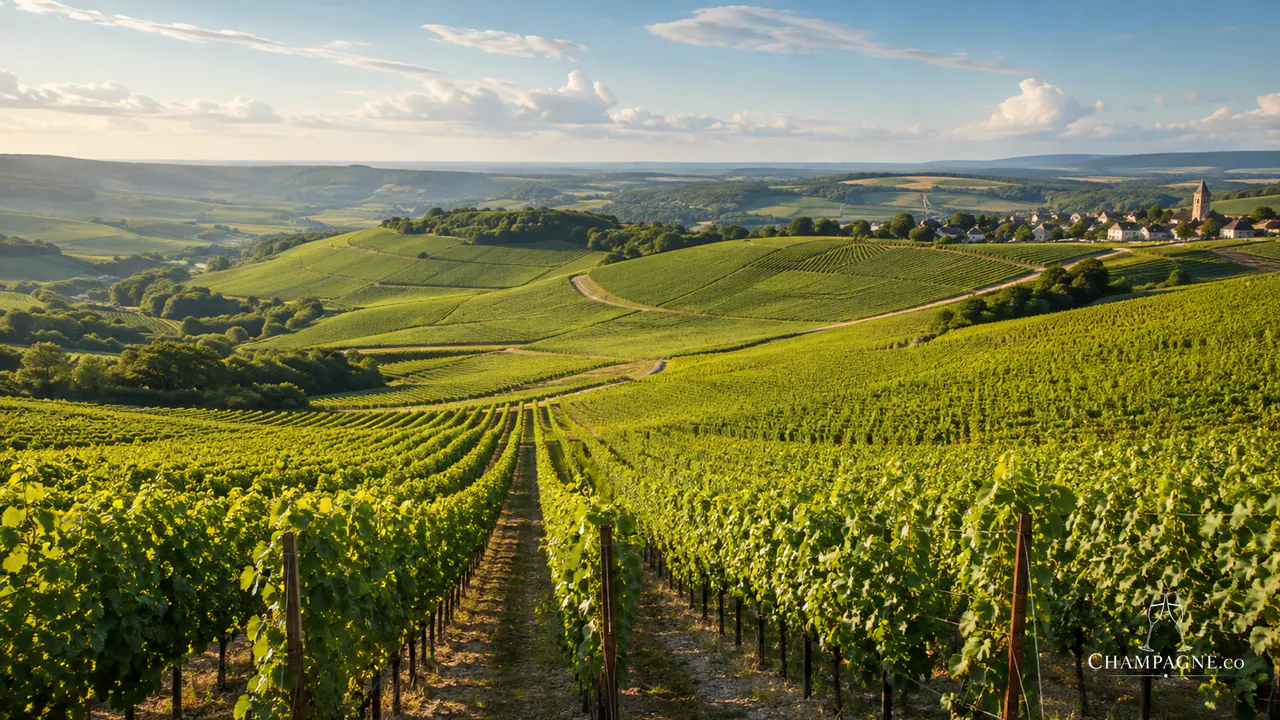
The producer currently states that it operates 12 hectares of vines, including 8 hectares in Bouzy Grand Cru. Its vineyard holdings also extend to Chigny-les-Roses Premier Cru and to 2.5 hectares at Loches-sur-Ource in the Aube. The Union des Maisons de Champagne currently records a smaller 10-hectare estate figure, so Champagne.co uses the house's current 12-hectare figure with the external discrepancy kept explicit rather than pretending the two sources agree.
Why this producer matters
Brice gives a particularly clear view of Bouzy through several levels of specificity. The range begins with house blends, then separates Chardonnay and Pinot Noir, narrows further into named parcel Champagnes, and finally extends into Bouzy Coteaux Champenois still wines.
The estate is also useful for understanding how a family house can combine a strong Bouzy Pinot Noir identity with vineyards outside the village. Chigny-les-Roses and Loches-sur-Ource broaden the raw-material base, while La Chatelaine introduces Chardonnay from Ambonnay Grand Cru into the parcel range.
Vineyards and farming
Brice's current vineyard page identifies important Bouzy lieux-dits including Les Hauts Vaudayants, Les Doyennes, Le Poteau, Le Mont des Tours, Les Cercets and Les Chantereines. The Chigny-les-Roses holdings are planted mainly to Meunier, while the 2.5-hectare Loches-sur-Ource parcel comprises roughly two hectares of Pinot Noir and half a hectare of Chardonnay.
The producer states that the vineyards are worked without chemical pesticide or insecticide and have been certified organic since the 2023 harvest. Soils are ploughed, much of the vineyard uses family massal selections, and average vine age is stated at around 45 years. The house also holds HVE certification, but organic status is not back-projected onto releases made before the documented certification date.
Cellar and winemaking approach
Vinification is directed by Christophe Constant, whom both the producer and Union des Maisons de Champagne identify as the current oenologist/cellar master. The house describes vinifying parcels or related lieux-dits separately, principally in stainless steel with selected use of oak, and generally avoiding malolactic fermentation in the currently documented cuvées.
The modern technical sheets also show a move toward lower dosage. Current Héritage and Héritage Rosé pages are Extra-Brut at no more than 2 g/L, while Héritage E.P. and the parcel Champagnes are Brut Nature at 0 g/L. These are current cuvée specifications, not assumptions about older releases.
Champagne.co analysis
Brice is best read as a progression from house identity to vineyard precision. Héritage establishes the modern blend around Pinot Noir, while the Blanc de Blancs and Blanc de Noirs split the range by grape. The three parcel Champagnes then shift the emphasis from house blend to named place, with Le Poteau and Le Mont des Tours anchored in Bouzy Pinot Noir and La Chatelaine bringing in Ambonnay Chardonnay.
The Coteaux Champenois range adds another useful layer because it shows that the same producer identity is not confined to sparkling wine. Bouzy Rouge and the two Bouzy Blanc bottlings belong to the wider estate story but need to remain clearly separated from Champagne AOC. The combination of Bouzy, outside holdings and parcel wines makes Brice more nuanced than a simple 'Pinot Noir house' label suggests.
Buying guidance
Héritage is the clearest introduction to the modern house blend. For a direct grape comparison, Blanc de Blancs and Blanc de Noirs show the Chardonnay/Pinot Noir split most clearly.
Readers interested in place should move to the parcel wines: Le Poteau and Le Mont des Tours for Bouzy Pinot Noir, and La Chatelaine for Chardonnay from Ambonnay Grand Cru. Héritage E.P. is the more relevant choice for exploring extended ageing and the reserve-wine programme. The Coteaux Champenois bottlings should be approached separately as still wines, with the exact Les Hautes/Le Poteau labels checked carefully because their grape specifications are not intuitive from the names alone.
Loading current Champagne range…
Spotted something wrong? Report a correction
Every report goes to a human review queue. Nothing on this page changes automatically.