Bruno Michel
Champagne Bruno Michel is a family grower based in Pierry, immediately south of Épernay, with one of the longer-running documented organic programmes in Champagne. Catherine and Bruno Michel began moving the vineyard toward organic viticulture in 1998, and…
Editorial profile
Champagne Bruno Michel is a family grower based in Pierry, immediately south of Épernay, with one of the longer-running documented organic programmes in Champagne. Catherine and Bruno Michel began moving the vineyard toward organic viticulture in 1998, and Comité Champagne records Ecocert certification from 2004.
Current independent and trade records place the estate at about 12 hectares. The vineyard is dominated by Chardonnay and Meunier, with a smaller proportion of Pinot Noir. After Bruno Michel's death, the domaine continued under the next family generation, with current specialist records identifying Pauline Michel and Guillaume Orban in the running of the estate.
Why this producer matters
Bruno Michel matters less for a large prestige hierarchy than for the durability of its farming identity. Organic conversion began well before organic certification became common in Champagne, and the current Comité Champagne record still identifies the domaine explicitly with organic farming.
That history is supported by practical vineyard methods rather than generic sustainability language. Current Comité Champagne material records grassed parcels, green manures and compost teas, while the domaine's longer-established vineyard approach is repeatedly associated with soil biology and plant-based treatments.
Vineyard and farming identity
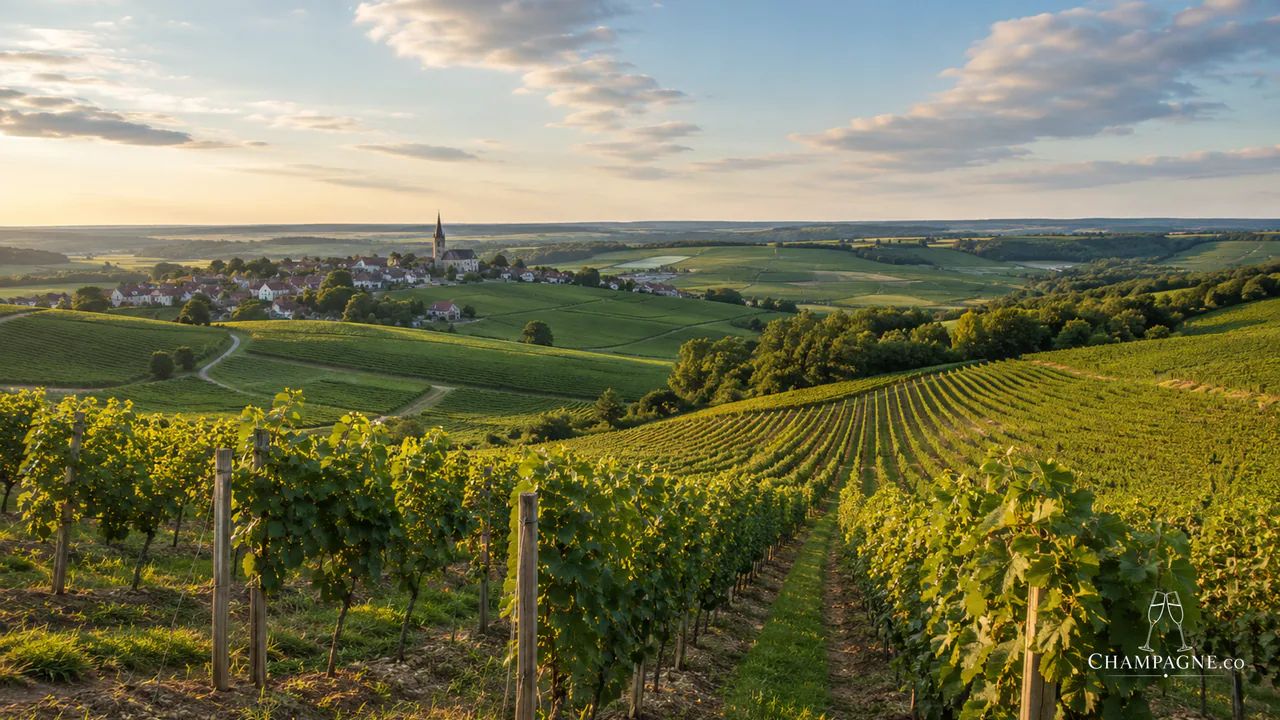
The estate is centred on Pierry and the Coteaux Sud d'Épernay. Current specialist records put the vineyard at roughly 12 hectares and more than thirty individual parcels, with Chardonnay and Meunier making up the great majority of the planting and Pinot Noir forming the smaller balance.
The organic chronology is the strongest independently anchored part of the estate's identity: conversion activity began in 1998 and certification followed in 2004. Ecocert's current certification database continues to list Champagne Bruno Michel for EU organic agriculture, supporting the estate's present organic status.
Cellar approach
Current specialist records describe stainless steel as the principal cellar vessel, with the estate historically using oak selectively rather than as a universal signature. The useful distinction for publication is therefore between parcel, grape and release rather than a claim that every wine follows one identical élevage programme.
Champagne.co analysis
Bruno Michel is best understood through the interaction between Pierry, organic farming and the two dominant grapes of the estate. Chardonnay and Meunier provide the basic vineyard structure; the organic programme gives the estate its strongest long-term point of distinction; parcel wines such as La Demi-Lune and Les Brousses show how the producer can narrow that broad estate identity into more specific expressions.
It is the movement from the core blended wines toward more specific grape or parcel interpretations, all within an estate whose organic commitment has been documented for more than two decades.
Buying guidance
Cuvée Blanche is the straightforward starting point for understanding the domaine's core Chardonnay/Meunier identity. Cuvée Rebelle provides the most relevant comparison within the core white range, while the house Rosé covers the rosé category.
For a more specific vineyard or grape perspective, La Demi-Lune is the relevant Meunier-led reference and Les Brousses the Chardonnay parcel/vintage reference when those wines are currently available.
Loading current Champagne range…
Spotted something wrong? Report a correction
Every report goes to a human review queue. Nothing on this page changes automatically.