C.H. Piconnet
C.H. Piconnet is a family grower based in Neuville-sur-Seine in the Côte des Bar. The modern domaine was created in 2014 by Agathe and Clément Piconnet, building on vineyards developed over earlier generations by Clément's grandfather Charles and father…
Editorial profile
C.H. Piconnet is a family grower based in Neuville-sur-Seine in the Côte des Bar. The modern domaine was created in 2014 by Agathe and Clément Piconnet, building on vineyards developed over earlier generations by Clément's grandfather Charles and father Hubert.
The estate's current identity is unusually clear: Pinot Noir, Chardonnay and Pinot Blanc all have a real place in the vineyard and the range. Pinot Blanc is not merely preserved as a historical curiosity; it forms 35% of 3 Cépages and 30% of the producer's published Les Vignes de Charles blend, making it one of the most visible parts of C.H. Piconnet's Champagne identity.
Why this producer matters
C.H. Piconnet combines a relatively young winemaking domaine with a much older family vineyard base. The 2014 creation therefore marks the point at which Agathe and Clément built their own cuverie and began shaping a separate estate identity, rather than the beginning of the family's work with vines.
The second distinction is organic farming. The current Association des Champagnes Biologiques record states that the domaine entered certification in 2018, achieved its first certified-organic harvest in 2022, and now has 100% of its 9.3-hectare vineyard certified AB. That gives the environmental claim a defined chronology rather than a generic sustainability label.
Vineyards and farming
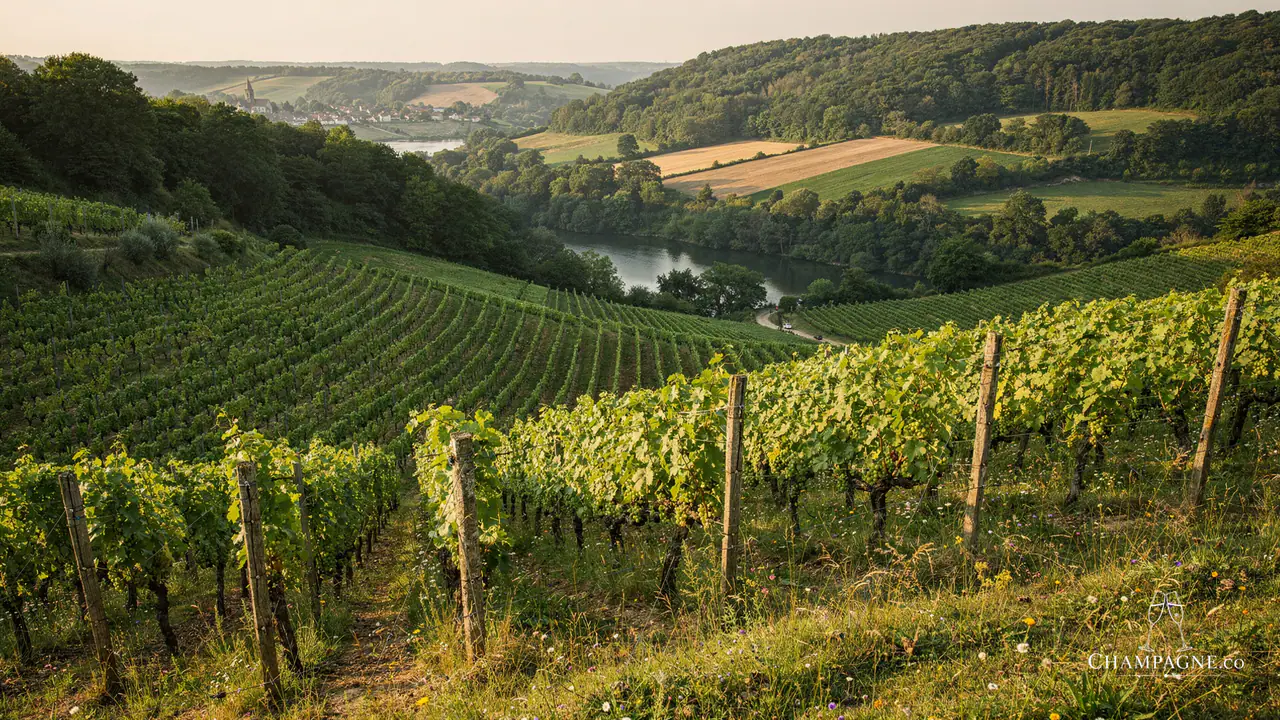
The current organic-sector record places the domaine at 9.3 hectares, all certified organic, with Chardonnay, Pinot Noir and Pinot Blanc among the certified varieties. The same record describes the Côte des Bar vineyards as clay-limestone terroirs.
The official producer site adds useful detail about the viticultural work. Pruning and disbudding are done by hand, canopy work is managed parcel by parcel, and the domaine uses east-side leaf removal after tying-up to expose grapes to gentler morning sun while retaining protection from stronger afternoon heat.
Cellar and winemaking approach
C.H. Piconnet's official site describes direct pressing for white wines, destemming and maceration for red wine, and separate handling of individual lots according to their character. Assemblages are prepared in March and bottling follows in April.
The current Association des Champagnes Biologiques profile describes the domaine's cuvées as vinified in stainless steel and without dosage.
Champagne.co analysis
C.H. Piconnet is best understood through continuity and change. Charles and Hubert built the family vineyard foundation; Agathe and Clément created the modern vinifying domaine in 2014; organic conversion from 2018 then changed the farming framework again. The result is a young Champagne label sitting on a longer family viticultural history.
The grape mix is equally distinctive. Pinot Noir provides the Côte des Bar backbone, Chardonnay broadens the palette, and Pinot Blanc is used in proportions large enough to shape the wines rather than merely decorate the story. 3 Cépages is particularly useful because its 40/35/25 blend makes that identity explicit in a single bottle.
Buying guidance
3 Cépages is the most informative starting point because it brings Pinot Noir, Pinot Blanc and Chardonnay together in the proportions that most clearly express the domaine's unusual grape mix. Blanc de Noirs is the direct route to Pinot Noir.
The producer Rosé is the relevant choice for the rosé side of the range, but its composition should remain tied to the exact release. Les Vignes de Charles is potentially the next step for readers interested in another substantial Pinot Blanc component, but its current availability should be confirmed before it is presented as a live commercial wine.
Loading current Champagne range…
Spotted something wrong? Report a correction
Every report goes to a human review queue. Nothing on this page changes automatically.