Caillez-Lemaire
Champagne Caillez-Lemaire is a family grower based in Damery in the Vallée de la Marne. The current estate record describes 45 vineyard plots covering 6.3 hectares within a radius of about six kilometres, with vines in Damery, Cumières, Hautvillers,…
Editorial profile
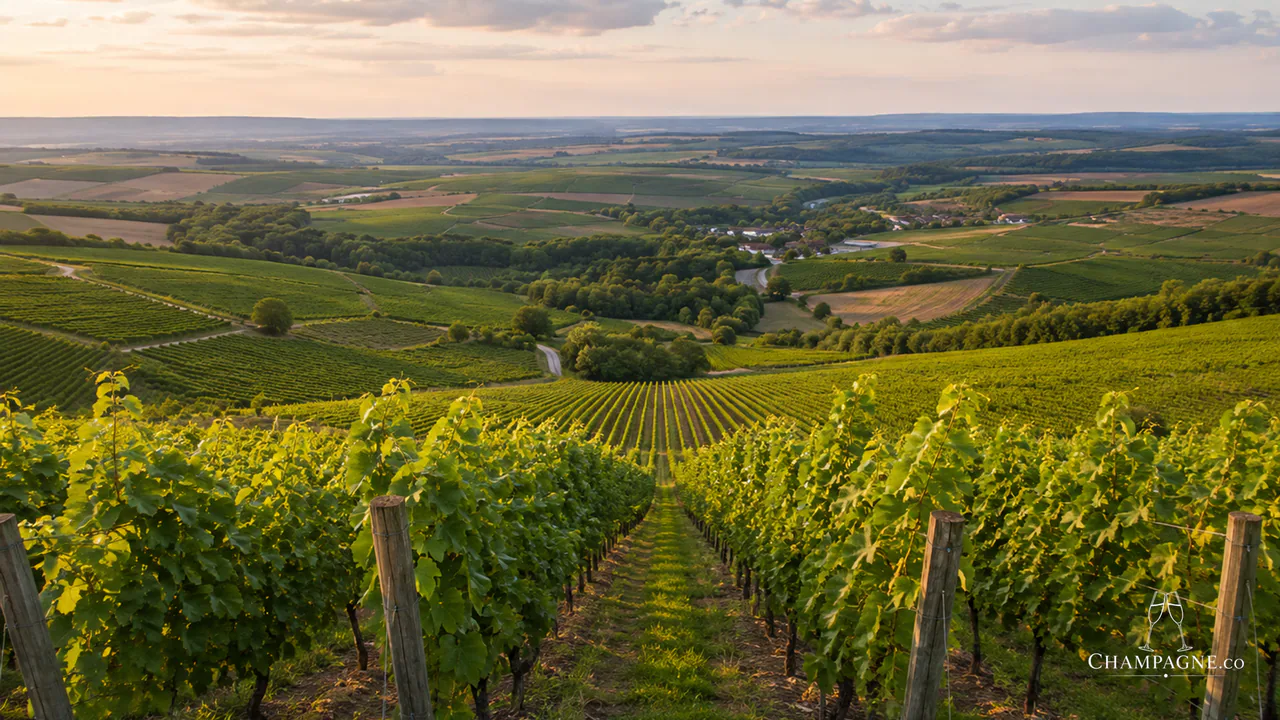
Champagne Caillez-Lemaire is a family grower based in Damery in the Vallée de la Marne. The current estate record describes 45 vineyard plots covering 6.3 hectares within a radius of about six kilometres, with vines in Damery, Cumières, Hautvillers, Fleury-la-Rivière and Vauciennes.
The domaine says that its vineyards have been farmed 100% organically since 2020 and that Ecocert certification took effect on 1 August 2023, making the 2023 harvest its first from certified-organic grapes. That chronology is important: the move to organic farming predates the certification date, and the two are not treated as interchangeable claims.
Caillez-Lemaire also has a clearly defined cellar direction. Current producer material describes a substantial role for oak, with some juices fermented directly in barrel, while the wines are made without malolactic fermentation, filtration or fining before bottling. The degree of wood use varies by cuvée rather than functioning as one fixed recipe across the range.
Why this producer matters
Caillez-Lemaire is a useful expression of the central Vallée de la Marne because its holdings are spread across five nearby villages rather than concentrated in a single parcel or commune. That gives the house a broad local palette while still keeping the vineyard footprint compact enough for a grower identity.
The range then makes that diversity easy to follow. Reflets draws across the five-village estate, Éclats shifts the emphasis toward Chardonnay and longer cellar ageing, Jadis focuses on old south-facing Premier Cru parcels in Cumières and Hautvillers, and the mono-varietal wines isolate Chardonnay and Meunier more directly.
Vineyards and farming
The current estate figure is 45 plots / 6.3 hectares. The vineyards lie principally around Damery, with additional parcels in Cumières, Hautvillers, Fleury-la-Rivière and Vauciennes. Cumières and Hautvillers are Premier Cru villages.
The producer describes a varied soil mosaic rather than one uniform terroir, including chalk-influenced thinner soils, clay-rich sections and mixtures containing silt and sand. That diversity is more useful for understanding the estate than reducing Caillez-Lemaire to a single soil type.
The current organic chronology is explicit: full organic farming from 2020, Ecocert certification from 1 August 2023, and the first certified harvest in 2023. The estate also records a longer environmental progression, including the end of insecticide use in the 1990s and an anti-herbicide programme beginning in 2014.
Cellar and winemaking
Oak is an important but variable part of the cellar. The producer says that around 40% of its wines receive a stronger barrel influence and that barrel fermentation also helps keep plots separate before blending. Current cuvée pages confirm that some wines use only a small wood-fermented component while others are fermented mainly or entirely in oak.
The house also states that its Champagne cuvées are made without malolactic fermentation, filtration or fining before bottling. Ageing periods differ substantially across the range, from the relatively early-drinking Fantaisie to the much longer-matured Jadis.
Champagne.co analysis
Caillez-Lemaire is best understood through the interaction of a compact multi-village vineyard, organic farming and a cellar that uses oak selectively rather than uniformly. The producer has enough geographical breadth to blend across several Vallée de la Marne sites, but it also has the scale and parcel focus to make narrower wines from specific grapes and Premier Cru locations.
The range therefore has a logical progression rather than simply a prestige ladder. Reflets shows the estate in blended form. Éclats pushes further into Chardonnay and longer maturation. Jadis narrows the source to mature Premier Cru parcels and extended ageing. and the mono-varietal wines separate Chardonnay and Meunier for a more direct comparison.
Buying guidance
- Best first bottle: Reflets is the clearest introduction to the five-village estate and its Meunier-led Vallée de la Marne identity.
- For a more Chardonnay-led expression: Éclats moves toward Chardonnay, greater wood influence and much longer cellar ageing.
- For the mature, long-aged end of the range: Jadis is the relevant reference, with its Premier Cru sourcing and extended lees ageing.
- For a younger house expression: Fantaisie occupies the more immediate end of the range.
- For varietal comparison: Chardonnay de la Vallée and Pur Meunier provide the most direct way to compare the estate's treatment of individual grapes.
- For still wine or regional spirits: Coteaux Blancs, Coteaux Rouge, Ratafia, Fine and Marc sit outside the Champagne AOC sparkling range.
Loading current Champagne range…
Spotted something wrong? Report a correction
Every report goes to a human review queue. Nothing on this page changes automatically.