Camille Savès
Champagne Camille Savès is an independent family grower based in Bouzy, one of the principal Pinot Noir villages of the Montagne de Reims. The family's current history traces its presence in Bouzy to 1894, when Eugène Savès, an agricultural engineer,…
Editorial profile
Champagne Camille Savès is an independent family grower based in Bouzy, one of the principal Pinot Noir villages of the Montagne de Reims. The family's current history traces its presence in Bouzy to 1894, when Eugène Savès, an agricultural engineer, married Anaïs Jolicoeur, the daughter of a local winegrower, and established the house.
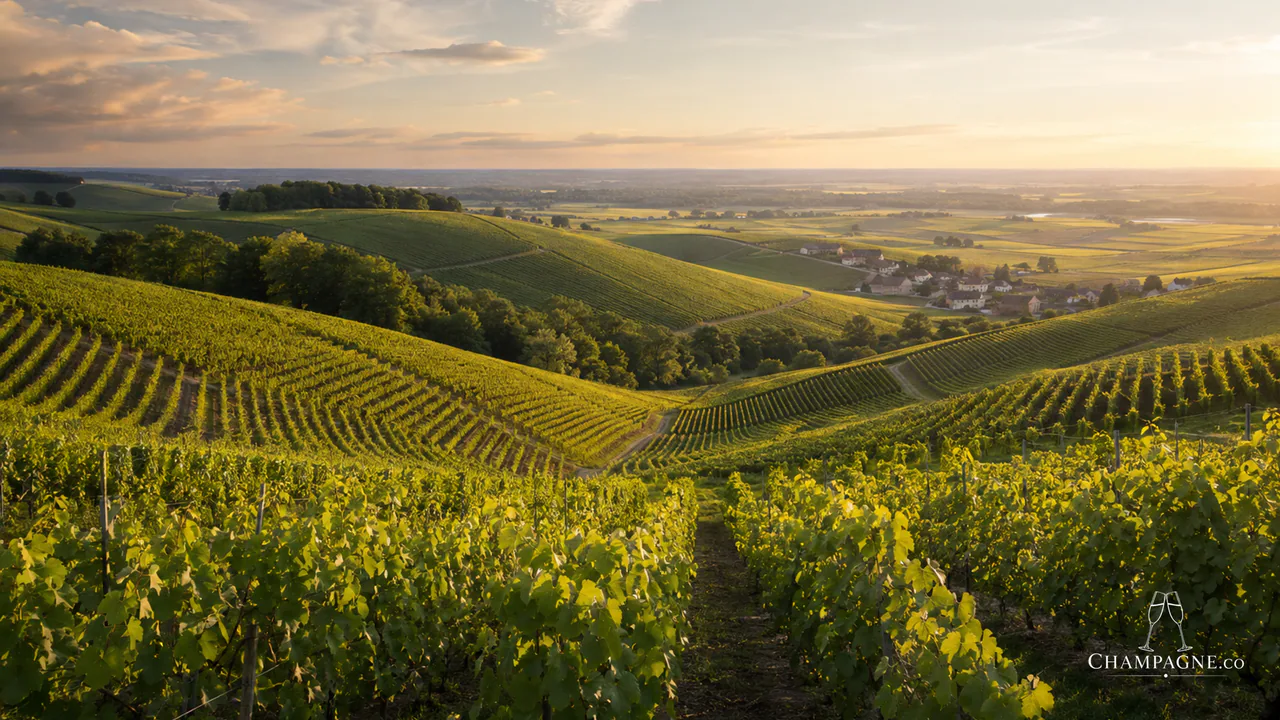
Today Hervé and Nathalie Savès work with their son Arthur. The producer records a vineyard of roughly ten hectares, with an average vine age of about 35 years, spread across Grand Cru Bouzy, Ambonnay and Tours-sur-Marne and Premier Cru Tauxières. The estate therefore extends beyond Bouzy while remaining concentrated in a compact group of highly regarded Montagne de Reims and Grande Vallée sites.
Pinot Noir and Chardonnay are the central varieties. The producer describes predominantly south-facing, chalk-rich vineyard conditions and says that herbicides and insecticides are not used, with vineyard work relying mainly on organic and natural treatments. That farming description is kept distinct from any formal organic-certification claim.
Why this producer matters
Camille Savès combines the intimacy of a family grower with a vineyard base dominated by Grand Cru villages. Its identity is especially useful for understanding Bouzy because the range can move between Pinot Noir-led blends and Chardonnay-led alternatives while keeping the same village context in view.
The estate also carries out the production cycle itself. Current house material says the family handles the process from pressing through dispatch, using temperature-controlled vats for alcoholic fermentation and a separate cellar for single-plot wines vinified in tanks and barrels. That gives the domaine more than a simple grape-growing identity: vineyard source, blending and cellar work are all part of the same family operation.
Vineyards and terroir
The current estate figure is around ten hectares. Bouzy is the historical centre, supplemented by Grand Cru parcels in Ambonnay and Tours-sur-Marne and Premier Cru vineyards in Tauxières. The producer gives an average vine age of approximately 35 years.
The house describes its core sites as strongly exposed to the south and rich in chalk. Pinot Noir is particularly important to the Bouzy identity, while Chardonnay is sufficiently important to support a contrasting Chardonnay-majority cuvée such as Prestige.
Environmental practice is described cautiously.
Cellar and winemaking
Camille Savès says the family performs each stage of production on the estate, from pressing to shipment. Alcoholic fermentation takes place in temperature-controlled vats, while a dedicated cellar is used for single-plot cuvées vinified in both tanks and barrels.
Blending remains central to the house style. The current producer material describes the family assembling different varieties, crus and reserve wines each year, while bottles receive extended maturation in deep chalk cellars before release. Exact blend and ageing details vary by cuvée and release.
Champagne.co analysis
Camille Savès is best read as a Bouzy-centred grower whose range demonstrates that a Grand Cru village associated strongly with Pinot Noir can support more than one stylistic route. Carte d'Or keeps Pinot Noir decisively in front, while Prestige reverses the emphasis and makes Chardonnay the majority grape without leaving Bouzy Grand Cru.
That contrast is more informative than treating Prestige simply as a higher rung in a hierarchy. Both wines are rooted in the same village, but they use different proportions to show different sides of the estate's raw material. The broader vineyard holdings in Ambonnay, Tours-sur-Marne and Tauxières then add context to a domaine whose public identity remains firmly anchored in Bouzy.
The estate's integrated production model also matters. Because the family controls pressing, fermentation, blending, maturation and dispatch, Camille Savès can be understood as a genuine grower-producer rather than merely a label attached to purchased finished wine.
Buying guidance
- Best first bottle: Carte d'Or is the most direct introduction to Camille Savès and to the producer's Pinot Noir-led Bouzy Grand Cru identity.
- For a Chardonnay-led comparison: Prestige changes the balance to 65% Chardonnay while remaining entirely Bouzy Grand Cru, making it the most useful contrast with Carte d'Or.
- For older or less regularly available bottlings: vintage, rosé, parcel and Coteaux Champenois releases are best understood through the specific bottle and vintage in hand.
Loading current Champagne range…
Spotted something wrong? Report a correction
Every report goes to a human review queue. Nothing on this page changes automatically.