Carré Frères
Domaine Carré Frères is a young family grower project created in 2019 by brothers Édouard and Victor Carré. The domaine was assembled from their father's vineyards in Trépail and their mother's vines in Verzy, giving the brothers an inherited base on two…
Editorial profile
Domaine Carré Frères is a young family grower project created in 2019 by brothers Édouard and Victor Carré. The domaine was assembled from their father's vineyards in Trépail and their mother's vines in Verzy, giving the brothers an inherited base on two contrasting sides of the Montagne de Reims.
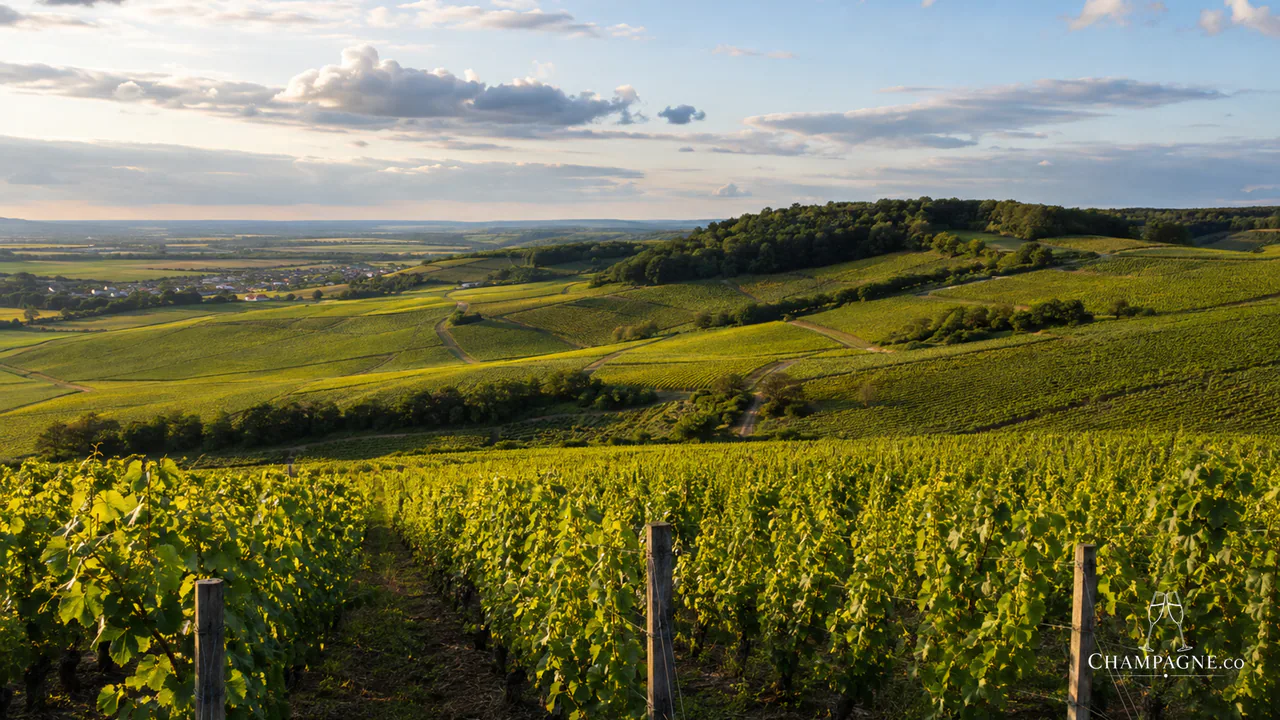
The producer currently records 25 hectares across three terroir groups: 16 hectares in Trépail Premier Cru, 6 hectares in Verzy Grand Cru and 3 hectares in the Côte des Bar, around Essoyes, Loches-sur-Ource and Les Riceys. Trépail is described by the domaine as southeast-facing, while Verzy is north-facing.
Carré Frères is deliberately vintage-led. The brothers state that they make only vintage wines and that individual cuvées may appear or disappear from one harvest to the next depending on grape quality and maturity. The cellar is equally distinctive: the current producer site says vinification takes place exclusively in wood, with approximately 50% new barrels for each cuvée.
Why this producer matters
Carré Frères is interesting because it combines substantial inherited vineyard scale with a deliberately narrow, parcel-conscious way of presenting wine. Twenty-five hectares could support a conventional broad house range, but the brothers instead organise their wines around individual terroirs, grapes and harvest years.
The geography also gives the domaine unusual internal contrast. Trépail provides a Premier Cru Chardonnay-focused base on a southeast-facing slope, Verzy brings Grand Cru Montagne de Reims fruit from a northern exposure, and the Côte des Bar holdings add a third landscape much farther south.
The resulting range is not designed to be permanent. That makes vintage identity part of the producer's core character rather than a secondary detail added only to prestige wines.
Vineyards and terroir
The current estate total is 25 hectares. The largest share is in Trépail Premier Cru, where the domaine records 16 hectares. Verzy Grand Cru accounts for another six hectares, and the remaining three hectares are in the Côte des Bar around Essoyes, Loches-sur-Ource and Les Riceys.
The producer explicitly distinguishes the exposures of its principal Montagne de Reims villages: Trépail faces southeast and Verzy north. Those differences help explain why the brothers treat site and parcel as central organising ideas rather than blending all vineyard origins into one generic estate identity.
The domaine says vineyard work is adjusted according to the year, climate and health of each parcel. Current first-party material does not establish a blanket certified-organic or certified-biodynamic status, so the estate is presented through the practices it documents rather than through a certification label it does not currently claim on its own site.
Cellar and winemaking
Carré Frères states that vinification is entirely in wood, with around half new barrels for each cuvée. Only selected grapes meeting the domaine's quality and maturity criteria are vinified each year.
The stated philosophy is concise: one terroir, one parcel, one grape, one vintage. In practical terms, that means the brothers do not rely on a fixed non-vintage architecture or a permanent set of cuvées. Each harvest determines which parcels are bottled and how the range is assembled.
Champagne.co analysis
Carré Frères is best understood as a large-vineyard, small-cuvée project. The brothers control a sizeable 25-hectare inheritance, yet the wines are presented through a deliberately fragmented lens: village, parcel, grape and year.
That approach creates a useful contrast between Trépail and Verzy. Trépail is the larger home base and naturally supports several Chardonnay and Blanc de Blancs expressions, while Verzy provides a Grand Cru counterpoint from a different exposure. The Côte des Bar holdings widen the raw-material base further, even though the current public range is most visibly centred on Trépail and Verzy.
The all-wood cellar regime is equally defining. Rather than using oak only for a prestige bottling, Carré Frères makes wood the baseline vessel for the entire vinification programme. Combined with vintage-only production, that makes each release a snapshot of one year's selected parcels rather than a repetition of a fixed house formula.
Buying guidance
- Best introduction to the domaine: Trépail Village is the broadest route into the brothers' Chardonnay-led home terroir.
- For a more parcel-specific Trépail wine: Le Champ Jeanvrai narrows the focus to a named Premier Cru site.
- For a Verzy comparison: Les Buissons is the key Grand Cru counterpoint when the relevant vintage is available.
- For still-wine interest: Les Hauts Bouitais and RO25 belong to Coteaux Champenois rather than the sparkling Champagne range.
- For collectors following the domaine over time: vintage matters unusually strongly here because Carré Frères does not guarantee that every cuvée will be made every year.
Loading current Champagne range…
Spotted something wrong? Report a correction
Every report goes to a human review queue. Nothing on this page changes automatically.