Cattier
Champagne Cattier is a family house based in Chigny-les-Roses, in the Montagne de Reims. The family's current history traces its vineyard roots in the village to 1625, while commercial Champagne production under the family name began in 1918, when Jean…
Cattier — Champagne producer profile image.
Editorial profile
Champagne Cattier is a family house based in Chigny-les-Roses, in the Montagne de Reims. The family's current history traces its vineyard roots in the village to 1625, while commercial Champagne production under the family name began in 1918, when Jean Cattier sold his first bottles at the end of the First World War.
The modern house remains family-run. Alexandre Cattier, an oenologist, took over direction of the company in 2011 after working alongside his father Jean-Jacques. The family now describes thirteen generations connected to the vines and four generations producing Champagne.
Cattier currently farms approximately 33 hectares, principally around Chigny-les-Roses, Ludes and Rilly-la-Montagne. The estate combines that substantial Premier Cru vineyard base with a broad house range and one especially important enclosed site: the 2.2-hectare Clos du Moulin.
Why this producer matters
Cattier's significance comes from the combination of long family continuity, meaningful estate scale and a genuine single-vineyard reference. The house's history stretches back centuries, but its modern Champagne identity is not built on heritage alone: it has a clearly documented vineyard programme, a substantial cellar operation and a current range that moves from core Premier Cru blends to vintage, mono-varietal and clos-based wines.
Clos du Moulin is the most distinctive anchor. Jean Cattier bought the neglected walled vineyard in 1950, restored it, vinified its grapes separately from the 1951 harvest and released the first bottles in 1955. Today the clos remains a numbered, limited-production wine and gives Cattier a terroir-specific prestige expression within a much broader house portfolio.
Vineyards and farming
The current estate figure is approximately 33 hectares, concentrated principally in Chigny-les-Roses, Ludes and Rilly-la-Montagne on the Montagne de Reims. The producer says the vineyard has been managed with an increasingly environmental approach since the mid-1990s.
Current certifications include Ampelos, Haute Valeur Environnementale level 3 and Viticulture Durable en Champagne. Those credentials demonstrate a formal sustainable-viticulture programme, but they are not presented as organic certification.
The Clos du Moulin covers 2.2 hectares near Chigny-les-Roses. Its identity is unusually clear within the estate because fruit from the enclosed vineyard has been treated separately since its restoration in the early 1950s.
Cellar and winemaking
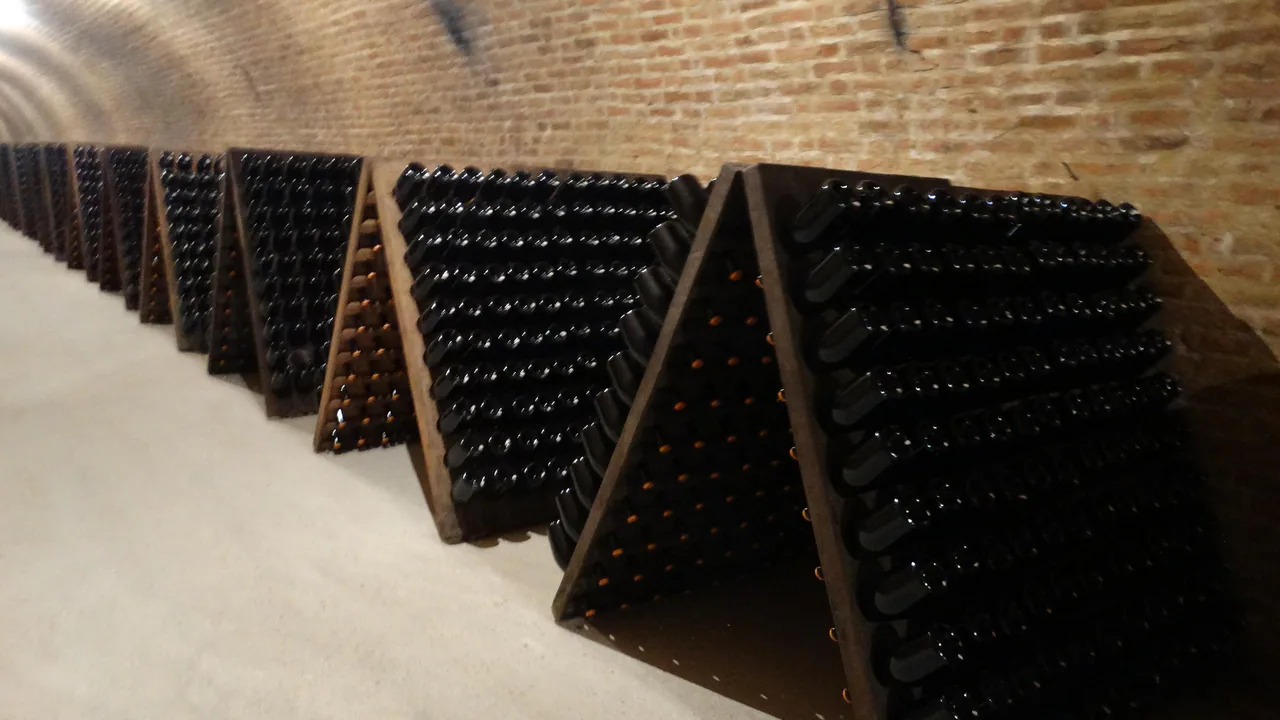
Cattier's principal cellars lie beneath the family estate at Rilly-la-Montagne. The house says they descend to almost 30 metres and can hold roughly two million bottles. Their depth provides stable conditions for prolonged bottle maturation.
Reserve wines play an important role in the non-vintage range. Current product pages specify substantial reserve components in Brut Premier Cru and several other house wines, while the Clos du Moulin Rosé currently incorporates a perpetual reserve.
Ageing varies materially across the range, from multi-year cellar maturation for the core Premier Cru wines to substantially longer ageing for vintage and Clos releases.
Champagne.co analysis
Cattier is most compelling when read at two scales. At house level, it is a sizeable family producer with 33 hectares, deep cellars, reserve-wine blending and a broad Premier Cru catalogue. At vineyard level, Clos du Moulin provides a much narrower identity: one enclosed 2.2-hectare site with its own history and separately vinified fruit.
That contrast gives the range a logical shape. Brut Premier Cru represents the house blend; Blanc de Blancs, Brut Nature and Meunier Millésime isolate particular grapes or dosage choices; vintage wines add harvest specificity; and Clos du Moulin moves from house-scale blending to a defined vineyard source.
The house's sustainability credentials also matter because they are concrete and current. Ampelos, HVE level 3 and VDC provide a stronger basis for describing environmental practice than vague claims of 'natural' viticulture, while avoiding the mistake of calling the estate organic when the current evidence does not establish that certification.
Buying guidance
- Best introduction: Brut Premier Cru is the clearest starting point for the current Cattier house style and reserve-wine approach.
- For Chardonnay: Brut Blanc de Blancs Premier Cru gives the most direct single-variety route.
- For zero dosage: Brut Nature Premier Cru is the current no-dosage expression.
- For Meunier: Meunier Millésime 2016 provides a dedicated vintage example while that release remains current.
- For the house's most specific terroir story: Clos du Moulin is the key reference, with Clos du Moulin Rosé offering the corresponding rosé interpretation.
- For anniversary or limited editions: the 400-year cuvées are best treated as special releases rather than permanent range anchors.
Loading current Champagne range…
Spotted something wrong? Report a correction
Every report goes to a human review queue. Nothing on this page changes automatically.