Cazé-Thibaut
Champagne Cazé-Thibaut is a small grower estate based in Châtillon-sur-Marne, on the right bank of the Vallée de la Marne, and led by Fabien Cazé. The producer traces the family tradition through ten generations of winegrowers; Roger Cazé was the first to…
Editorial profile
Champagne Cazé-Thibaut is a small grower estate based in Châtillon-sur-Marne, on the right bank of the Vallée de la Marne, and led by Fabien Cazé. The producer traces the family tradition through ten generations of winegrowers; Roger Cazé was the first to commercialise Champagne under the family name, creating Champagne Cazé in 1953.
The current Association des Champagnes Biologiques record gives a total vineyard surface of 2.58 hectares, all of it certified organic. Chardonnay, Meunier and Pinot Noir are all included within that certified surface. The estate entered organic certification in 2016, and the 2020 harvest was its first certified-organic vintage.
The domaine's present identity is strongly parcel- and grape-led. Châtillon-sur-Marne and nearby Vandières provide the principal reference points, while spontaneous fermentation, barrel ageing, long fine-lees maturation and low dosage shape the cellar programme.
Why this producer matters
Cazé-Thibaut shows how a very small vineyard can support a surprisingly differentiated range. Rather than relying on one generic house blend, Fabien Cazé separates Meunier, Chardonnay, Pinot Noir and mixed-variety expressions according to village, parcel and harvest.
The organic status is also unusually clear. The current sector record does not merely describe environmentally minded farming: it identifies the entire recorded 2.58-hectare surface as AB-certified and provides both the 2016 commitment date and 2020 first certified harvest.
The range is especially useful for comparing the right bank of the Vallée de la Marne through grape variety. Naturellement centres on Meunier from Châtillon-sur-Marne; Les Fourches and Jossias move to Chardonnay and Pinot Noir in Vandières; Les Lériens returns to Châtillon with all three principal Champagne grapes together.
Vineyards and farming
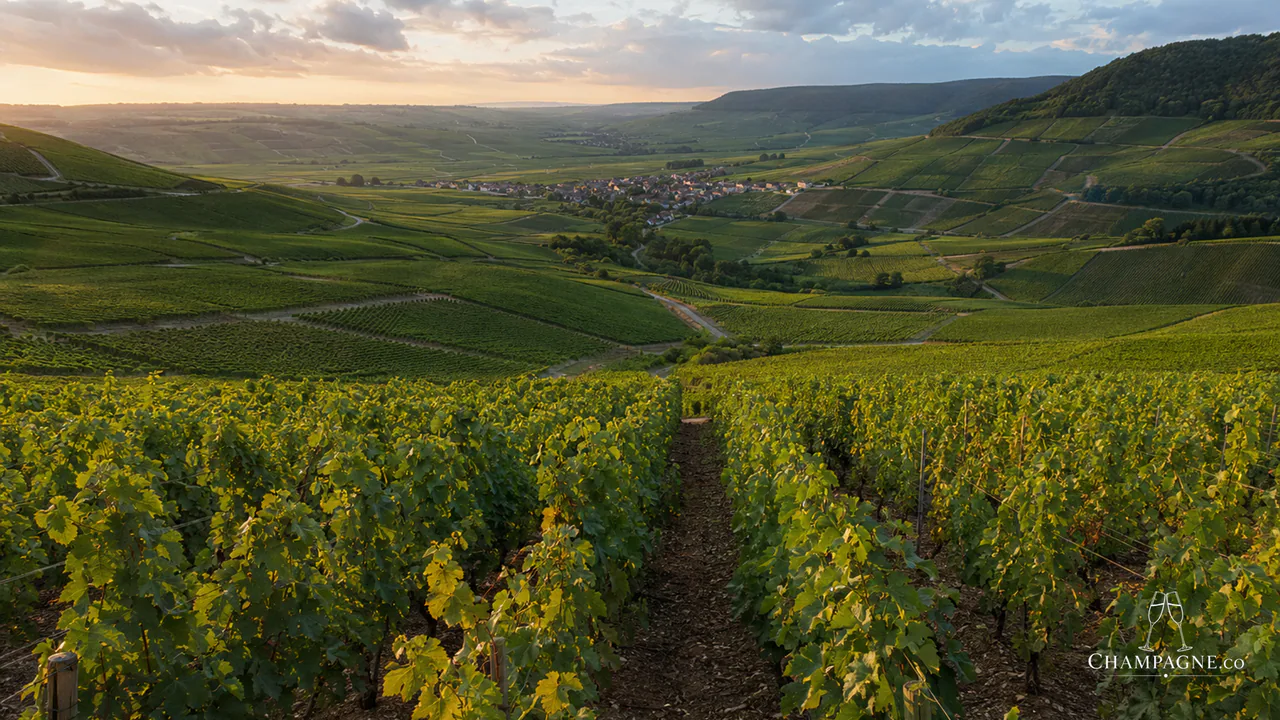
The estate's certified vineyard totals 2.58 hectares. Current producer material places the vineyards on the right bank of the Vallée de la Marne, with Châtillon-sur-Marne and Vandières central to the wines currently presented.
The domaine says vineyard work includes soil cultivation by scratching and hoeing and that neither herbicides nor insecticides are used. Manual work remains important from pruning through harvest, with picking dates decided parcel by parcel according to maturity.
Organic certification is precisely documented: engagement in 2016, first certified-organic harvest in 2020, and 100% of the recorded 2.58 hectares certified AB. Chardonnay, Meunier and Pinot Noir are all certified varieties within the estate.
Cellar and winemaking
Spontaneous fermentation is a recurring feature of the current wines, with oak used extensively for fermentation and élevage. Naturellement is currently presented as fermenting entirely in oak, while Les Fourches, Jossias and Les Lériens are raised in used barrels.
The producer states that surfaced wines are bottled without fining or filtration and use natural cold stabilisation. Fine-lees ageing is described broadly at 24 to 72 months, depending on the wine. Dosage is decided by tasting and kept low, but exact figures vary by bottling and release.
Malolactic fermentation is not uniform across the range: the current pages for Les Fourches, Jossias and Les Lériens specify it, while the cellar approach is otherwise tailored to the individual cuvée.
Champagne.co analysis
Cazé-Thibaut is most interesting as a study in resolution. With only 2.58 hectares, the domaine could easily be reduced to one small-grower profile, yet the range separates the vineyard into distinct grape and village expressions. That makes scale an advantage rather than a limitation: individual sites and varieties remain visible instead of disappearing into a large blending programme.
Meunier provides the clearest connection to the estate's Châtillon-sur-Marne base through Naturellement, while Vandières supplies the pure Chardonnay and Pinot Noir counterpoints in Les Fourches and Jossias. Les Lériens then recombines the three principal varieties without abandoning the parcel-led logic.
The cellar approach reinforces that structure. Oak and spontaneous fermentation are important, but they are not used to make every wine identical. Vessel history, malolactic fermentation and maturation are adjusted cuvée by cuvée, allowing grape and site to remain the organising ideas.
Buying guidance
- Best introduction: Naturellement is the clearest starting point for the domaine's Meunier and Châtillon-sur-Marne identity.
- For Chardonnay: Les Fourches provides the direct Vandières expression.
- For Pinot Noir: Jossias is the corresponding single-variety comparison.
- For a three-grape view of the home village: Les Lériens brings Chardonnay, Meunier and Pinot Noir together in a Châtillon-sur-Marne cuvée.
- For comparing releases: vintage, dosage and disgorgement matter at this scale, so the exact bottle in hand is more informative than assuming a fixed recipe across years.
Loading current Champagne range…
Spotted something wrong? Report a correction
Every report goes to a human review queue. Nothing on this page changes automatically.