Charles Collin
Champagne Charles Collin is a cooperative producer based in Fontette in the Côte des Bar. Comité Champagne records the cooperative as founded in 1952, bringing together 160 winegrowers and working approximately 390 hectares. The Charles Collin name was…
Editorial profile
Champagne Charles Collin is a cooperative producer based in Fontette in the Côte des Bar. Comité Champagne records the cooperative as founded in 1952, bringing together 160 winegrowers and working approximately 390 hectares. The Charles Collin name was adopted for commercial bottlings in 1993 in tribute to one of the cooperative's founders.
Those figures describe a collective vineyard, not a privately owned 390-hectare estate. The member vineyards are predominantly planted to Pinot Noir, the principal variety of the house, with Chardonnay providing the main white-grape counterpoint.
The house carries the production process through internally from hand harvest and pressing to fermentation, maturation and shipment. The current portfolio spans the main Charles Collin range, the more Chardonnay-led Cuvée Charles line and La Belle Gabrielle.
Why this producer matters
Charles Collin is a useful reminder that grower Champagne is not Champagne's only alternative to the large merchant houses. Its 160 member growers pool a substantial Côte des Bar vineyard base while retaining a regional identity strongly centred on Pinot Noir.
The cooperative scale also gives the cellar access to a much wider selection of fruit than a small family estate. That makes blending central to the house, but the range still creates clear varietal contrasts: the core Brut is Pinot Noir-dominant, Extra Brut and Blanc de Noirs are pure Pinot Noir, while Cuvée Charles moves strongly toward Chardonnay.
Because the 390 hectares belong to the cooperative's grower network, Charles Collin should be read as a collective Côte des Bar producer rather than as one enormous estate.
Vineyard and cooperative identity
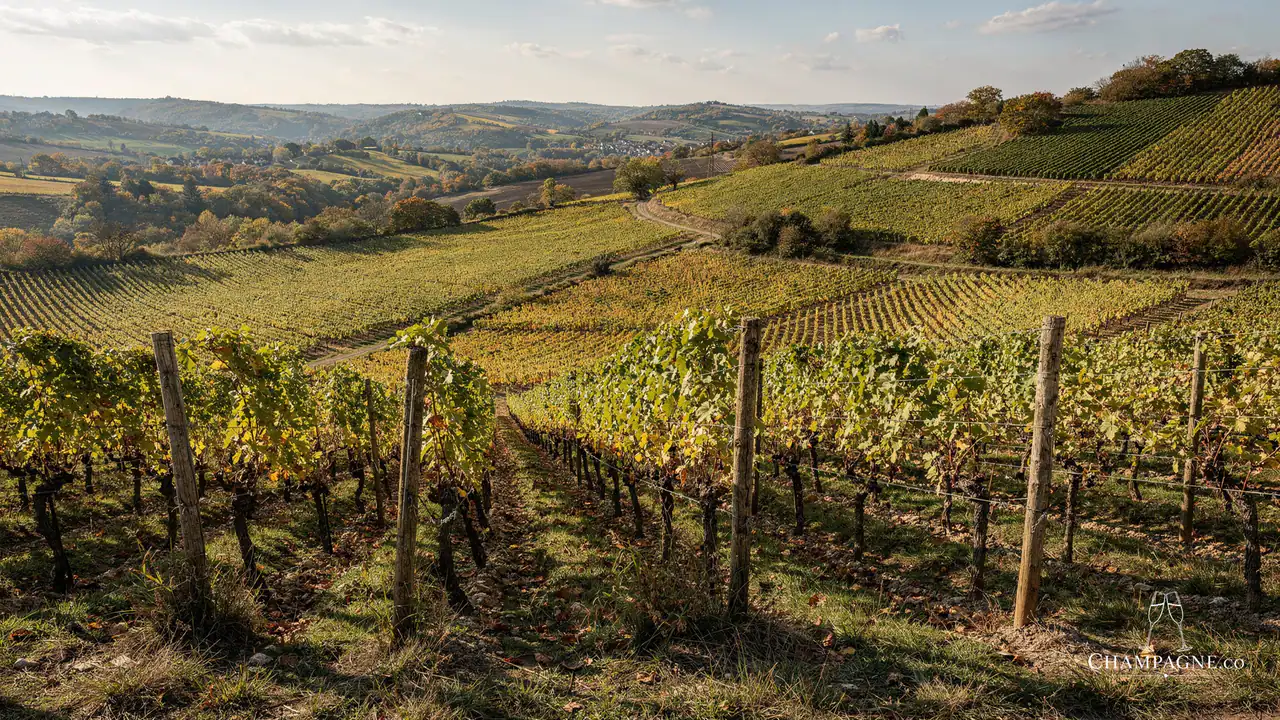
Comité Champagne currently records 160 member winegrowers working about 390 hectares. The house describes the collective vineyard as predominantly Pinot Noir, with Chardonnay also planted across the member holdings.
The Côte des Bar setting is important. Pinot Noir is the dominant grape in the current core range, reflecting the broader viticultural character of southern Champagne, while Chardonnay is used both as a supporting component and as the majority grape in selected cuvées.
Current technical sheets also state that the house works with vines of at least 15 years for the surfaced classic releases and carries Viticulture Durable en Champagne certification. That sustainability credential belongs to the cooperative programme and is not expanded into an organic claim.
Cellar and winemaking
Charles Collin says the full production and maturation cycle is handled by the house, beginning with hand picking. Current technical sheets describe careful grape selection, pneumatic pressing, temperature-controlled alcoholic and malolactic fermentation in stainless-steel tanks, secondary fermentation and maturation in constant-temperature cellars.
Reserve wine is important in the classic range. Current technical sheets place it around 20–25% in several cuvées, although the percentage can vary by harvest. Core Brut and current Blanc de Noirs receive a minimum of around three years on lees, with exact ageing and dosage varying according to the wine.
Champagne.co analysis
Charles Collin's identity comes from the relationship between cooperative scale and Côte des Bar character. A 390-hectare member network gives the cellar broad blending options, but Pinot Noir remains the common thread rather than disappearing into a neutral large-volume house style.
The current range makes that structure easy to navigate. Brut gives the broad Pinot Noir-dominant house blend; Extra Brut and Blanc de Noirs push fully into Pinot Noir; Cuvée Charles reverses the balance and makes Chardonnay dominant. La Belle Gabrielle adds a more cellar-led dimension through its use of reserve wines matured in larger and smaller oak vessels.
This is therefore a producer where the cooperative model is part of the story rather than something to hide. The 160 growers and 390 hectares explain both the scale and the diversity available to the blending team, while the Côte des Bar and Pinot Noir provide the regional centre of gravity.
Buying guidance
- Best introduction: Brut is the clearest starting point for the Pinot Noir-led Charles Collin house style.
- For lower dosage and pure Pinot Noir: Extra Brut is the most direct comparison with the core Brut.
- For a fuller black-grape expression: Blanc de Noirs is another 100% Pinot Noir route with longer cellar maturation than a simple entry-level bottling.
- For Chardonnay: Cuvée Charles provides the clearest Chardonnay-majority contrast.
- For a sweeter style: Demi-Sec keeps the Pinot-led blend but moves into a substantially higher-dosage category.
- For the prestige end of the range: La Belle Gabrielle is the relevant Chardonnay-led reference, with part of its reserve-wine component matured in wood.
Loading current Champagne range…
Spotted something wrong? Report a correction
Every report goes to a human review queue. Nothing on this page changes automatically.