Charles Lafitte
Charles Lafitte is a modern Champagne brand built on a much older commercial name. The current producer history records that Charles Lafitte & Cie had long supplied Cognac spirit used by Champagne houses in dosage liqueurs, while Paul-François Vranken…
Editorial profile
Charles Lafitte is a modern Champagne brand built on a much older commercial name. The current producer history records that Charles Lafitte & Cie had long supplied Cognac spirit used by Champagne houses in dosage liqueurs, while Paul-François Vranken created the Charles Lafitte Champagne brand in 1983.
That distinction matters because the name's nineteenth-century history is older than the present Champagne brand. Union des Maisons de Champagne records 1834 as the house foundation date, while the producer itself explicitly dates the modern Champagne brand to 1983. Charles Lafitte is therefore best understood as a contemporary Champagne identity drawing on an older wine-and-spirits heritage rather than as uninterrupted Champagne production under the current brand since 1834.
Today Charles Lafitte sits within Maison Pommery & Associés. UMC places its operational base at the Côte des Noirs activity centre in Tours-sur-Marne and identifies Nathalie Vranken as president. The house's own material describes a traditional style with Chardonnay as the dominant blending grape.
Why this producer matters
Charles Lafitte is useful for understanding the distinction between brand history and present Champagne identity. Its heritage reaches back through a nineteenth-century Cognac-spirit business, but the Champagne brand itself dates from 1983. Keeping those two histories separate makes the modern house easier to understand accurately.
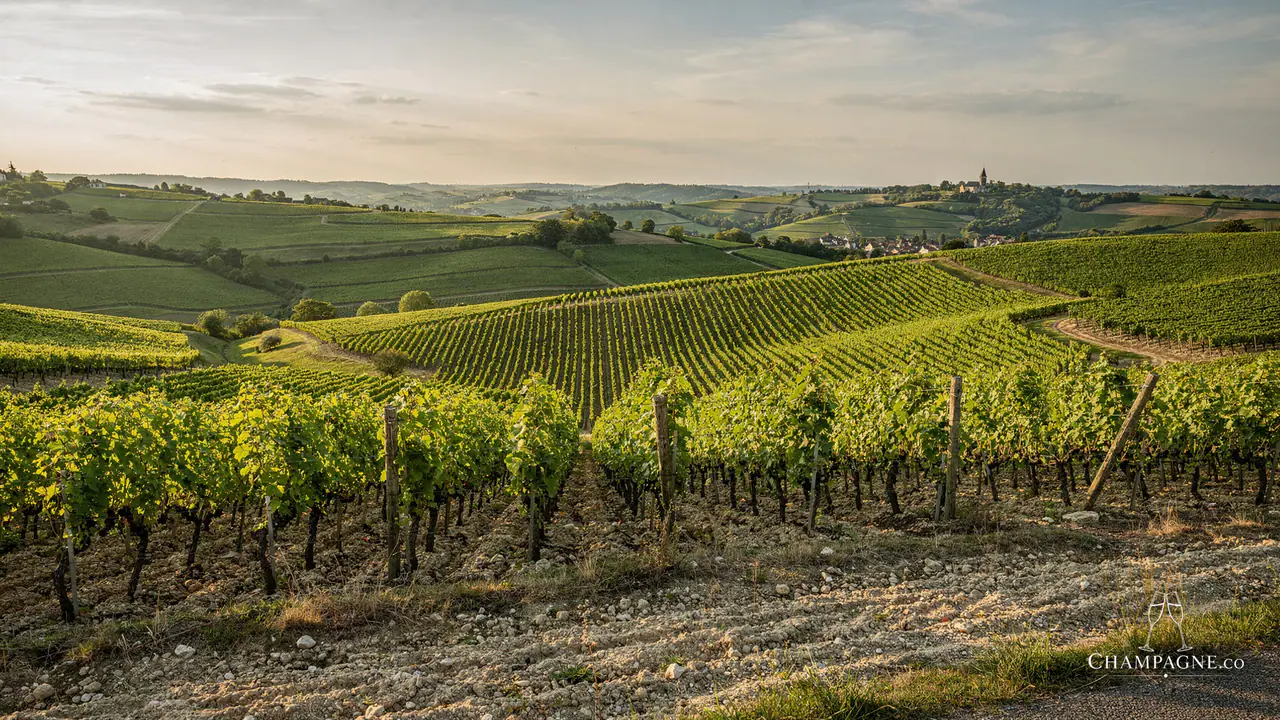
The production model is also geographically broad. The house operates pressing facilities in Tours-sur-Marne, Saudoy and Merrey-sur-Arce, allowing fruit from the Marne Valley, Sézannais and Aube to be pressed close to the vineyards before the must is brought to the winery.
That broad sourcing supports a classic blending-house approach. Chardonnay has a leading role in the house's stated style, while the current range moves from standard Brut and Rosé through Blanc de Blancs, Premier Cru, vintage and special cuvées.
Sourcing and production geography
Charles Lafitte describes pressing centres at Tours-sur-Marne, Saudoy and Merrey-sur-Arce. The house says grapes from the Aube, the Sézannais and the Marne Valley can therefore be pressed near the vineyard before the clarified must is transported onward for vinification.
This is a sourcing and production network rather than evidence of one large Charles Lafitte-owned estate. UMC lists a 280-hectare vineyard figure, but explicitly marks it as group-consolidated for Maison Pommery & Associés. It is not presented as 280 hectares belonging specifically to Charles Lafitte.
The current house description identifies Chardonnay as the dominant grape in the traditional blend, giving the brand a white-grape emphasis within its broader multi-region sourcing model.
Cellar and blending
After pressing and settling, Charles Lafitte describes alcoholic fermentation in tank before the cellar team begins the blending process. The current production page names Dominique Pichart and his team of oenologists as responsible for blending the Charles Lafitte cuvées.
The house combines wines from different crus, grape varieties and years for its non-vintage wines, using reserve wines to support continuity between releases. Vintage Champagne is treated separately because it is built around one harvest year.
The current production page states that Charles Lafitte Brut spends at least 24 months ageing in bottle before the later stages of riddling, disgorgement and dosage. Exact ageing, dosage and blend proportions for other cuvées are not assumed from that one house reference.
Champagne.co analysis
Charles Lafitte is best read as a broad-sourcing, Chardonnay-oriented blending house whose modern identity is much younger than its historic name. The distinction between the older Charles Lafitte & Cie activity and the Champagne brand created in 1983 prevents the house from being presented through an artificially continuous origin story.
The production geography reinforces the modern blending model. Pressing centres in the Marne, Sézannais and Aube allow the house to draw on several parts of Champagne, while reserve wines and multi-year blending create consistency across non-vintage releases.
The current range then provides several ways into that structure. The 1834 line carries the heritage name, Blanc de Blancs isolates the Chardonnay emphasis, Premier Cru introduces a classification-based distinction, and Millésime 2010 provides the single-harvest counterpoint to the house's non-vintage blending model.
Buying guidance
- Best introduction: Charles Lafitte 1834 Brut is the most direct entry into the modern house and its heritage-branded core range.
- For Chardonnay: Charles Lafitte 1834 Blanc de Blancs is the clearest expression of the grape the house identifies as central to its traditional style.
- For rosé: the house currently offers both Charles Lafitte 1834 Rosé and Grande Cuvée Brut Rosé, providing two distinct routes within the range.
- For Premier Cru: Premier Cru Brut is the relevant current classification-led bottling.
- For a vintage wine: Millésime 2010 is the current vintage reference on the producer site and should be understood specifically as the 2010 release.
- For a named special cuvée: Orgueil de France sits outside the core 1834 and Grande Cuvée lines.
Loading current Champagne range…
Spotted something wrong? Report a correction
Every report goes to a human review queue. Nothing on this page changes automatically.