Chartogne-Taillet
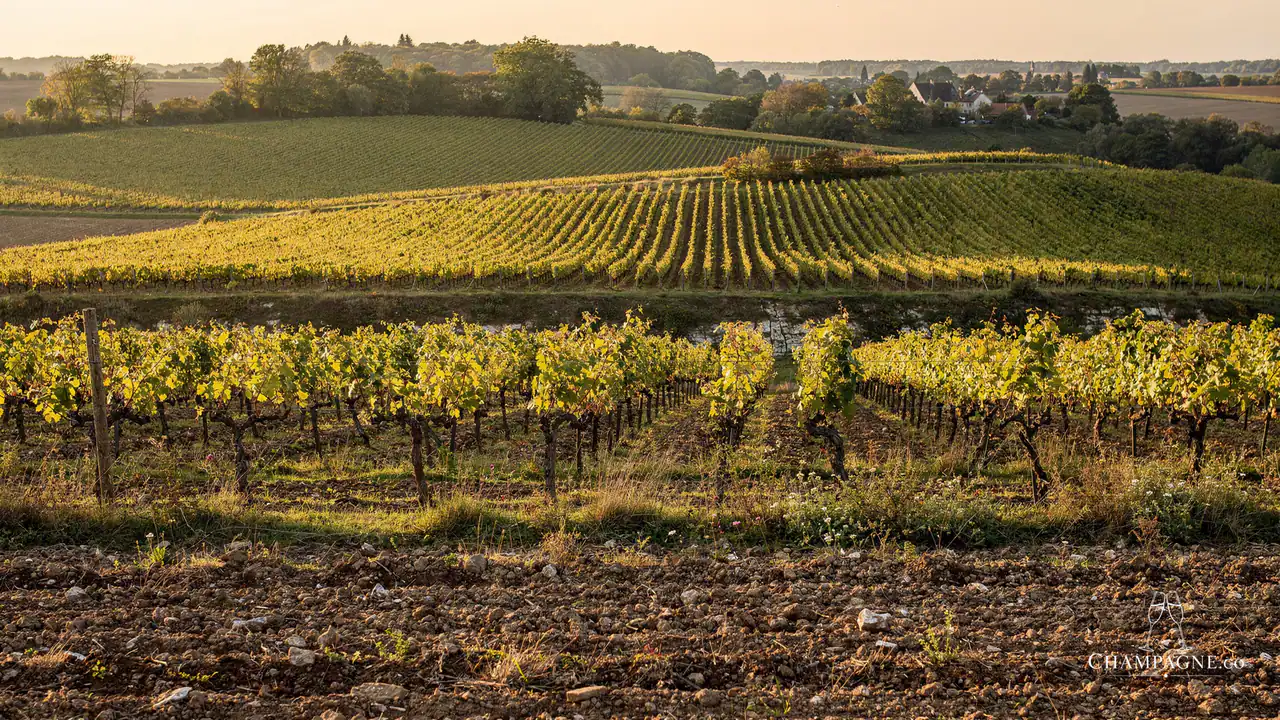
Chartogne-Taillet is a grower-producer based in Merfy, a village north-west of Reims whose vineyards sit on an unusual mix of sands, limestone, clay and chalk. Alexandre Chartogne is the current producer, working from 37–39 Grande Rue in Merfy.
Editorial profile
Chartogne-Taillet is a grower-producer based in Merfy, a village north-west of Reims whose vineyards sit on an unusual mix of sands, limestone, clay and chalk. Alexandre Chartogne is the current producer, working from 37–39 Grande Rue in Merfy.
The estate is best understood through its parcels rather than through a single fixed house recipe. Its current vineyard and wine maps separate sites such as Les Barres, Les Oriseaux, Chemin de Reims, Les Couarres and Les Heurtes Bises, while Sainte-Anne brings multiple Merfy parcels and harvest years together into the broadest expression of the village.
Why this producer matters
Chartogne-Taillet makes soil and parcel differences unusually visible. The current estate material gives not just grape varieties and exposures but individual worked surfaces, planting dates, soil horizons and different cellar choices for particular sites. The result is a range in which the distinction between wines is fundamentally geographical rather than a simple ascending prestige ladder.
Merfy’s sandy-limestone soils are especially important to that identity. At Les Barres, Thanetian limestone sands lie over Campanian chalk; Chemin de Reims combines iron-rich orange-red Thanetian sands with chalk; Les Oriseaux has deep Thanetian sands with limestone layers above Campanian chalk. The producer adjusts vineyard work and élevage to those differences rather than applying one uniform method everywhere.
Merfy vineyards and farming
Les Barres is one of the most precisely documented sites. The wider cadastral vineyard covers 4.7735 hectares, of which Chartogne-Taillet works 1.3760 hectares for the wine identified as 100% Meunier. The plot is south-west facing, highly draining and based on Thanetian limestone sands over Campanian chalk. Some vines in the sandy site have survived without grafted rootstocks, but that fact is not generalised to every vine or every bottle of Les Barres.
Les Oriseaux covers a larger cadastral site of 4.4612 hectares, with Chartogne-Taillet working 0.4917 hectares. The producer identifies this section as 100% Pinot Noir, planted in 1970, with both south- and north-facing exposure.
Les Couarres is a mixed Pinot Noir/Chardonnay site on a gentle south-facing slope. Chartogne-Taillet works 1.9415 hectares within the broader parcel, where different sections combine sands, clay and tuffeau.
Beyond Merfy, the producer also maps 0.7529 hectares of Chardonnay in Avize and Oger in the Côte des Blancs. Those vines span several positions on the slope and include plantings dating from the twentieth century, giving the estate a second chalk-driven Chardonnay reference outside its home village.
Cellar and winemaking
The cellar is parcel-led rather than recipe-led. Sainte-Anne is vinified and aged in a combination of 228-, 350- and 2,000-litre barrels, with a smaller tank component, while individual parcel wines can use different barrel sizes, oxygen exposure and topping-up regimes according to the site.
Sainte-Anne also shows the estate’s approach to reserve wines. It combines several harvest years, with older wines tempering younger components, and is bottled without filtration. The current dosage range is generally 4–7 g/L, using a liqueur based on the same wine as the cuvée being disgorged.
For Les Barres, 228-litre barrels and a period without topping-up are part of the current élevage. Orizeaux is aged in older Burgundy-origin oak casks. Chemin de Reims has been raised in 350- to 600-litre barrels since 2012, with regular topping-up after fermentation. These differences reinforce the idea that the vessel follows the parcel rather than defining a single house-wide oak style.
Champagne.co analysis
Chartogne-Taillet’s defining idea is not simply “single-vineyard Champagne”; it is site-specific decision-making. The same producer treats sandy Meunier at Les Barres differently from Pinot Noir at Orizeaux, mixed grapes at Les Couarres and Chardonnay-led Chemin de Reims. The cellar choices change with the physical character of each place.
Sainte-Anne is therefore important rather than merely introductory. It reverses the parcel logic by bringing different Merfy sites and several harvest years together, making it the estate’s broad village statement. The named-site wines then allow readers to pull that village identity apart and compare grape, soil, exposure and élevage more closely.
The Côte des Blancs holdings add another useful dimension. They show that Chartogne-Taillet’s detailed approach to soil is not confined to Merfy, while the estate’s strongest identity still remains rooted in the sandy and chalk-influenced sites around its home village.
Buying guidance
Sainte-Anne is the best first bottle because it gives the broadest view of Merfy and the estate’s multi-vintage blending approach. From there, Les Barres is the clearest route into Meunier and the sandy soils for which the producer is particularly well documented.
For Pinot Noir, Orizeaux offers the most direct single-variety comparison. Chemin de Reims is the relevant choice for a Chardonnay-dominant Merfy site, while Les Couarres is useful for understanding a mixed-grape parcel on contrasting soils. Readers interested in Chartogne-Taillet beyond Merfy should look for the Côtes des Blancs Chardonnay when available.
Loading current Champagne range…
Spotted something wrong? Report a correction
Every report goes to a human review queue. Nothing on this page changes automatically.