Chassenay d’Arce
Chassenay d’Arce is a cooperative Maison de Vignerons based in Ville-sur-Arce in the Côte des Bar. It was founded in 1956 by five growers and today brings together around 130 winegrowing families, preserving the cooperative model across several generations.
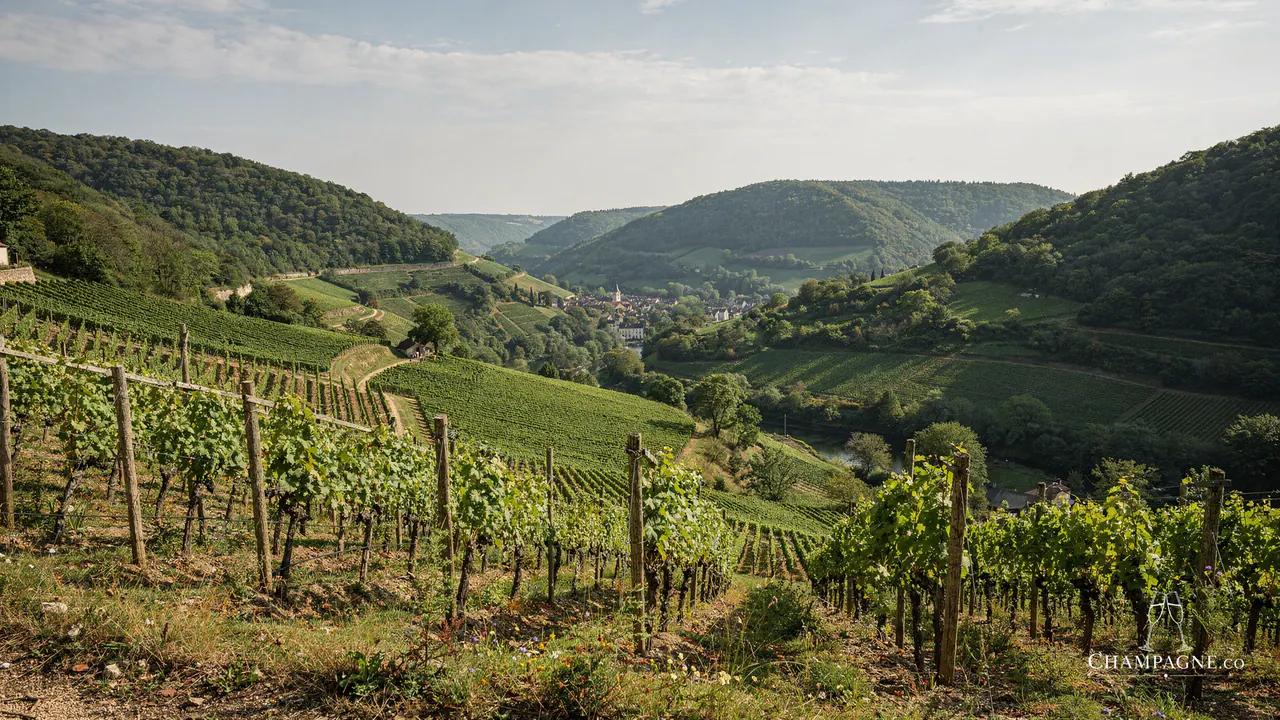
Editorial profile
Chassenay d’Arce is a cooperative Maison de Vignerons based in Ville-sur-Arce in the Côte des Bar. It was founded in 1956 by five growers and today brings together around 130 winegrowing families, preserving the cooperative model across several generations.
The cooperative currently works approximately 315 hectares across 14 villages, all within about 25 kilometres of the cellar. The plantings are strongly Côte des Bar in character: around 90% Pinot Noir, 7% Chardonnay, 2% Meunier and 1% Pinot Blanc. That final one per cent matters because Chassenay d’Arce continues to bottle Pinot Blanc as a distinct varietal Champagne rather than allowing the grape to disappear into anonymous blends.
Why this producer matters
Chassenay d’Arce shows what a large Côte des Bar grower collective can do when it treats diversity as more than raw material for one house blend. Its portfolio moves from accessible multi-harvest wines to varietal vintages, an organic Pinot Noir cuvée and older-vine prestige releases.
The cooperative scale is also important. The 315-hectare figure represents the combined Champagne vineyard network of its member growers, not a privately owned single estate. That broad base gives the house enough material to make Pinot Noir the centre of gravity while still isolating Chardonnay and the much rarer Pinot Blanc in dedicated wines.
Vineyard and cooperative identity
The current network comprises around 130 grower families farming approximately 315 hectares in 14 villages of the Côte des Bar. Pinot Noir dominates at about 90% of plantings, followed by Chardonnay, Meunier and a small but meaningful proportion of Pinot Blanc.
Chassenay d’Arce’s cooperative structure dates to five founding growers in 1956. Seventy years later, the house continues to present itself explicitly as a Maison de Vignerons: the vineyard resource belongs to a community of growers whose parcels feed both the core blends and the narrower varietal and vintage wines.
Environmental programme
Chassenay d’Arce obtained Vignerons Engagés certification in 2021 and reports that its environmental programme also works through the Viticulture Durable en Champagne (VDC) and Haute Valeur Environnementale (HVE) frameworks used by member growers.
Organic farming is represented most clearly in the current range by Cuvée Origine, made from organically farmed Pinot Noir parcels. That wine provides a precise organic claim without implying that the cooperative’s entire 315-hectare network is certified organic.
Champagne.co analysis
Chassenay d’Arce is most convincing when read as a Côte des Bar Pinot Noir house with a deliberately preserved streak of varietal diversity. The cooperative’s scale gives it the breadth to maintain consistent core wines, but the more interesting part of the range is how it separates grapes and farming choices rather than hiding everything inside a single assemblage.
Pinot Blanc is central to that story. At only around one per cent of the collective vineyard, it is numerically minor, yet it appears both as a standalone 2016 vintage wine and as part of Sélection Blanche and Confidences Rosé. That makes it a genuine part of the house identity rather than a historical footnote.
The organic Cuvée Origine adds another dimension. It demonstrates a specific environmental route within the cooperative without overstating the status of the whole vineyard network. Combined with the Vignerons Engagés programme, it gives Chassenay d’Arce a sustainability story that can be described precisely rather than through vague green claims.
Buying guidance
Cuvée Première is the clearest starting point for the house and its Pinot Noir-led Côte des Bar identity. Cuvée Expression is the parallel choice for rosé and also introduces Pinot Blanc into a broader blend.
For varietal comparison, the Chardonnay 2018, Pinot Noir 2018 and especially Pinot Blanc 2016 form the most useful trio. The Pinot Blanc is the distinctive choice for readers specifically interested in Champagne’s less common permitted varieties.
Cuvée Origine is the route into organically farmed Pinot Noir and a drier Extra-Brut profile. At the upper end of the range, Confidences 2014 and Confidences Rosé 2015 provide the current prestige-vintage references.
Loading current Champagne range…
Spotted something wrong? Report a correction
Every report goes to a human review queue. Nothing on this page changes automatically.