Chaudron
Champagne Chaudron is a family Champagne house rooted in Verzenay Grand Cru on the Montagne de Reims, with its current production cellar and visitor centre at Vaudemange. The family traces its winegrowing presence on the Montagne de Reims to the nineteenth…
Editorial profile
Champagne Chaudron is a family Champagne house rooted in Verzenay Grand Cru on the Montagne de Reims, with its current production cellar and visitor centre at Vaudemange. The family traces its winegrowing presence on the Montagne de Reims to the nineteenth century and records seven generations of involvement, with the house becoming independent in 1955.
Luc Chaudron is the current family manager, while Capucine represents the next generation. The modern production site at Vaudemange dates from 2008, separating the working cellar from the historic Verzenay base while keeping both places central to the house identity.
Why this producer matters
Chaudron’s range is built around a useful contrast between a traditional three-grape house core and more narrowly focused wines. The Grande Réserve combines Chardonnay, Pinot Noir and Meunier with a substantial reserve-wine component, while the Plaisirs and Grains families move toward single-variety, low-dosage and zero-dosage expressions.
The house also uses a solera system for reserve wines, refreshed with each new harvest, and vinifies in relatively small vessels to keep different origins separate before blending. That reserve architecture gives the broad house wines continuity, while the specialist cuvées deliberately narrow the frame.
Vineyard and sourcing identity
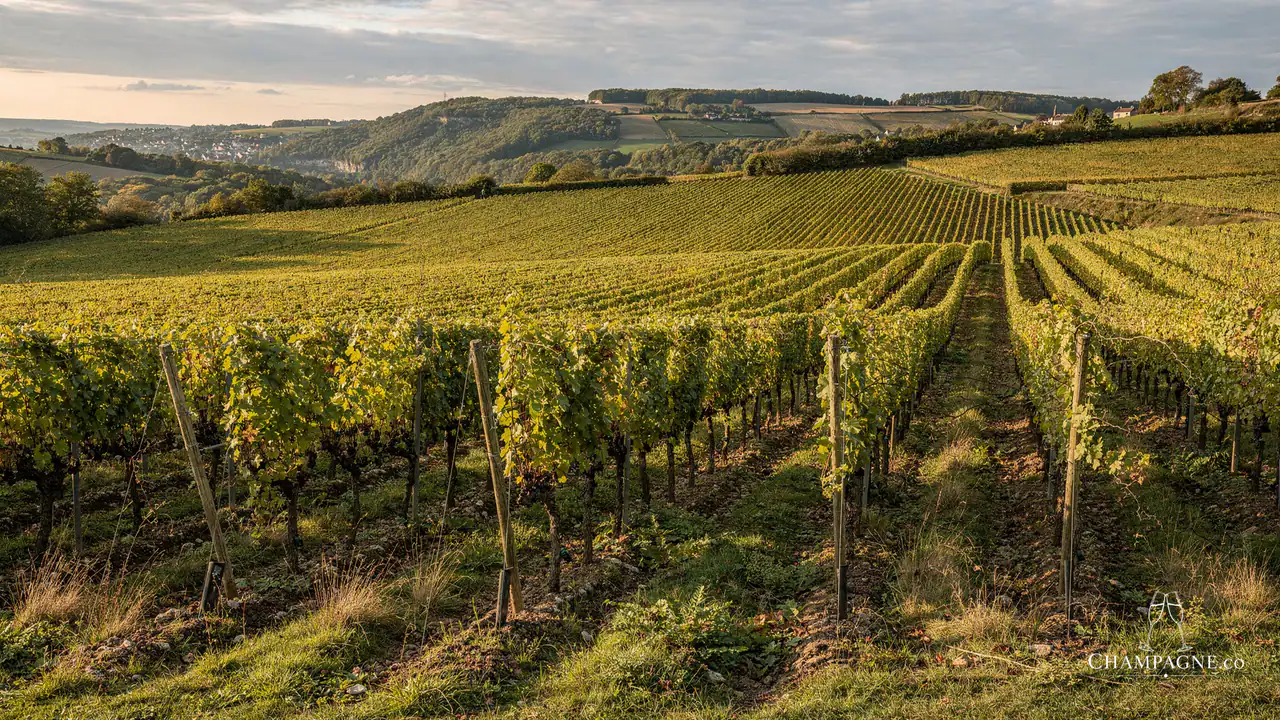
Verzenay anchors Chaudron in Pinot Noir-dominant Grand Cru Montagne de Reims territory. The family also works with Chardonnay from Vaudemange Premier Cru, where the present production facilities are located.
As a négociant-manipulant, Chaudron is not limited to family-owned parcels and may source beyond its own vineyard holdings. The producer identifies additional Champagne sourcing beyond Verzenay and Vaudemange, so individual cuvées are best understood by their stated grape and cru composition rather than by treating the house as a single-estate domaine.
The house describes many family vines as roughly 25–40 years old. No general organic or biodynamic certification is claimed for the estate in this profile.
Cellar and reserve-wine approach
Chaudron emphasises small-vessel vinification, allowing different vineyard components to remain separate before assemblage. Reserve wines are maintained through a solera system that receives wine from successive harvests.
The current Brut Grande Réserve includes 25–30% reserve wines from a solera about three years old. Its base wines spend approximately 10–12 months in oak before the secondary fermentation stage. The house also states that its Champagnes are generally given at least three years to develop, although exact maturation depends on the cuvée.
The Grains series pushes the cellar in a different direction, using single varieties or low-/zero-dosage presentations to make grape identity and dosage more explicit than in the classic blends.
Champagne.co analysis
Chaudron is most coherent when read as a house moving in two directions at once. Grande Réserve and Brut Rosé preserve the classic multi-grape, reserve-wine model; the Grains wines do the opposite, stripping the blend back to individual grapes or zero dosage so that one variable becomes easier to examine.
That contrast gives the range more structure than a simple hierarchy from basic to prestige. Hélène and Capucine carry family-generation significance, while Grains de Blancs, Grains de Noirs, B73 and the newer Pinot Blanc bottling are more exploratory. The common thread is a cellar built around separation before blending: small vessels, reserve wine kept through solera, and enough flexibility to make both broad assemblages and narrowly defined wines.
Verzenay and Vaudemange provide the geographical anchors. Pinot Noir from the Montagne de Reims and Chardonnay from Premier/Grand Cru sources recur throughout the range, but the négociant-manipulant structure means the producer is better described through individual cuvée sourcing than as one closed vineyard estate.
Buying guidance
Brut Grande Réserve is the best first bottle because it shows the full three-grape blend and reserve-wine architecture. Brut Rosé is the parallel core rosé.
For varietal exploration, Grains de Blancs gives the Chardonnay route and Grains de Noirs the Meunier route. Blanc de Noirs Zéro Dosage is the more direct Pinot Noir comparison, while B73 is the choice for readers specifically interested in the house’s zero-dosage work.
At prestige level, Cuvée Hélène is the more traditional vintage family reference, while Cuvée Capucine represents the newer generation and a Chardonnay-majority Premier Cru blend. The limited Grains de Pinot Blanc is the specialist choice for readers interested in one of Champagne’s less common authorised varieties.
Loading current Champagne range…
Spotted something wrong? Report a correction
Every report goes to a human review queue. Nothing on this page changes automatically.