Chavost
Champagne Chavost is a cooperative producer in Chavot-Courcourt, on the Coteaux Sud d’Épernay. The cooperative was founded in 1946 by village winegrowers, taking its name from an older form of the village name.
Editorial profile
Champagne Chavost is a cooperative producer in Chavot-Courcourt, on the Coteaux Sud d’Épernay. The cooperative was founded in 1946 by village winegrowers, taking its name from an older form of the village name.
The modern Chavost programme has been shaped by Fabian Daviaux, who returned to the village after working internationally and took charge of the new winemaking direction at the end of 2019. The change was substantial: Chavost moved toward spontaneous fermentations, Brut Nature wines and vinification without added sulphites, while also developing certified-organic vineyard activity.
Why this producer matters
Chavost is unusual because a cooperative structure has become the platform for a distinctly low-intervention range rather than simply a source of volume. The modern wines focus on grape variety, individual harvests and a deliberately restrained cellar approach, with no added sulphites and no dosage in the principal Brut Nature Champagnes.
The wording matters. “No added sulphites” does not mean analytically sulphite-free: fermentation can create naturally occurring sulphur compounds. Likewise, Chavost’s current Ecocert certification establishes organic farming and processing activity but does not justify describing every hectare or every grape entering the wider cooperative as organic.
Vineyard and organic programme
Chavost is based at 16 rue d’Ilbesheim, 51530 Chavot-Courcourt and holds European organic-agriculture certification for farming and processing activities.
The producer’s present vineyard operation combines certified-organic and conventional land rather than one undifferentiated status. In 2026 it described 5 hectares certified organic since the 2023 harvest and 2 hectares farmed conventionally, principally around Chavot-Courcourt. Organic status therefore belongs to the relevant vineyard activity or bottle rather than functioning as a blanket claim about every possible cooperative source.
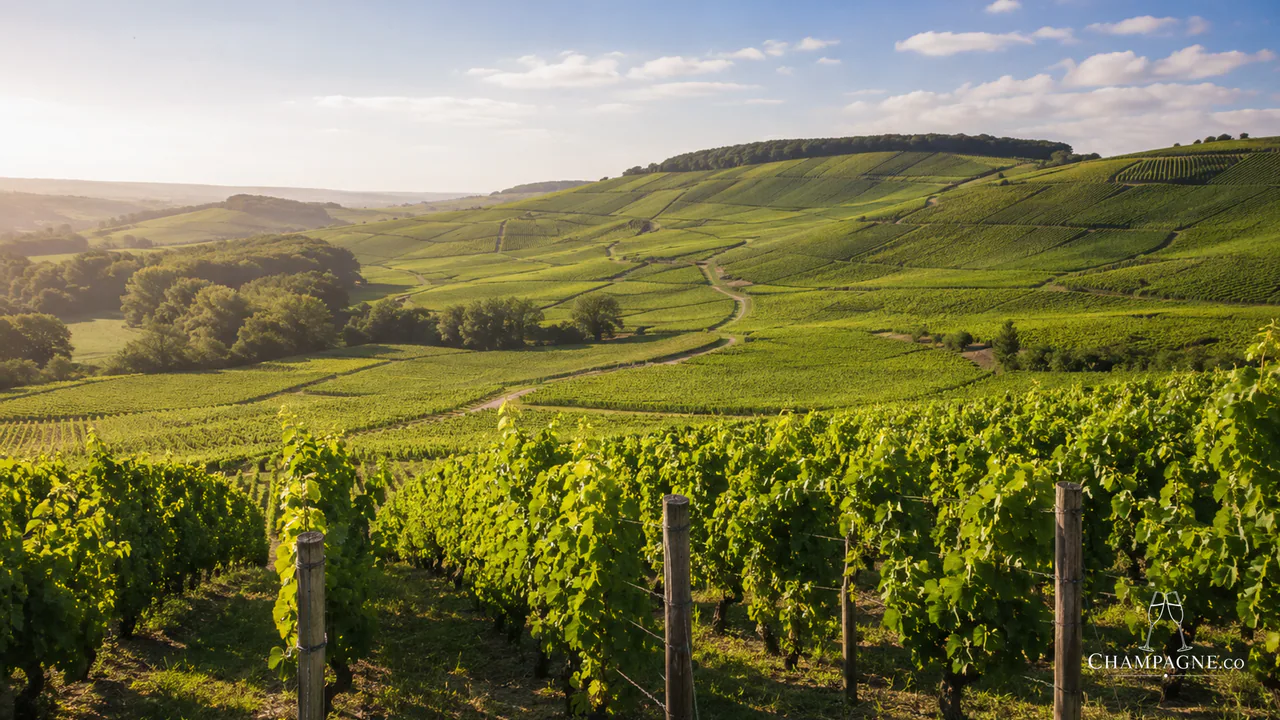
The local vineyard context is clay-limestone, with Chavot-Courcourt lying south of Épernay. The village remains the principal geographical anchor for the modern range.
Cellar and winemaking
The modern programme is built around reduction of cellar additions. The principal wines use spontaneous alcoholic fermentation with indigenous yeasts, spontaneous malolactic fermentation, no added sulphites, no chaptalisation, no acidification or deacidification, and no fining before bottling.
The core varietal Champagnes are Brut Nature, meaning no sugar is added at disgorgement. Stainless steel is central to wines such as Blanc de Chardonnay, while barrels and foudres are also used for reserve material and particular cuvées.
This approach should not be confused with a claim that nothing exists in the wine beyond grape-derived compounds. The defensible distinction is that Chavost deliberately avoids a series of common additions and interventions, with “no added sulphites” and zero dosage describing process choices rather than laboratory absolutes.
Champagne.co analysis
Chavost’s significance lies less in one vineyard parcel than in the reorientation of a cooperative cellar. The 1946 structure remains collective, but since 2019 the winemaking identity has become much more specific: individual grapes, low-input fermentations, no added sulphites and zero dosage are used to make the differences between wines easier to see.
The range is also more coherent than the “natural Champagne” shorthand suggests. Blanc de Chardonnay and Blanc de Meunier create a direct varietal comparison; Blanc d’Assemblage puts those grapes back together; Rosé de Saignée changes the extraction method; and Paradoxe deliberately breaks the single-harvest pattern by using several years of reserve wine.
That makes Paradoxe particularly useful for understanding the producer. It shows that the modern Chavost idea is not simply about removing inputs. Reserve blending and wood are still available when they serve the intended wine, so the underlying philosophy is better described as selective intervention than as a rigid recipe.
Buying guidance
Blanc de Chardonnay is the cleanest first bottle for understanding the current Chavost method in a single grape. Blanc de Meunier is the natural comparison if the goal is to see how the same low-intervention framework works with a different variety.
Blanc d’Assemblage is the next step for readers interested in the interaction of Chardonnay and Meunier, while Rosé de Saignée provides the stylistic contrast of skin contact and Pinot Noir. Paradoxe is the most useful bottle for exploring the producer’s reserve-wine side and the deliberate departure from a single-harvest model.
Coteaux Champenois and Ratafia should be approached as separate regional wine categories rather than as extensions of the Brut Nature Champagne ladder.
Loading current Champagne range…
Spotted something wrong? Report a correction
Every report goes to a human review queue. Nothing on this page changes automatically.