Christian Etienne
Champagne Christian Etienne is the wine label of the family Domaine de l’Espérance at Meurville in the Côte des Bar. Christian and Anne Etienne founded the domaine in 1978, building a récoltant-manipulant estate that today works roughly ten hectares and…
Editorial profile
Champagne Christian Etienne is the wine label of the family Domaine de l’Espérance at Meurville in the Côte des Bar. Christian and Anne Etienne founded the domaine in 1978, building a récoltant-manipulant estate that today works roughly ten hectares and belongs to Vignerons Indépendants.
Christian trained in Beaune, and oak has become one of the clearest threads through the cellar. It is not used identically for every wine: some cuvées receive a partial barrel component, while Louange is raised entirely in oak. The result is a range that stays rooted in Pinot Noir and Chardonnay while varying how strongly élevage shapes each bottling.
Why this producer matters
Christian Etienne is a useful Côte des Bar example of a family domaine where the cellar method can be followed across a compact range. The estate does not rely on one prestige cuvée to carry the oak story; barrel ageing appears at several levels, from part of the Tradition blend through the Blanc de Blancs to the fully barrel-raised Louange.
The current portfolio is also unusually stable and easy to read. Seven Champagne cuvées cover the core Brut, a more oak-shaped Prestige, rosé, Blanc de Blancs, Louange and two library vintages, while the domaine also makes Ratafia Champenois and a still Chardonnay Coteaux Champenois.
Vineyard and estate identity
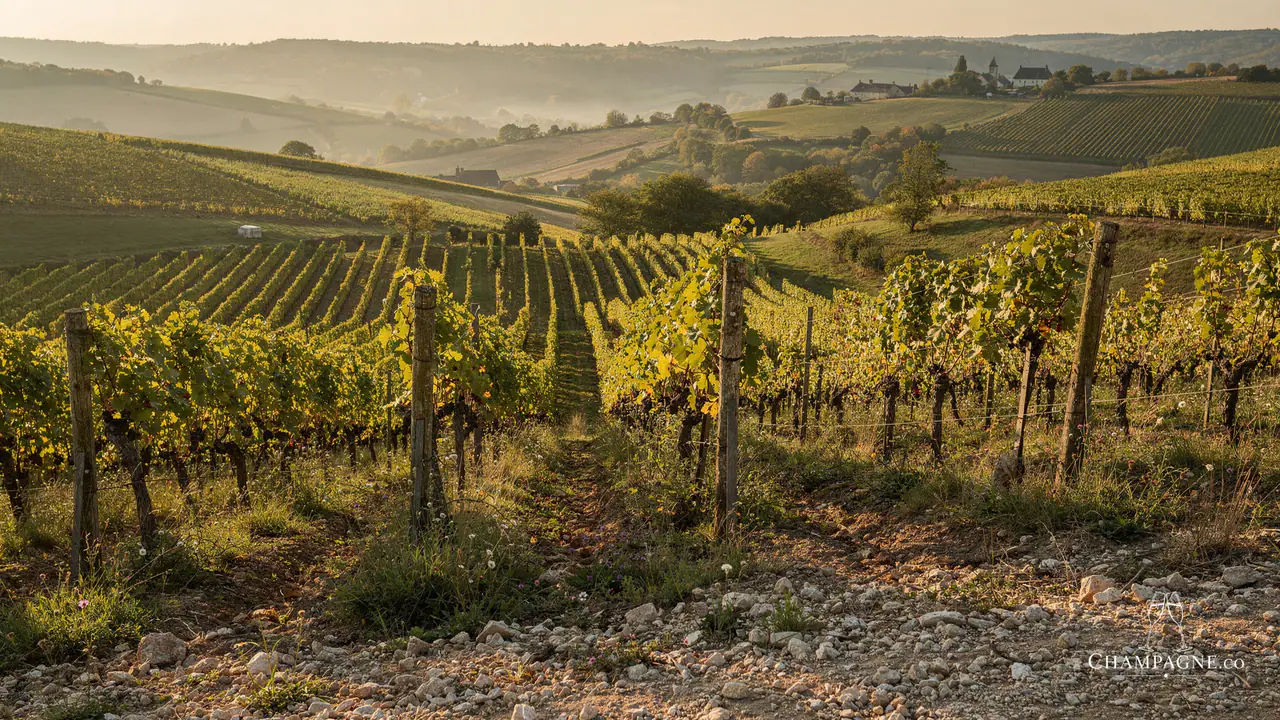
Domaine de l’Espérance is based at 12 rue de la Fontaine, 10200 Meurville and works approximately ten hectares in the Aube. The producer identifies itself as a récoltant-manipulant, meaning the wines are made from grapes grown by the estate rather than being presented as a broad négociant sourcing programme.
Pinot Noir is important to the house identity, but Chardonnay is equally visible across the range. The Blanc de Blancs is pure Chardonnay, while the 2012 vintage combines Pinot Noir and Chardonnay from the named La Côte Mare site.
Cellar and oak programme
Oak is a recurring but graduated part of the winemaking. Tradition Brut is Pinot Noir-led with Chardonnay and includes a component aged for one year in oak. Blanc de Blancs uses a smaller barrel proportion, with one quarter of the current blend aged in oak for a year. Louange takes the idea furthest, with the entire wine raised in barrel.
That progression makes it possible to compare the domaine’s wines by élevage as well as grape.
Champagne.co analysis
Christian Etienne’s range is best understood through controlled changes in oak exposure. Tradition gives the broadest house view with only part of the wine raised in barrel. Blanc de Blancs makes the grape more specific while keeping oak to one quarter of the blend. Louange then turns barrel ageing into the central production choice.
That structure is valuable because the domaine is small enough for the differences to remain legible. Pinot Noir provides the Côte des Bar foundation, Chardonnay supplies both a pure varietal Champagne and the still Cana bottling, and the two vintages give a time dimension without forcing old release data onto current wines.
The domaine therefore has a clearer editorial identity than its modest scale might suggest: a Meurville family grower, Pinot Noir/Chardonnay based, with oak used deliberately at several intensities rather than as a universal recipe.
Buying guidance
Tradition Brut is the best first bottle because it shows the house’s Pinot Noir-led core with a measured oak component. Prestige is the natural next step for readers wanting more emphasis on barrel élevage without moving to a single-variety wine.
For Chardonnay, Blanc de Blancs is the direct sparkling reference; Cana 2019 provides a useful still-wine comparison but belongs to the separate Coteaux Champenois appellation. Louange is the most relevant bottle for exploring the domaine’s fully barrel-raised Champagne style.
For mature wines, the 2015 and 2012 vintages offer the clearest route into the library side of the range, with the 2012 particularly useful because its Pinot Noir/Chardonnay sourcing from La Côte Mare is explicitly identified.
Loading current Champagne range…
Spotted something wrong? Report a correction
Every report goes to a human review queue. Nothing on this page changes automatically.