Claude Cazals
Champagne Claude Cazals is a family grower based in Le Mesnil-sur-Oger in the Côte des Blancs. The house dates its origin to 1897, when Ernest Cazals, a cooper from the Hérault, settled in the village. The business has remained in the family through…
Editorial profile
Champagne Claude Cazals is a family grower based in Le Mesnil-sur-Oger in the Côte des Blancs. The house dates its origin to 1897, when Ernest Cazals, a cooper from the Hérault, settled in the village. The business has remained in the family through successive generations and has been directed by Delphine Cazals since the death of her father Claude in 1996.
Chardonnay is the defining grape. The estate’s range is built around the Grand Cru villages of Le Mesnil-sur-Oger and Oger, with the enclosed Clos Cazals at Oger providing the most distinctive single-site expression.
Why this producer matters
Claude Cazals combines two different strands of Champagne history. One is the classic Côte des Blancs story of Chardonnay, chalk and Grand Cru villages. The other is technological: Claude Cazals was one of the patent-holders involved in developing the Gyropalette, the automated riddling system that transformed an important stage of Champagne production.
Today the more useful way to understand the wines is through the progression from broader Blanc de Blancs blends to vintage, parcel and clos bottlings. The range becomes more site-specific as it moves toward Les Boulangères, La Chapelle du Clos and Clos Cazals Vieille Vigne.
Vineyards and farming
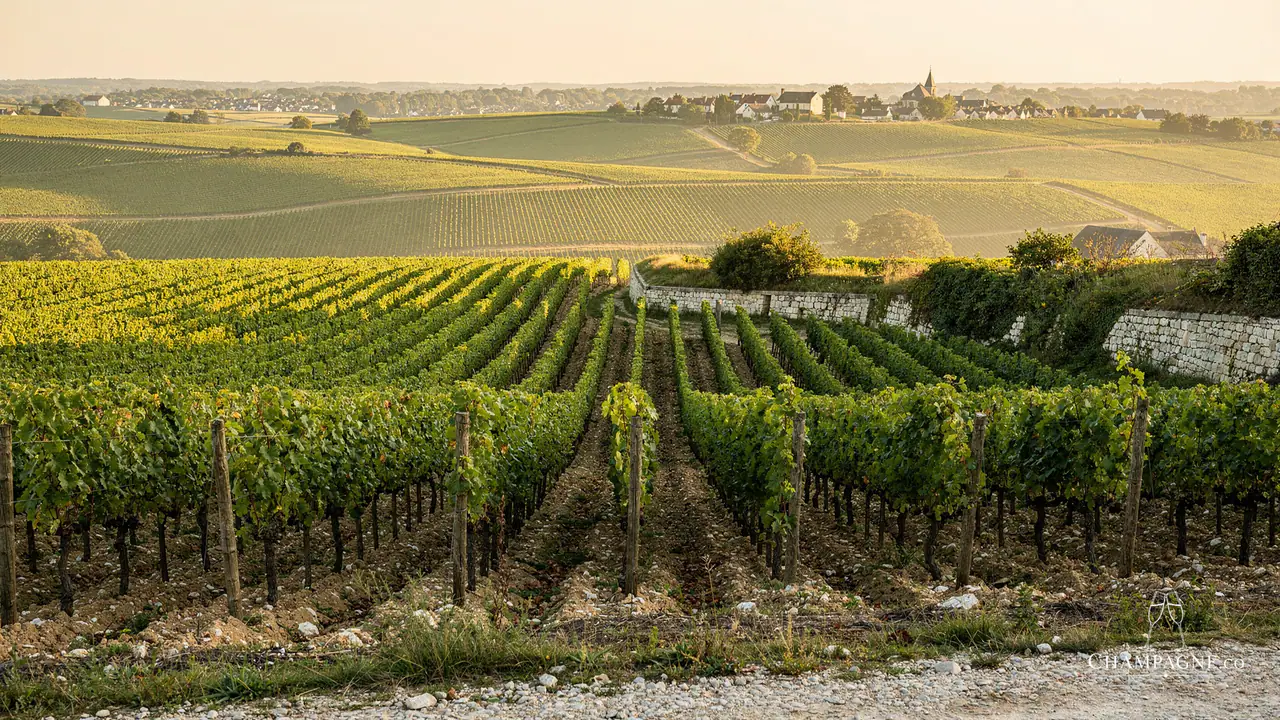
The domaine works Chardonnay-focused vineyards in the Côte des Blancs and describes its current viticulture as culture raisonnée.
The environmental programme includes reduced vineyard inputs, soil work and biodiversity measures such as planting hedges around vineyard parcels. These certifications are kept distinct from organic certification; the estate does not need to be labelled organic to explain its current farming approach.
The most recognisable site is Clos Cazals at Oger, acquired by Delphine Cazals’ grandfather Olivier in the 1950s. Olivier and Claude planted vines there, and the oldest Chardonnay used for the Vieille Vigne bottling dates from 1957.
Cellar and winemaking
The cellar combines temperature-controlled tanks with oak. Malolactic fermentation is used on wines such as Carte Or, while selected vintage and parcel wines receive a proportion of oak ageing.
Long bottle maturation is particularly important at the top of the range. Clos Cazals Vieille Vigne is held for many years on lees before release, while parcel wines such as Les Boulangères also receive extended cellar ageing.
The estate’s link to mechanised riddling is historically significant. Claude Cazals and Jacques Ducoin held the patent associated with the future Gyropalette and worked with the Station Oenotechnique de Champagne on development of the automated system in the early 1970s.
Champagne.co analysis
Claude Cazals is best read as a Côte des Blancs grower whose range becomes progressively more site-specific. Carte Or establishes the house in broad Grand Cru Chardonnay terms; the parcel wines then narrow the focus until Clos Cazals becomes the defining vineyard identity.
The clos matters because it gives the estate a physical and historical centre beyond the family name. Its old Chardonnay vines, enclosed setting and long-aged vintage bottlings provide a direct link between the Cazals family history and the most ambitious wines in the range.
The Gyropalette connection adds a separate historical dimension, but it should not overshadow the modern wines. For today’s reader, the strongest editorial story is the relationship between Le Mesnil-sur-Oger, Oger and increasingly precise Chardonnay parcels.
Buying guidance
Carte Or Grand Cru is the clearest starting point for the house because it introduces the core Chardonnay identity across Le Mesnil-sur-Oger and Oger.
For a more site-specific step, move to Les Boulangères or La Chapelle du Clos. They show how the range changes when the focus narrows from village blends to individual parcels.
Clos Cazals Vieille Vigne is the natural destination for readers who want the estate’s most explicit combination of old vines, enclosed vineyard and long cellar ageing. Its exact vintage and technical profile changes with the harvest.
The Coteaux Champenois Blanc is useful for readers interested in seeing the same Chardonnay site expressed without secondary fermentation or effervescence.
Loading current Champagne range…
Spotted something wrong? Report a correction
Every report goes to a human review queue. Nothing on this page changes automatically.