Claude Corbon
Champagne Claude Corbon is a family grower based in Avize on the Côte des Blancs. The Corbon family's documented Champagne history begins after the First World War, when Charles Corbon settled in Avize and acquired his first vines during the 1920s. The…
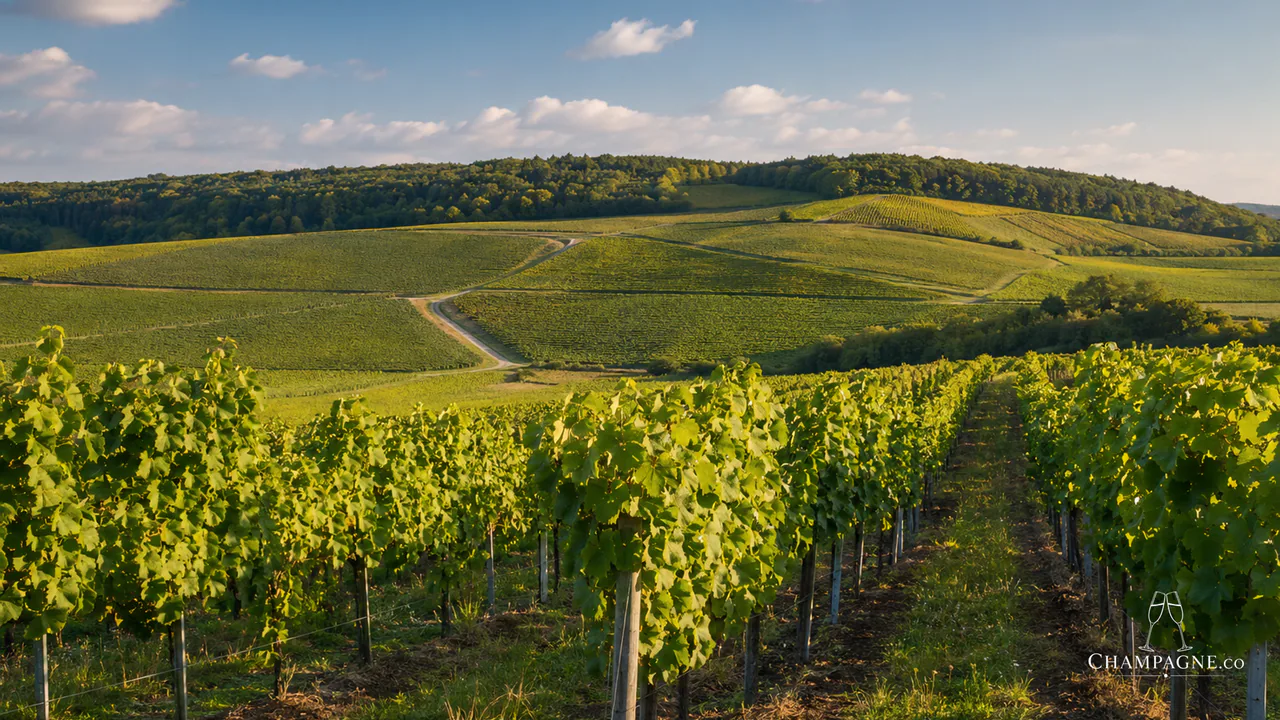
Editorial profile
Champagne Claude Corbon is a family grower based in Avize on the Côte des Blancs. The Corbon family's documented Champagne history begins after the First World War, when Charles Corbon settled in Avize and acquired his first vines during the 1920s. The family initially sold grapes rather than making Champagne under its own name.
That changed in 1970, when a collapse in grape prices led Claude Corbon to become a récoltant-manipulant and produce estate Champagne. In 1981 he began building a collection of vintage Avize Blanc de Blancs, establishing long-aged Chardonnay as a central part of the family's identity. His daughter Agnès Corbon joined the domaine in 2006 after an earlier career in the food industry and now represents the next generation of the family business.
The producer remains rooted at 541 avenue Jean Jaurès, Avize.
Why this producer matters
Claude Corbon is distinctive because the estate links two different parts of Champagne rather than presenting itself as an Avize-only Chardonnay specialist. Avize supplies the deep chalk and Chardonnay identity of the Côte des Blancs, while additional vineyards in Vandières, Verneuil and Vincelles on the right bank of the Vallée de la Marne bring clay-limestone marl soils and all three principal Champagne grapes into the picture.
The family also has a long documented preference for restrained cellar intervention. Claude moved away from filtration and fining early in his career, and the producer's history of extended ageing — including the vintage Blanc de Blancs collection begun in 1981 — gives maturity and reserve-wine development an unusually important role in the house story.
Vineyards and terroir
In Avize, the estate works with Chardonnay on the Côte des Blancs' deep chalk. That chalk-rich setting is the historic core of the producer and the basis of its Blanc de Blancs identity.
The Marne holdings broaden the picture. The estate works Vandières, Verneuil and Vincelles on clay-limestone marl soils, with Pinot Noir in Vandières, Chardonnay in Verneuil, and Meunier in Vincelles and Verneuil.
This two-region structure matters more than a single headline hectare figure. It allows Corbon to work both with pure Avize Chardonnay and with wines that draw on the broader grape and soil mix of the Vallée de la Marne.
Cellar and winemaking
Claude Corbon moved away from routine filtration and fining early in the estate’s development. The family has also maintained unusually long ageing cycles for selected wines, most visibly through its cellar of Avize Blanc de Blancs vintages accumulated since 1981.
Blend, dosage, disgorgement and time on lees vary by cuvée and release rather than defining one fixed house recipe.
One documented example is Brut d'Autrefois: the release placed on sale in 2016 was 85% Chardonnay and 15% Pinot Noir, used a perpetual-reserve approach and was dosed at 6.5 g/L. Those figures describe that release only.
Champagne.co analysis
Claude Corbon is best understood as a grower whose identity comes from contrast and continuity. The continuity is Avize: Chardonnay, chalk and a family history that moved from grape growing into estate bottling in 1970. The contrast comes from the Marne vineyards, where Pinot Noir and Meunier join Chardonnay on marl-rich soils.
That combination gives the producer more range than the label “Avize grower” might suggest. The Blanc de Blancs wines express the historic centre of gravity, while the Marne parcels make reserve blends and multi-variety wines a genuine part of the estate rather than an exception to it.
The cellar philosophy reinforces this identity. Long ageing and limited intervention are not quality claims in themselves; they matter because they explain why mature reserve material and older vintages occupy such an important place in Corbon's range.
Buying guidance
For the clearest introduction to Claude Corbon, start with an Avize Blanc de Blancs when available. It is the most direct route into the estate's historic Chardonnay-and-chalk identity.
Choose Brut d'Autrefois if you want to see how Corbon broadens beyond pure Avize Chardonnay through reserve blending and Pinot Noir from the Marne side of the estate. Because the cuvée evolves across releases, its exact blend, dosage and disgorgement depend on the bottle.
Older vintage Blanc de Blancs and mature millésime releases are best treated as limited cellar wines rather than permanent catalogue staples. Availability can vary significantly by market and release.
Loading current Champagne range…
Spotted something wrong? Report a correction
Every report goes to a human review queue. Nothing on this page changes automatically.