Coessens
Champagne Coessens is a family producer based in Ville-sur-Arce in the Côte des Bar. Jérôme Coessens says his family has owned vines around the village for five generations. After seven years working as a vineyard manager for a large Champagne group, he…
Editorial profile
Champagne Coessens is a family producer based in Ville-sur-Arce in the Côte des Bar. Jérôme Coessens says his family has owned vines around the village for five generations. After seven years working as a vineyard manager for a large Champagne group, he founded his own house in 2006. His wife Valérie joined the estate in 2008.
The historic heart of the producer is Largillier, a family-owned monopole at Ville-sur-Arce planted to Pinot Noir.
The estate entered a new phase in 2021 with the acquisition of a vineyard in Les Riceys. The first vinification from that site took place in 2022 and led to the first release of Pinotmaniac in 2025. That same year, Jérôme and Valérie's son Grégoire joined the family project.
Why this producer matters
Coessens offers an unusually focused way to understand the Côte des Bar. For most of its history the house has worked around one village, one principal climat and one principal grape: Ville-sur-Arce, Largillier and Pinot Noir.
That concentration is important because the range is built from variation within Largillier. Different sub-parcels, different soil balances and different winemaking choices produce distinct wines without requiring a broad multi-village estate. The newer Les Riceys chapter adds another Pinot Noir terroir, but it does not replace the original Largillier identity.
The result is a producer whose story is less about a large portfolio of unrelated cuvées and more about repeated interpretations of a tightly defined place.
Vineyards and terroir
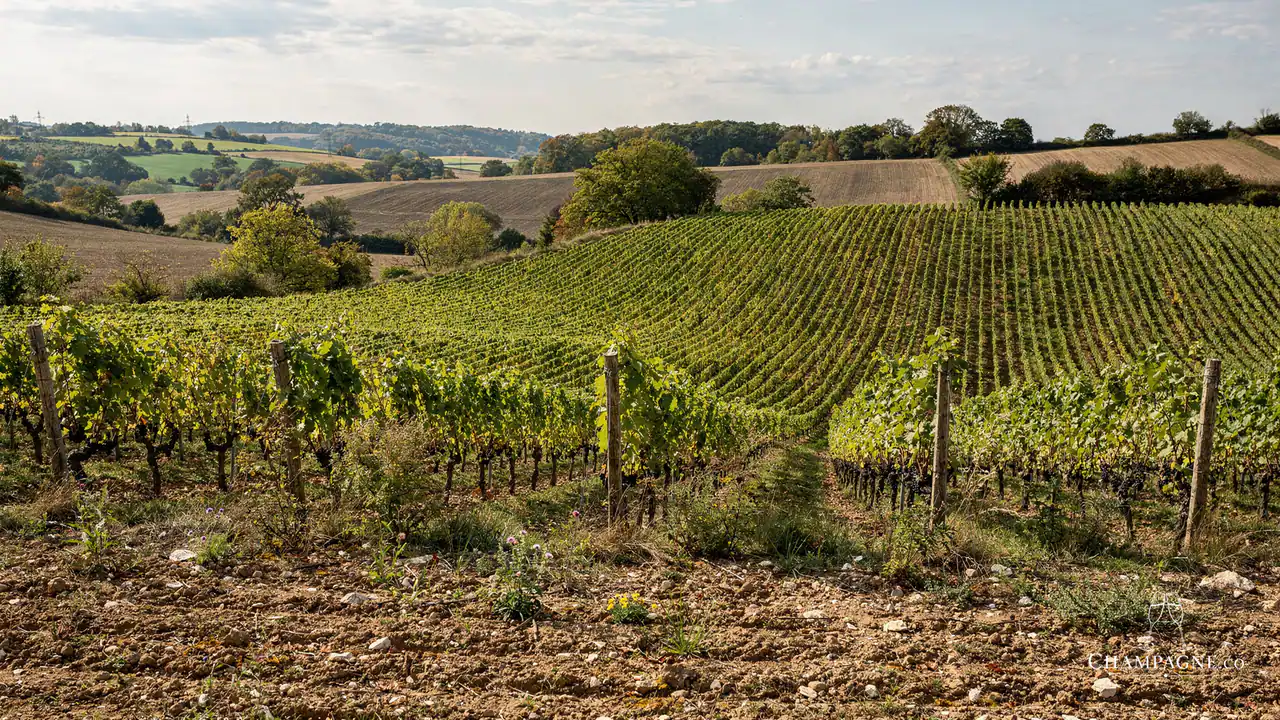
Largillier is a monopole belonging to the Coessens family at Ville-sur-Arce. The producer describes it as predominantly clay-limestone, with alternating clay and limestone layers and a geological profile identified through soil pits as Kimmeridgian marl.
Pinot Noir is the defining grape. The estate's own material presents Largillier as a collection of distinguishable sub-parcels rather than a single homogeneous block. That allows wines to be drawn from combinations such as Fruit and Fleur, or from a more specific sub-parcel such as Minérale or Matière.
The Les Riceys vineyard, added in 2021, expands the estate's geography farther south within the Côte des Bar. Coessens continues to frame that new chapter through Pinot Noir, preserving continuity with the house's established variety-led identity.
Cellar and winemaking
Coessens generally vinifies parcels separately before deciding how they should appear in the final range. On the current Blanc de Noirs page, the Fruit and Fleur sub-parcels are vinified separately and then blended in spring. The same page records completed malolactic fermentation and lees ageing for the current wine.
The current Brut Nature is more narrowly defined: it comes from the Minérale sub-parcel of Largillier, uses Pinot Noir from a single year and is bottled without dosage. The producer states that this cuvée is only made in years suited to the style, so its existence should not be treated as an automatic annual fixture.
The current Rosé de Saignée is also from Largillier Pinot Noir and is tied to the Matière sub-parcel. The producer describes it as a maceration rosé made only in years when grape maturity and condition are suitable. These details are specific to the current producer descriptions and should remain attached to the individual wines rather than generalized into universal cellar rules.
Champagne.co analysis
The most useful way to understand Coessens is to think of Largillier as the organising system of the estate, not simply as a vineyard name printed on a label. The house uses different parts of that single climat to create different expressions of Pinot Noir, so the distinctions between Fruit, Fleur, Minérale and Matière are central to the range.
This creates a focused comparison for readers. Blanc de Noirs shows the estate's blended interpretation of Largillier; Brut Nature narrows the source to Minérale and removes dosage; Rosé de Saignée isolates Matière and changes the method as well as the wine colour. The newer Les Riceys project then adds a second terroir without abandoning the producer's Pinot Noir centre of gravity.
Coessens therefore sits at the intersection of two ideas: very tight site focus and a willingness to show how different parcels or methods can change the expression of the same grape.
Buying guidance
Start with Blanc de Noirs for the clearest overview of the traditional Coessens identity. It combines two Largillier sub-parcels and provides the broadest introduction to the estate's Pinot Noir-led approach.
Choose Brut Nature if you want a more narrowly defined Largillier expression from the Minérale sub-parcel and a zero-dosage style. Because the producer only makes it in suitable years, release availability may vary.
Choose Rosé de Saignée to see how Coessens interprets Largillier through a different sub-parcel and maceration method. For readers interested in the estate's newest direction, Pinotmaniac is the key wine to follow because it marks the expansion from Ville-sur-Arce into Les Riceys.
Loading current Champagne range…
Spotted something wrong? Report a correction
Every report goes to a human review queue. Nothing on this page changes automatically.