Collard-Picard
Champagne Collard-Picard is a family grower-producer created in 1996 by Olivier Collard and Caroline Picard. The estate began at Villers-sous-Châtillon with 2.5 hectares and has grown to 16 hectares across 52 parcels, linking the right bank of the Vallée…
Editorial profile
Champagne Collard-Picard is a family grower-producer created in 1996 by Olivier Collard and Caroline Picard. The estate began at Villers-sous-Châtillon with 2.5 hectares and has grown to 16 hectares across 52 parcels, linking the right bank of the Vallée de la Marne with the Côte des Blancs.
The two family backgrounds remain central to the domaine. The Collard side is rooted in the Marne Valley and has a long association with Meunier; the Picard side comes from Le Mesnil-sur-Oger and a Chardonnay-growing tradition. Current vineyard holdings reflect that dual identity, with Chardonnay in Le Mesnil-sur-Oger, Oger and Vertus and Pinot Noir and Meunier around Villers-sous-Châtillon, Reuil and Binson-et-Orquigny.
Since the 2024 harvest, Olivier and Caroline's son Alexandre Collard has joined the estate. The family cellar at Villers-sous-Châtillon, built in 2006, remains the centre of production, while the domaine also operates a boutique on Avenue de Champagne in Épernay.
Why this producer matters
Collard-Picard is built around a genuine two-region structure rather than a single dominant village. Its range can move from Meunier- and Pinot Noir-led Marne wines to Grand Cru Chardonnay from the Côte des Blancs without leaving the family's own vineyard base.
The cellar programme is equally distinctive. The estate uses gravity handling from the press, indigenous yeasts for selected juices, deliberately avoids malolactic fermentation and relies heavily on large oak foudres. Since the 2024 harvest, selected lots have also been vinified or matured in clay and sandstone amphorae.
That combination of broad vineyard geography and long maturation gives the producer room to make both perpetual-reserve wines and extended-age vintage releases, while still offering parcel-specific and still-wine expressions.
Vineyards and terroir
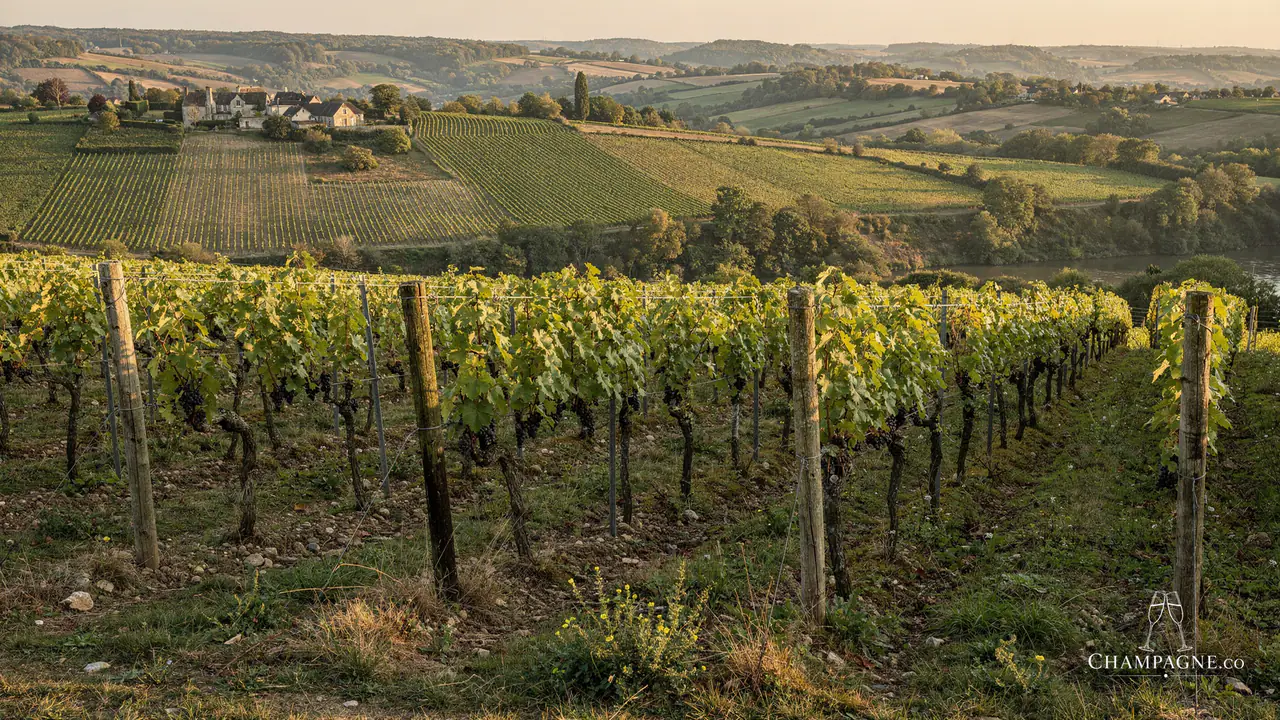
The current estate comprises 16 hectares in 52 parcels. On the Côte des Blancs, Chardonnay comes from Le Mesnil-sur-Oger, Oger and Vertus. On the right bank of the Vallée de la Marne, the estate works Pinot Noir and Meunier in villages including Villers-sous-Châtillon, Reuil and Binson-et-Orquigny.
The vineyard programme is therefore better understood as two complementary family territories. The Côte des Blancs side supplies the Chardonnay-focused wines, while the Marne holdings support Meunier, Pinot Noir and mixed-variety cuvées.
The domaine describes its vineyard work in terms of soil care, measured yields and maintaining natural balance. Certification should remain attached to the exact parcel or wine where it is documented rather than being generalized to the whole estate.
Cellar and winemaking
The Villers-sous-Châtillon cellar uses a modern Coquard press with gravity transfer. The producer states that selected juices ferment with indigenous yeasts and that malolactic fermentation is deliberately avoided for its Champagnes.
Large oak foudres are central to vinification and maturation. From the 2024 harvest, the cellar added clay and sandstone amphorae for selected lots. These vessels expand the estate's options without replacing the established foudre programme.
Technical details vary by release. Blend percentages, dosage, ageing time and base-vintage information are therefore kept with the exact cuvée or vintage for which the producer currently publishes them.
Champagne.co analysis
Collard-Picard makes most sense when viewed as a bridge between the Vallée de la Marne and the Côte des Blancs. The producer does not use those regions merely as sourcing labels: they correspond directly to the two family histories and to different parts of the range.
That makes the portfolio unusually easy to navigate by origin. Racines isolates Marne Valley Meunier, Dom. Picard moves to Grand Cru Chardonnay, and Perpétuelle deliberately combines the two sides through a long-running reserve system. The mature Essentiel and Archives wines then show how the same family geography can be extended through longer ageing.
The cellar approach gives the wines a second organising axis. Foudres, blocked malolactic fermentation and long bottle ageing are recurring tools; the newer amphora programme adds another option rather than redefining the estate. The strongest editorial distinction is therefore not a single “house style” claim, but the interaction between two vineyard territories and a maturation-focused cellar.
Buying guidance
For a first look at the estate, Perpétuelle is the most useful reference because it combines the three principal grapes and both family territories through the perpetual-reserve system.
Choose Racines for the Meunier-led Marne Valley side of Collard-Picard, or Dom. Picard for the Grand Cru Chardonnay counterpoint. ADN Noir offers another Marne-focused route through Pinot Noir and Meunier.
For mature Champagne, look to Essentiel and Archives and check the exact vintage before buying. The Coteaux Champenois wines are the more specialised choice for readers who want to follow individual parcels without the influence of secondary fermentation.
Loading current Champagne range…
Spotted something wrong? Report a correction
Every report goes to a human review queue. Nothing on this page changes automatically.