Collet
Champagne Collet is an Aÿ-based, grower-owned Champagne house founded in 1921. Its origin lies in a collective of winegrowers who chose to make and market Champagne together rather than remain solely suppliers to larger houses. Raoul Collet, their…
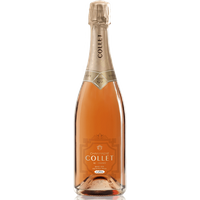
Representative Champagne from Collet
Editorial profile
Champagne Collet is an Aÿ-based, grower-owned Champagne house founded in 1921. Its origin lies in a collective of winegrowers who chose to make and market Champagne together rather than remain solely suppliers to larger houses. Raoul Collet, their spokesperson, gave his name to the new house.
That collective structure remains central today. The winegrowers own the brand and are responsible for the vineyards; Collet’s technical teams take over vinification, blending and ageing. This gives the house a sourcing base that is much broader than a single estate while preserving direct grower ownership.
Why this producer matters
Collet sits in an unusual position between grower Champagne and a conventional large house. It has the range breadth, blending resources and technical team of a maison, but the ownership remains with the growers who supply its grapes.
The portfolio makes use of that breadth in several ways. Origine Brut draws on grapes from around one hundred crus and all three principal Champagne varieties. Art Déco Brut narrows the focus toward Grand and Premier Cru sources. Aÿ Grand Cru 2019 moves to the opposite extreme: one vintage, one Pinot Noir parcel and one village.
Grower network, terroirs and Aÿ
Aÿ is the historical and cultural centre of the house, with Villa Collet remaining part of its identity. The wines themselves, however, draw from a much wider map of Champagne through the cooperative grower network.
The current Origine Brut uses fruit from roughly 100 villages, spanning the Vallée de la Marne, Montagne de Reims, Côte des Blancs and Côte des Bar. Art Déco and the varietal wines draw more selectively on Grand and Premier Cru villages, allowing the house to shift from breadth toward more tightly defined sourcing as the range progresses.
The most precise site in the current portfolio is La Côte du Moulin in Aÿ. The parcel covers 95 ares, was planted in 1995, and has chalky-clay soil. It supplies the 100% Pinot Noir Aÿ Grand Cru vintage wine.
Cellar and blending
Collet’s cellar role begins after its member-growers deliver the fruit. The technical team is responsible for vinification, reserve-wine management, blending and maturation, giving the house the ability to assemble wines across many villages while keeping individual cuvées distinct.
Current releases show that oak is used selectively rather than as a blanket house rule. Art Déco Brut and Extra Brut each include a small barrel-vinified component; Blanc de Blancs uses a larger proportion of oak; Esprit Couture 2015 was much more substantially barrel-vinified. Reserve wine is likewise cuvée-specific, from a significant component in Origine Brut to different proportions in other non-vintage blends.
Dosage is release-specific. The current Art Déco Brut and Extra Brut are especially useful as a comparison because they share the same base-year grape proportions and reserve-wine structure while differing markedly in dosage.
Champagne.co analysis
Collet’s cooperative ownership is not merely corporate background; it explains the architecture of the wines. A broad network of growers gives the technical team access to many villages and all three main grape varieties, which is why a cuvée such as Origine Brut can function as a wide Champagne blend while other wines become progressively more selective.
The most revealing comparison is between Origine Brut, Art Déco and Aÿ Grand Cru. Origine demonstrates breadth. Art Déco concentrates the selection around Grand and Premier Crus. Aÿ Grand Cru reduces the idea to one Pinot Noir parcel. Together they show how the same grower-owned house moves from regional blending to site specificity.
The range also avoids treating oak or low dosage as automatic prestige markers. Art Déco Extra Brut changes dosage while keeping the current blend close to Art Déco Brut; Esprit Couture uses far more barrel vinification because that is part of the 2015 wine’s construction. Those are separate stylistic decisions rather than a single hierarchy.
Buying guidance
Start with Art Déco Brut for the clearest introduction to Collet’s central house blend. Compare it with Art Déco Extra Brut if you want to isolate the effect of lower dosage within an otherwise closely related current release structure.
Choose Origine Brut to understand the scale of the cooperative sourcing network and the role of Meunier in the broader blend. For grape-focused exploration, Blanc de Blancs and Blanc de Noirs provide the most direct contrast.
Move to Millésime 2016 for a vintage Grand/Premier Cru blend, and to Esprit Couture 2015 for the prestige tier with its much larger barrel-vinified component.
Aÿ Grand Cru 2019 is the most site-specific bottle in the current range and the natural choice for readers who want to connect Collet directly back to its Aÿ roots through a single Pinot Noir parcel.
Loading current Champagne range…
Spotted something wrong? Report a correction
Every report goes to a human review queue. Nothing on this page changes automatically.