Cuperly
Maison Cuperly is an independent family Champagne house founded in 1845 and now based in Verzy, in the Montagne de Reims. The family traces eight generations through the business, from founder Charles Cuperly to the current generation represented by Jean…
Editorial profile
Maison Cuperly is an independent family Champagne house founded in 1845 and now based in Verzy, in the Montagne de Reims. The family traces eight generations through the business, from founder Charles Cuperly to the current generation represented by Jean Morel.
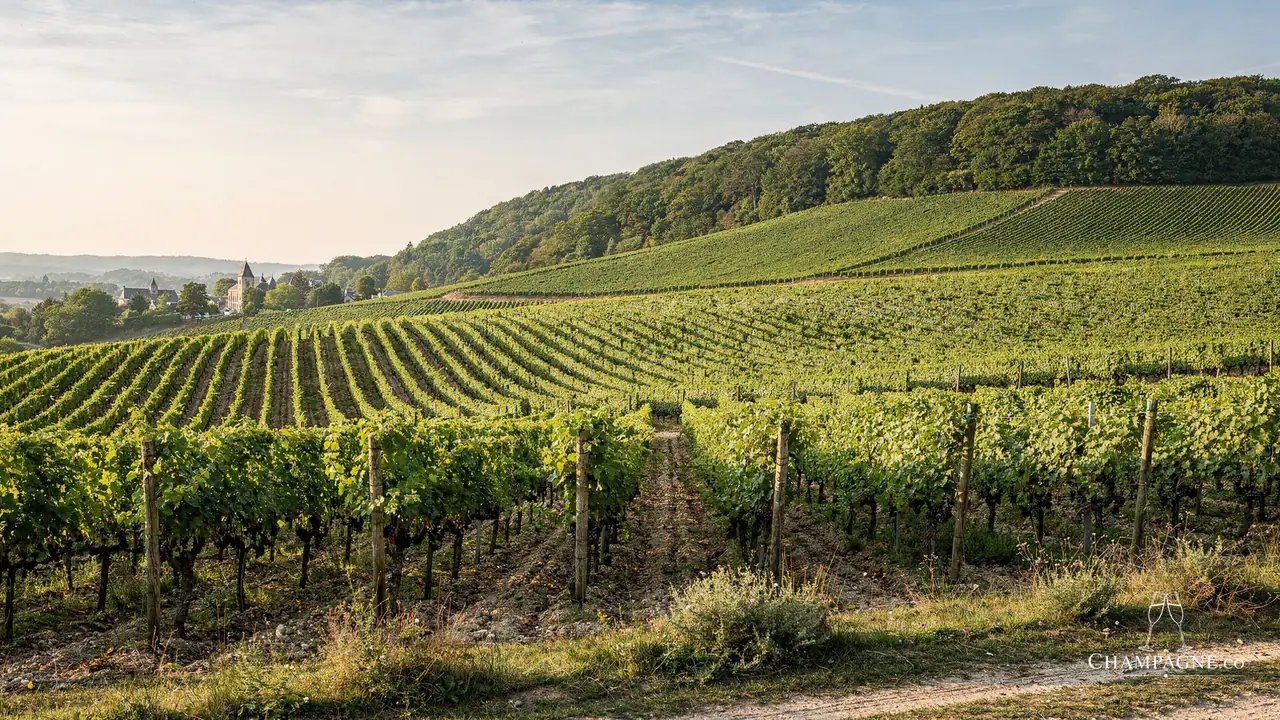
The house did not begin in Verzy. Its modern vineyard identity developed after Robert Cuperly married Hermance Lecompère, whose family was rooted in Verzy, in 1919. They developed vineyards in the village and established the Champagne house there. That move placed Cuperly at the centre of the Montagne de Reims Grand Cru landscape that continues to define much of the range.
Why this producer matters
Cuperly combines a long family history with a notably consistent cellar framework. Across the current Grande Réserve and Prestige wines, the house repeatedly uses first-press Grand Cru fruit, blocked malolactic fermentation, reserve wines matured in oak and extended lees ageing.
The differences between cuvées then come from grape variety, source and the proportion of reserve wine handled in wood. Grande Réserve Brut provides the core Pinot Noir/Chardonnay blend; the Prestige Blanc de Noirs and Blanc de Blancs isolate each grape; the Organic cuvée shifts the geographical focus south to the Côte des Bar.
That makes the range easier to understand as a set of controlled variations rather than a collection of unrelated labels.
Family, vineyards and Verzy
Charles Cuperly founded the family wine-trading house in 1845. Successive generations expanded the business, and Robert and Hermance Cuperly established the house in Verzy after the First World War. Their descendants continued to acquire vineyards in the Montagne de Reims.
The current vineyard estate covers about 10 hectares. Grand Cru sources named across the range include Verzy, Verzenay, Mailly-Champagne, Bouzy and Aÿ, with Chardonnay sources also extending to the Côte des Blancs in the Prestige Blanc de Blancs.
Sophie Cuperly joined the house in 1997 and has been president since 2013. Jean Morel, Gérard Cuperly’s grandson, joined in 2021 and now serves as managing director. Paul Decotte is the current cellar master and oenologist.
Cellar and winemaking
Cuperly harvests by hand and bases its principal Grand Cru wines on the first press. A recurring technical choice is no malolactic fermentation.
Reserve wine and oak are central to the blending system. In the Grande Réserve Brut and Rosé, around 35% of reserve wines are matured in oak. The Prestige Blanc de Noirs and Blanc de Blancs push that proportion much higher, with around 70% of reserve wines matured in oak and a year of barrel ageing before extended bottle maturation.
The result is not one fixed recipe across the whole house. Oak percentage, lees time and dosage change by cuvée, while the no-malolactic framework and emphasis on reserve wine provide continuity.
Champagne.co analysis
Cuperly’s range is best understood through reserve wine and grape separation. The Grande Réserve wines establish the common method: Grand Cru fruit, no malolactic fermentation and a meaningful oak-aged reserve component. The Prestige wines then intensify the reserve-wine and barrel programme while isolating Pinot Noir or Chardonnay.
The contrast between the two Prestige single-variety wines is particularly useful because their broad ageing architecture is similar. That allows the grape and vineyard source to become the main variables rather than a completely different cellar method.
The Organic cuvée is a different kind of comparison. It moves away from the Grand Cru Montagne de Reims axis to Pinot Noir from Bar-sur-Seine in the Côte des Bar and uses stainless steel rather than presenting the prestige oak programme as a universal requirement.
Buying guidance
Start with Grande Réserve Brut for the clearest introduction to the house: it combines the Montagne de Reims Grand Cru base, Pinot Noir dominance, oak-aged reserve wine and blocked malolactic fermentation in one core cuvée.
Choose Grande Réserve Rosé if you want the same broad house framework with a red-wine component. For a direct grape comparison, move to Prestige Blanc de Noirs and Prestige Blanc de Blancs; their similar maturation structure makes the Pinot Noir/Chardonnay contrast especially informative.
Grande Réserve Organic is the most useful bottle for seeing a different geographical and farming expression within the portfolio, while Prestige Millésime 2012 is the route into the current mature vintage tier.
Loading current Champagne range…
Spotted something wrong? Report a correction
Every report goes to a human review queue. Nothing on this page changes automatically.