Dauby Mère & Fille
Champagne Dauby Mère & Fille is a grower Champagne producer based in Aÿ-Champagne. The family’s own Champagne story began with Guy Dauby and Thérèse Tissier, who inherited a small number of vineyard parcels and gradually assembled a domaine around Aÿ and…
Editorial profile
Champagne Dauby Mère & Fille is a grower Champagne producer based in Aÿ-Champagne. The family’s own Champagne story began with Guy Dauby and Thérèse Tissier, who inherited a small number of vineyard parcels and gradually assembled a domaine around Aÿ and Mutigny. In 1956 they bought small oak barrels and made the first cuvée sold under the family name.
The modern identity remains closely tied to the Mère & Fille name, but the wines are more usefully understood through their vineyards and cellar practice. The estate is planted roughly 60% to Pinot Noir, with the balance in Chardonnay, and works across Grand Cru Aÿ and Premier Cru sites including Mutigny and Mareuil-sur-Aÿ.
Why this producer matters
Dauby Mère & Fille connects three themes that are easy to follow across the range: Aÿ and nearby Premier Cru terroirs, Pinot Noir-led vineyard holdings, and reserve wines matured in oak.
That makes oak part of the blending system as well as a feature of wines such as Cuvée Guy Dauby.
The estate is also currently associated with Haute Valeur Environnementale (HVE) and Vigneron Indépendant status. These provide useful context for how the domaine operates without being turned into broader organic-certification claims.
Vineyards and terroir
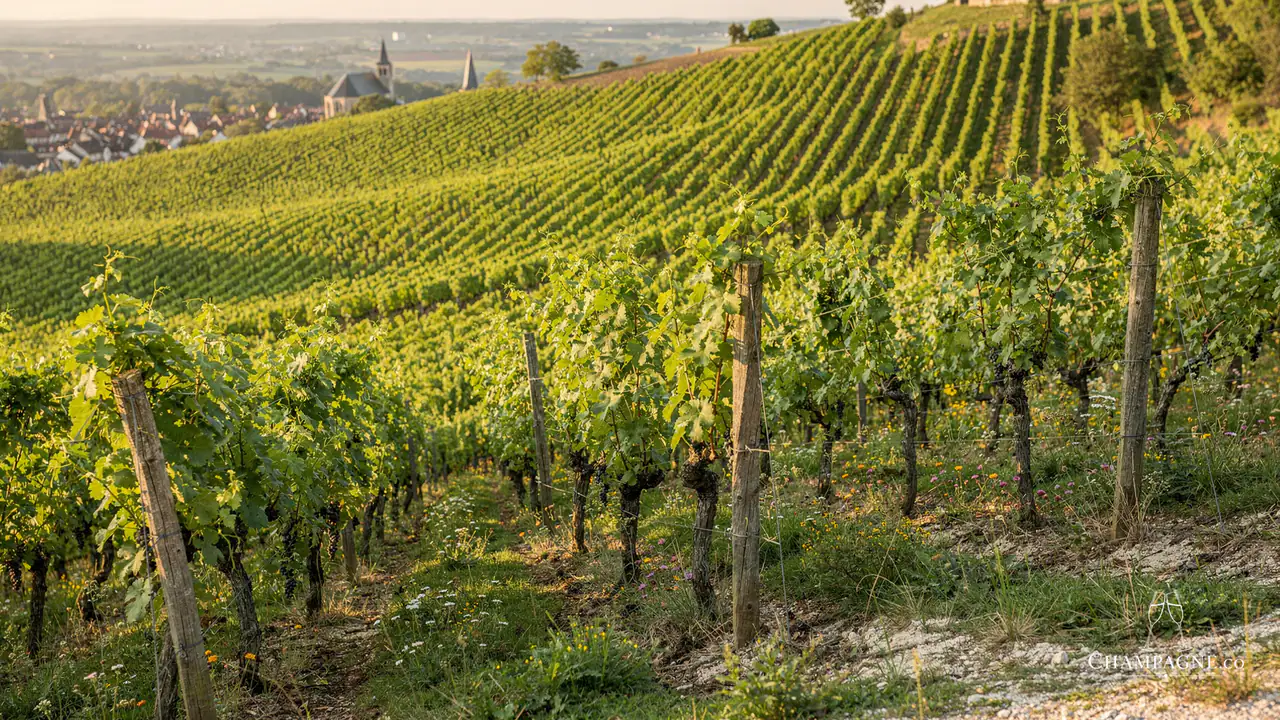
The vineyard base is centred on Aÿ and Mutigny, with additional Premier Cru sourcing represented in wines such as the Réserve Brut from Mutigny and Mareuil-sur-Aÿ. Aÿ’s south-facing, chalk-influenced slopes provide the Grand Cru anchor, while Mutigny gives the range an important Premier Cru Pinot Noir component.
About 60% of the estate’s vines are Pinot Noir, with Chardonnay making up the remainder. That split explains why Pinot Noir leads several core wines without excluding a dedicated Blanc de Blancs from the portfolio.
The estate’s current vineyard identity is therefore broader than a single Aÿ parcel: it links Grand Cru and Premier Cru sites while keeping Pinot Noir and Chardonnay as the two clear varietal pillars.
Cellar and winemaking
Dauby’s cellars in Aÿ are more than a century old. Reserve wines are maintained in large oak foudres and barrels, creating a reserve-wine programme that feeds into the house blends.
Traditional Champagnes receive at least 30 months of cellar maturation, while vintage wines and prestige cuvées receive substantially longer ageing. The house also retains the traditional practice of tirage sur liège, using cork rather than crown cap for the secondary-fermentation closure on selected wines.
Oak is used at different intensities according to the cuvée. Cuvée Guy Dauby receives 12–18 months in oak before its extended bottle maturation, while the Rosé uses locally produced red wine that itself spends a year in oak.
Champagne.co analysis
Dauby Mère & Fille is most coherent when read as a progression from reserve blending to grape and site specificity. Réserve Brut introduces the oak-aged reserve-wine system. Blanc de Noirs and Blanc de Blancs then separate Pinot Noir and Chardonnay. Cuvée Guy Dauby moves into Grand Cru selection and a more explicit oak programme, while Flore occupies the long-aged prestige tier.
The vineyard mix reinforces that structure. Pinot Noir is the majority grape, so it naturally shapes much of the range, but Chardonnay is sufficiently important to support its own Blanc de Blancs rather than functioning only as a blending component.
The Mère & Fille identity gives the house a recognisable family narrative, but the more durable editorial distinction is the combination of Aÿ/Mutigny terroirs, Pinot Noir emphasis, oak-aged reserves and long cellar maturation.
Buying guidance
Start with Réserve Brut Premier Cru for the clearest introduction to the house because it combines the Premier Cru vineyard base with the oak-aged reserve-wine programme.
Compare Blanc de Noirs with Blanc de Blancs to separate the Pinot Noir and Chardonnay sides of the domaine. The Blanc de Noirs is the more direct route into Mutigny Pinot Noir, while the Blanc de Blancs shows the Chardonnay strand across a broader set of terroirs.
Choose Cuvée Guy Dauby for a Grand Cru wine with a more explicit oak component and longer maturation. Cuvée Flore Extra-Brut is the natural step into the prestige tier and extended ageing, while the Rosé is the best choice for seeing how oak-aged red wine enters the assemblage.
Loading current Champagne range…
Spotted something wrong? Report a correction
Every report goes to a human review queue. Nothing on this page changes automatically.