David Léclapart
David Léclapart is a small grower based in Trépail Premier Cru, on the eastern side of the Montagne de Reims. The domaine works 3 hectares, all certified organic, with Chardonnay overwhelmingly dominant and a smaller area of Pinot Noir.
Editorial profile
David Léclapart is a small grower based in Trépail Premier Cru, on the eastern side of the Montagne de Reims. The domaine works 3 hectares, all certified organic, with Chardonnay overwhelmingly dominant and a smaller area of Pinot Noir.
Léclapart committed the vineyard to organic certification in 1998, with the first certified organic harvest recorded in 2000. Today the estate is worked by David and Martin Léclapart, keeping the project tightly focused on one village, a very small surface and a deliberately limited number of bottles — currently about 12,000 organic bottles a year.
Why this producer matters
Léclapart is distinctive for the concentration of its identity: one village, one very small certified-organic vineyard and a farming philosophy pursued with unusual consistency. After training at the Beaujeu school of agrobiology, David Léclapart returned to the family domaine determined to work in harmony with nature "from the vine to the glass", and biodynamic practice became the working agricultural philosophy of the estate.
The farming story is carefully bounded here. Organic certification is established and current; biodynamics is presented by the producer as the guiding method of cultivation, and that philosophy is kept distinct from any separate biodynamic-certification claim.
Trépail vineyards and farming
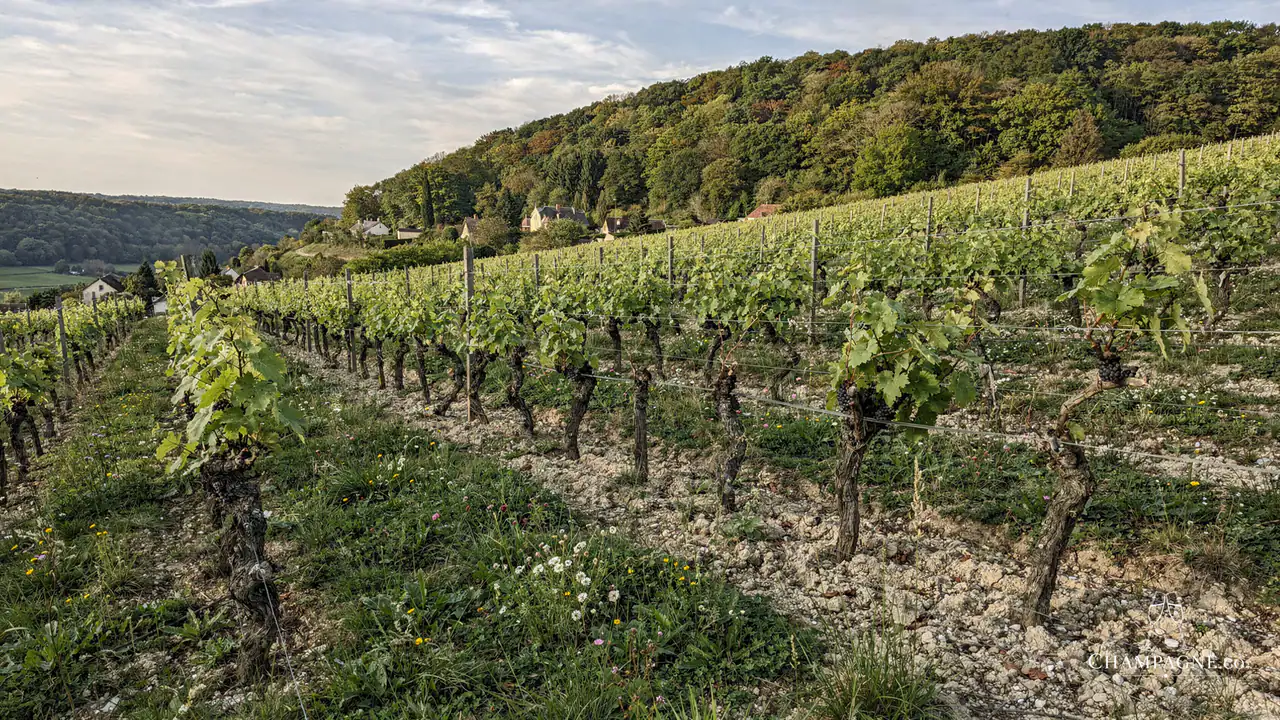
The entire 3-hectare vineyard is in Trépail Premier Cru and is 100% certified organic. Approximately 90% is Chardonnay, with the balance in Pinot Noir.
Trépail sits on the eastern Montagne de Reims and is particularly associated with Chardonnay. The village's chalk geology and the domaine's very concentrated footprint allow Léclapart to work at a scale where individual parcels and harvests remain meaningful rather than being absorbed into a broad regional blend.
Organic certification has been part of the estate's modern identity since the turn of the century, and the producer describes biodynamic cultivation as the means by which the vines are helped to grow "by solar and terrestrial forces" — a philosophy of purity, energy, pleasure and ecology that extends through the seasonal cycle.
Cellar and winemaking
The producer describes cellar work that follows the same philosophy as the vineyard: avoiding oenological technology that might mask or distort the character of the wine, and letting terroir, climate, grape variety and the grower's work shape the result.
The estate's Chardonnay is vinified in Champagne and, in certain years, as still Coteaux Champenois; the Pinot Noir may become red Coteaux Champenois or a Champagne Blanc de Noirs. Cuvée-level technical details — dosage, vessels, lees ageing and disgorgement — are release-specific at a domaine of this size and should be read from the exact current bottle rather than generalised into permanent house rules.
Champagne.co analysis
David Léclapart is best understood through reduction of variables. The vineyard is tiny, the geography is confined to Trépail, and the certified-organic surface is the entire estate rather than a selected parcel. From that narrow base, the meaningful differences between bottles come down to grape, year and the producer's release-level choices.
The organic and biodynamic farming context strengthens this site-led reading, but it should not be converted into vague claims about quality. The measurable points are that the entire three-hectare surface is organically certified, that the commitment dates back to 1998, and that annual production remains around twelve thousand bottles.
Buying guidance
At roughly 12,000 bottles a year, individual cuvées appear in small quantities, and the exact vintage, vessel and disgorgement details matter more than any assumed house formula.
L'Aphrodisiaque is the best-documented route into the estate's identity, with its 80% Chardonnay / 20% Pinot Noir composition mirroring the vineyard's own balance. For other bottlings, use the details attached to the exact release, and distinguish the sparkling Champagnes from the estate's still Coteaux Champenois.
Loading current Champagne range…
Spotted something wrong? Report a correction
Every report goes to a human review queue. Nothing on this page changes automatically.