De Saint-Gall
Champagne De Saint-Gall is the principal consumer marque of Union Champagne, the Avize-based union of 15 winegrowing cooperatives founded in 1966. Union Champagne now represents about 2,330 growers across 1,420 hectares, with roughly 90% of that surface…
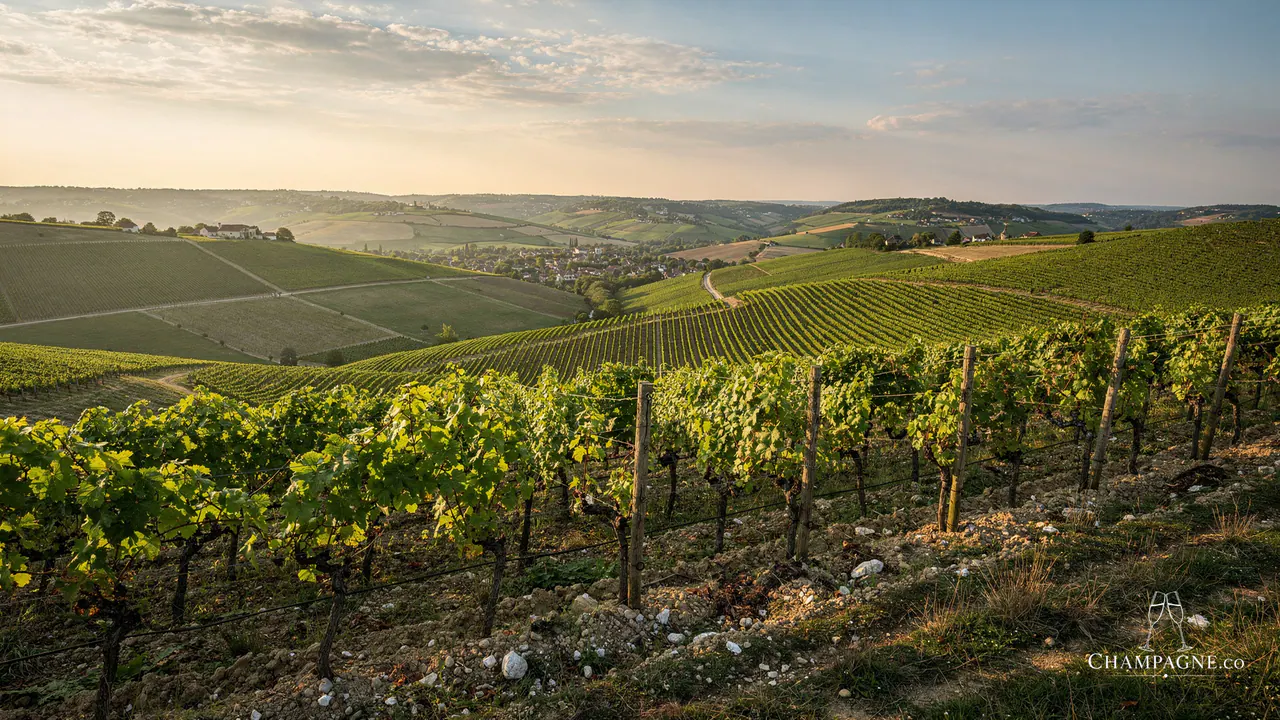
Editorial profile
Champagne De Saint-Gall is the principal consumer marque of Union Champagne, the Avize-based union of 15 winegrowing cooperatives founded in 1966. Union Champagne now represents about 2,330 growers across 1,420 hectares, with roughly 90% of that surface classified Premier Cru or Grand Cru.
That cooperative structure gives De Saint-Gall an unusually broad base of high-ranked Champagne villages, especially in the Côte des Blancs. Chardonnay is therefore central to the marque, but the network also reaches important Pinot Noir villages in the Montagne de Reims and Aÿ in the Vallée de la Marne.
Why this producer matters
De Saint-Gall is one of the clearest examples of a cooperative-of-cooperatives operating at serious scale while still organising its range around cru, grape variety and village identity. Its vineyard network includes Grand Cru and Premier Cru sources from the Côte des Blancs, Montagne de Reims and Vallée de la Marne rather than functioning as a single contiguous estate.
The strongest expression of that structure is Chardonnay. The range moves from Premier Cru Blanc de Blancs through Grand Cru and vintage Chardonnay to Orpale, the long-aged prestige cuvée drawn from Cramant, Avize, Oger and Le Mesnil-sur-Oger.
Vineyard network and cooperative model
Union Champagne’s 15 member cooperatives include sites in Ambonnay, Aÿ, Bouzy, Cramant, Le Mesnil-sur-Oger, Oger, Vertus, Villers-Marmery and other classified villages. Fourteen of the cooperatives, representing about 90% of the total surface, are based in Premier Cru and Grand Cru communes.
This scale should not be confused with estate ownership. De Saint-Gall draws on the collective vineyard resources supplied through Union Champagne, giving the marque breadth across several major Champagne subregions while retaining a particularly strong Côte des Blancs identity.
Winemaking and cellar approach
The house range is built around blending by cru and grape variety, with reserve wines used to maintain continuity in non-vintage cuvées. De Saint-Gall also maintains older reserve wines and uses both vats and foudres for parts of that reserve-wine programme.
The portfolio includes conventional Brut styles, Premier Cru blends, Blanc de Blancs, rosé, Extra-Brut and vintage wines. Technical specifications vary by exact release, so blend, dosage, reserve-wine contribution and tirage details belong to the specific cuvée and bottling.
Champagne.co analysis
De Saint-Gall is best understood through the contrast between scale and precision. Union Champagne gives the marque access to a very large collective vineyard base, but the range increasingly narrows that resource through cru level, grape variety, village origin and vintage selection.
Chardonnay is the organising thread. The Premier Cru Blanc de Blancs provides the accessible baseline, the Grand Cru and vintage wines increase specificity, and Orpale concentrates the idea into four Côte des Blancs Grand Cru villages with very long ageing.
The Pinot side of the network is not incidental, however. The Ambonnay Grand Cru Rosé shows that the cooperative structure also gives De Saint-Gall meaningful access to top Pinot Noir territory, making the portfolio broader than a simple Côte des Blancs specialist.
Buying guidance
Start with Le Blanc de Blancs Premier Cru for the clearest introduction to De Saint-Gall’s Chardonnay identity. Le Tradition Premier Cru is the better choice if you want to see how that Chardonnay-led approach works in a blended style.
Move to Le Blanc de Blancs Grand Cru Extra-Brut or the Grand Cru Millésimé for greater cru and release specificity. Le Grand Cru Rosé offers the most direct Pinot Noir counterpoint, while Orpale is the prestige expression for buyers seeking the marque’s most selective Chardonnay programme.
Because several cuvées evolve by release, exact percentages, dosage and reserve-wine figures are best read as bottle-specific technical details rather than fixed permanent formulas.
Loading current Champagne range…
Spotted something wrong? Report a correction
Every report goes to a human review queue. Nothing on this page changes automatically.