de Venoge
Champagne de Venoge is an Épernay house founded in 1837 by Henri-Marc de Venoge. Its identity is still organised around three historic names: Cordon Bleu, adopted as the house symbol in 1851; Princes, first created in 1858; and Louis XV, the prestige…
de Venoge — Champagne producer profile image.
Editorial profile
Champagne de Venoge is an Épernay house founded in 1837 by Henri-Marc de Venoge. Its identity is still organised around three historic names: Cordon Bleu, adopted as the house symbol in 1851; Princes, first created in 1858; and Louis XV, the prestige vintage tier launched in 2005.
De Venoge has been part of the Lanson-BCC group since the late 1990s and is based at 33 Avenue de Champagne, Épernay. The Union des Maisons de Champagne currently records a 12-hectare vineyard estate, Gilles de la Bassetière as chairman and managing director, and Isabelle Tellier as cellar master and oenologist.
Why this producer matters
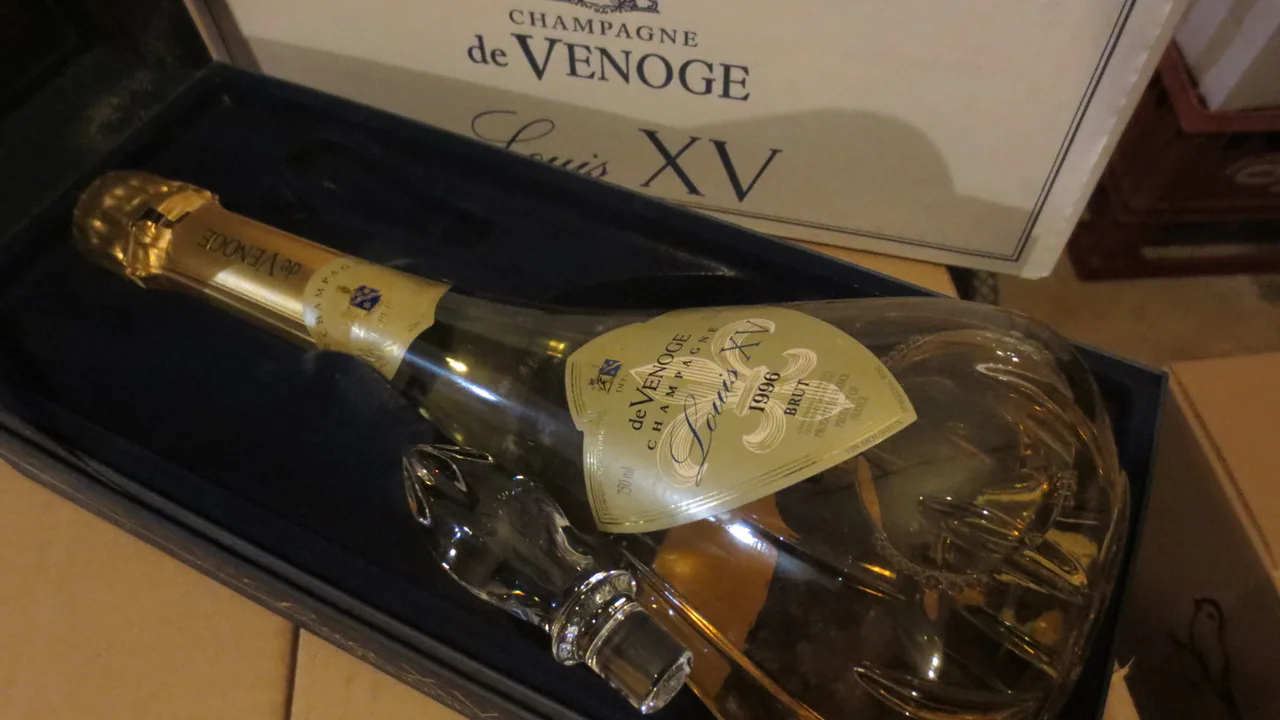
De Venoge combines a long Champagne-house history with a range architecture that has remained unusually legible. Cordon Bleu is the classical house family, Princes develops a more selective cru-led identity, and Louis XV is reserved for prestige vintage releases made from Grand Cru fruit.
The house is also notable for its active vinothèque. Rather than keeping old vintages purely as museum pieces, de Venoge continues to offer selected library bottles with disgorgement on demand, creating a direct link between its historical cellar stocks and current buyers.
House history and Épernay identity
Henri-Marc de Venoge established de Venoge & Cie in Épernay in 1837 after moving from the Swiss canton of Vaud. His son Joseph took over in 1845; the Cordon Bleu became the house symbol in 1851 and the Cuvée des Princes followed in 1858.
The house joined the Boizel Chanoine Champagne group in 1998, the group now known as Lanson-BCC. In 2015 de Venoge moved to 33 Avenue de Champagne, where the Hôtel de Venoge provides its present headquarters and visitor setting.
Winemaking and house approach
De Venoge’s current house material emphasises first-press juice, relatively low dosage and long ageing. Cordon Bleu is Pinot Noir-led, while the Princes range separates Blanc de Blancs, Blanc de Noirs, Extra Brut and Rosé expressions.
The Louis XV cuvées are produced only in selected vintages and from Grand Cru fruit. Exact blends, dosage and disgorgement details belong to the specific release and should not be generalised across the range.
Champagne.co analysis
De Venoge is best read through continuity rather than novelty. The house has preserved names created in the nineteenth century while giving them distinct modern roles: Cordon Bleu as the broad house identity, Princes as the more selective family, and Louis XV as the prestige vintage tier.
That structure is strengthened by the vinothèque. Few houses make their historical cellar depth so directly relevant to current purchasing, and the on-demand disgorgement programme gives older de Venoge vintages a genuine present-day role rather than leaving them as archival references.
Buying guidance
Start with Cordon Bleu Brut for the clearest introduction to the house. The Princes range is the next step if you want a more grape-specific or lower-dosage expression, with Blanc de Blancs and Blanc de Noirs providing an especially clear contrast.
Choose Louis XV for the prestige vintage programme. For experienced buyers, the vinothèque is the most distinctive part of de Venoge’s offer, but exact vintage, disgorgement timing and bottle provenance matter more than broad house-level assumptions.
Loading current Champagne range…
Spotted something wrong? Report a correction
Every report goes to a human review queue. Nothing on this page changes automatically.