Deutz
Deutz is an Aÿ Champagne house founded in 1838, when William Deutz and Pierre Geldermann, both from Aachen, established a wine business in the village with Edouard Lambry. Today Deutz remains based at 16 rue Jeanson in Aÿ, with a 45-hectare vineyard…
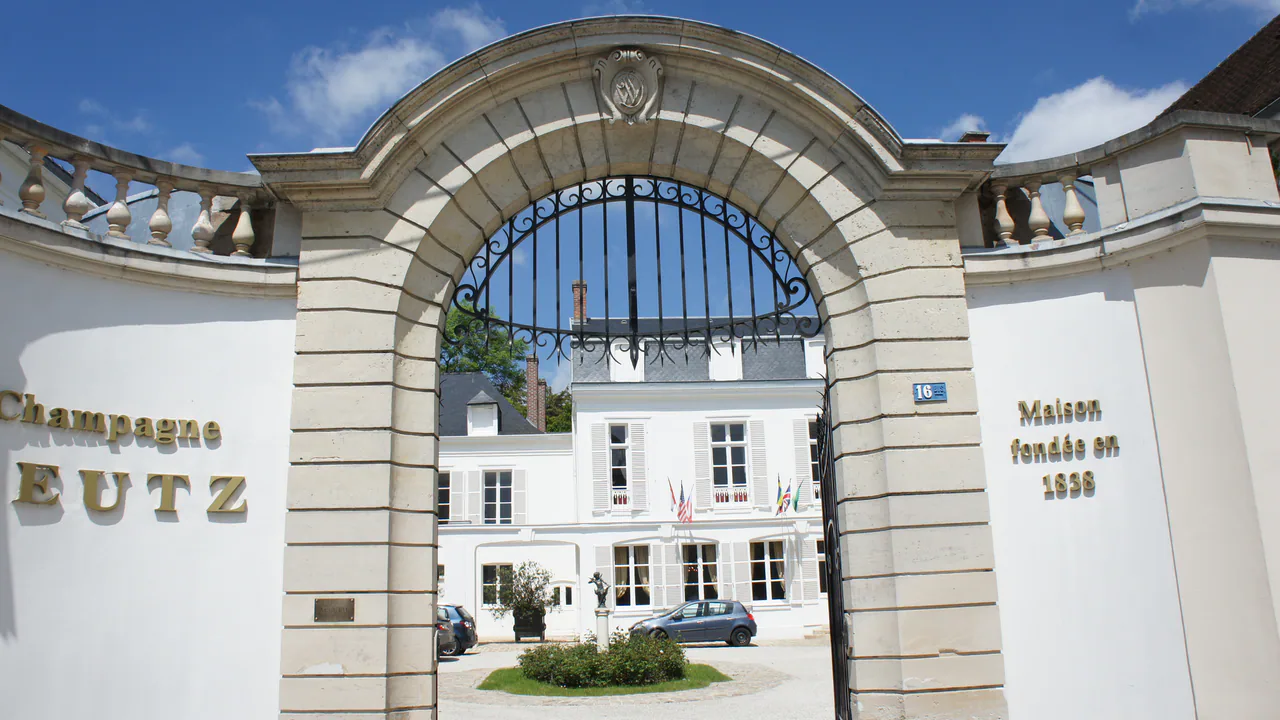
Deutz — Champagne producer profile image.
Editorial profile
Deutz is an Aÿ Champagne house founded in 1838, when William Deutz and Pierre Geldermann, both from Aachen, established a wine business in the village with Edouard Lambry. Today Deutz remains based at 16 rue Jeanson in Aÿ, with a 45-hectare vineyard estate, and forms part of the Louis Roederer group.
The house combines its historic Aÿ base with broad Champagne sourcing. Its current winemaking is led by cellar master Caroline Latrive, who joined Deutz in 2022 and took up the role in 2023. The contemporary range runs from Brut Classic and Brut Rosé through vintage wines and Blanc de Blancs to the prestige William Deutz and Amour de Deutz families.
Why this producer matters
- Deep roots in Aÿ: Deutz was founded there in 1838 and remains headquartered in the village.
- A meaningful estate base: the current house record lists 45 hectares of vineyards.
- Broad blending resources: the current cellar works with a large palette of separately vinified lots and crus, allowing the house to build both multi-vintage and vintage blends.
- A clear prestige hierarchy: William Deutz and the Chardonnay-led Amour de Deutz sit above a core range that includes Brut Classic, rosé, vintage and Blanc de Blancs.
- Continuity with active evolution: Caroline Latrive's arrival marks a new cellar chapter without changing the house's long-established emphasis on blending, terroir selection and extended maturation.
House and vineyard identity
Aÿ is central to Deutz. The village sits in the Grande Vallée de la Marne and is overwhelmingly planted to Pinot Noir; Deutz is among the houses recorded as owning vines there. The house's own estate is larger than its Aÿ holdings alone, while grape selection extends across Champagne and is weighted toward Premier and Grand Cru sources.
That gives Deutz two complementary identities: a strong Pinot Noir home base in Aÿ and access to Chardonnay terroirs, particularly important for Blanc de Blancs and Amour de Deutz. The current Brut Rosé, for example, explicitly brings together Pinot Noir from Aÿ with Chardonnay from the Côte des Blancs.
Winemaking and cellar approach
Blending remains fundamental to Deutz.
The house also places importance on time in bottle. Current material describes prolonged maturation in Deutz's historic cellars as part of the production approach. Exact ageing periods, blends and dosage can change by cuvée and release, so those details belong to the individual wine rather than being generalized across the range.
Champagne.co analysis
Deutz is most coherent when viewed as an Aÿ house that refuses to be defined by Aÿ alone. Pinot Noir from its home village gives the producer a strong geographic anchor, while Chardonnay from the Côte des Blancs and a much wider network of crus expands the blending palette. That tension between a precise home base and broad sourcing is what allows the range to move convincingly from Brut Classic to Blanc de Blancs and prestige cuvées.
The current cellar structure reinforces that interpretation. Vinifying many crus separately preserves options before blending, while extended cellar maturation shifts the emphasis away from speed of release. The result is a house whose identity is built as much through selection, assemblage and time as through ownership of a single vineyard sector.
Buying guidance
For a first encounter with Deutz, Brut Classic gives the clearest view of the core house proposition. Brut Rosé is the logical next step for readers interested in the Aÿ Pinot Noir dimension, while Blanc de Blancs Millésimé moves the focus decisively toward Chardonnay.
The vintage wines are best compared by exact year rather than treated as interchangeable. William Deutz and Amour de Deutz belong to the prestige tier; Amour is particularly relevant for buyers seeking the house's Chardonnay-focused expression. Check the specific vintage on prestige and millésimé bottles because blend, ageing and other technical details are release-dependent.
Loading current Champagne range…
Spotted something wrong? Report a correction
Every report goes to a human review queue. Nothing on this page changes automatically.