Diebolt-Vallois
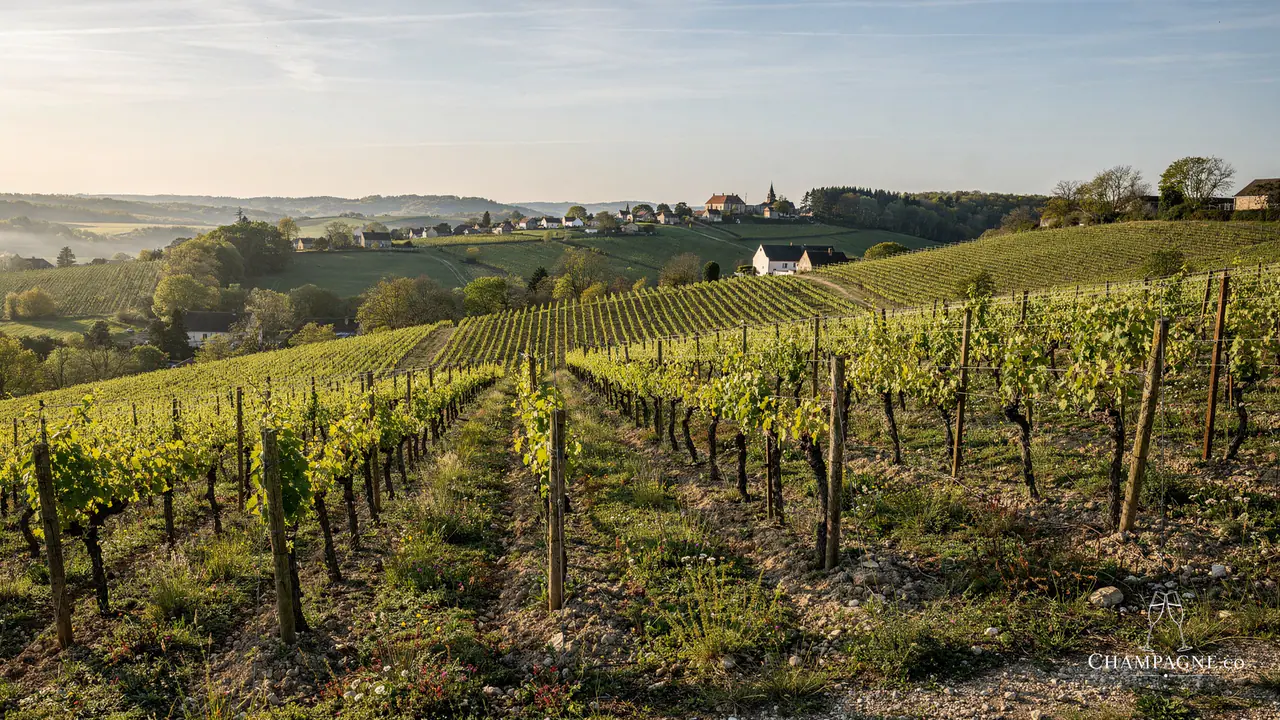
Diebolt-Vallois is a family Champagne producer based in Cramant, one of the Grand Cru villages at the heart of the Côte des Blancs. The Diebolt-Vallois identity developed in the late twentieth century as the family expanded its own production and cellars.
Editorial profile
Diebolt-Vallois is a family Champagne producer based in Cramant, one of the Grand Cru villages at the heart of the Côte des Blancs. The Diebolt-Vallois identity developed in the late twentieth century as the family expanded its own production and cellars.
Chardonnay is the defining grape. The domaine's principal Chardonnay holdings sit in the Côte des Blancs villages named on its current technical sheets, including Cramant, Chouilly, Oger, Le Mesnil-sur-Oger and Cuis. The range is therefore broader than a single Blanc de Blancs, but its clearest identity comes from Côte des Blancs Chardonnay and the way different cuvées use village origin, reserve wine and vintage selection.
The domaine's hierarchy is useful because it moves from accessible house blends into increasingly Chardonnay-specific and vintage-specific wines. Prestige and Fleur de Passion sit at the more selective end of the range, while the current vintage Blanc de Blancs offers a separate view of Chardonnay from a defined harvest.
Why this producer matters
- A family domaine based in Cramant Grand Cru.
- A strongly Chardonnay-led identity built around Côte des Blancs villages.
- The portfolio spans Tradition, Blanc de Blancs, Prestige, vintage Blanc de Blancs and the prestige cuvée Fleur de Passion.
- Reserve wines and longer lees ageing play an important role in the upper range.
- Prestige and Millésime 2018 illustrate two distinct Chardonnay structures: a reserve-driven multi-harvest blend and a single-vintage wine.
Vineyard and cellar identity
Cramant is the anchor, but the domaine draws Chardonnay from several Côte des Blancs villages. The current Prestige release combines fruit from Cramant, Chouilly, Oger and Le Mesnil-sur-Oger, while the current Millésime 2018 is sourced from Chouilly Grand Cru and Cuis Premier Cru. That gives Diebolt-Vallois a broader Côte des Blancs perspective than a profile based on Cramant alone would suggest.
Reserve wine is an important part of the non-vintage architecture. The present Prestige bottling includes a perpetual-reserve component held in large oak, alongside wines from the 2018 and 2020 harvests. Stainless steel remains part of the cellar toolkit, with oak used selectively rather than as a universal formula across every cuvée.
Champagne.co analysis
Diebolt-Vallois is best understood through the tension between continuity and selection. Cramant gives the domaine a strong geographical anchor, but the wines are not simply repetitions of one village formula. Prestige widens the Chardonnay base across several Côte des Blancs crus and brings reserve wine into the equation. Millésime narrows the focus to one harvest.
That makes the range more useful than a simple quality ladder. The differences between the wines are structural: grape mix, village origin, reserve component, vintage selection and cellar vessel all change as the range moves upward.
Buying guidance
For a first bottle, the Blanc de Blancs is the most direct introduction to the producer's Chardonnay identity. Choose Tradition if you want the broader house blend rather than a purely Côte des Blancs Chardonnay expression.
Prestige is the logical next step for buyers interested in greater reserve-wine depth and a multi-village Grand Cru Chardonnay blend. Millésime 2018 is more appropriate when the attraction is a single harvest and a precisely defined release. Fleur de Passion belongs at the top of the buying ladder for readers specifically seeking the domaine's most selective vintage Chardonnay expression.
Loading current Champagne range…
Spotted something wrong? Report a correction
Every report goes to a human review queue. Nothing on this page changes automatically.