Domaine Alexandre Bonnet
Domaine Alexandre Bonnet is based in Les Riceys, at the southern edge of the Côte des Bar. Few Champagne villages make the relationship between sparkling and still wine as visible: Les Riceys is associated with Champagne, Coteaux Champenois and Rosé des…
Editorial profile
Domaine Alexandre Bonnet is based in Les Riceys, at the southern edge of the Côte des Bar. Few Champagne villages make the relationship between sparkling and still wine as visible: Les Riceys is associated with Champagne, Coteaux Champenois and Rosé des Riceys, and Alexandre Bonnet works across all three appellations.
The family's vineyard story reaches back to 1934, when Lucien Noble planted his first vines. The modern domaine was created in 1970 by Serge Bonnet with Alain and René. Today the team is organised around Arnaud Fabre, with the estate's identity increasingly focused on the individual slopes and parcels of Les Riceys rather than on a generic Côte des Bar formula.
Pinot Noir is the central grape, but the range is deliberately broader. Blanc de Noirs and rosé sit beside a Blanc de Blancs that uses historic white varieties, while the Les Contrées series isolates individual sites and includes a seven-variety Champagne. The same vineyard landscape also produces Rosé des Riceys and Coteaux Champenois.
Why this producer matters
- Based in Les Riceys, one of Champagne's most distinctive multi-appellation villages.
- Family vineyard roots date to 1934; the modern domaine dates to 1970.
- The property works with 23 contrées, each differing in slope, orientation and soil depth.
- Kimmeridgian limestone and marl are central to the vineyard geology.
- Pinot Noir is the main reference point, but the domaine also preserves and bottles historic Champagne grape varieties.
- HVE and VDC certification has been in place since 2015.
- The range allows direct comparison between blended Champagne, single-site Champagne, Rosé des Riceys and Coteaux Champenois.
Vineyard and cellar identity
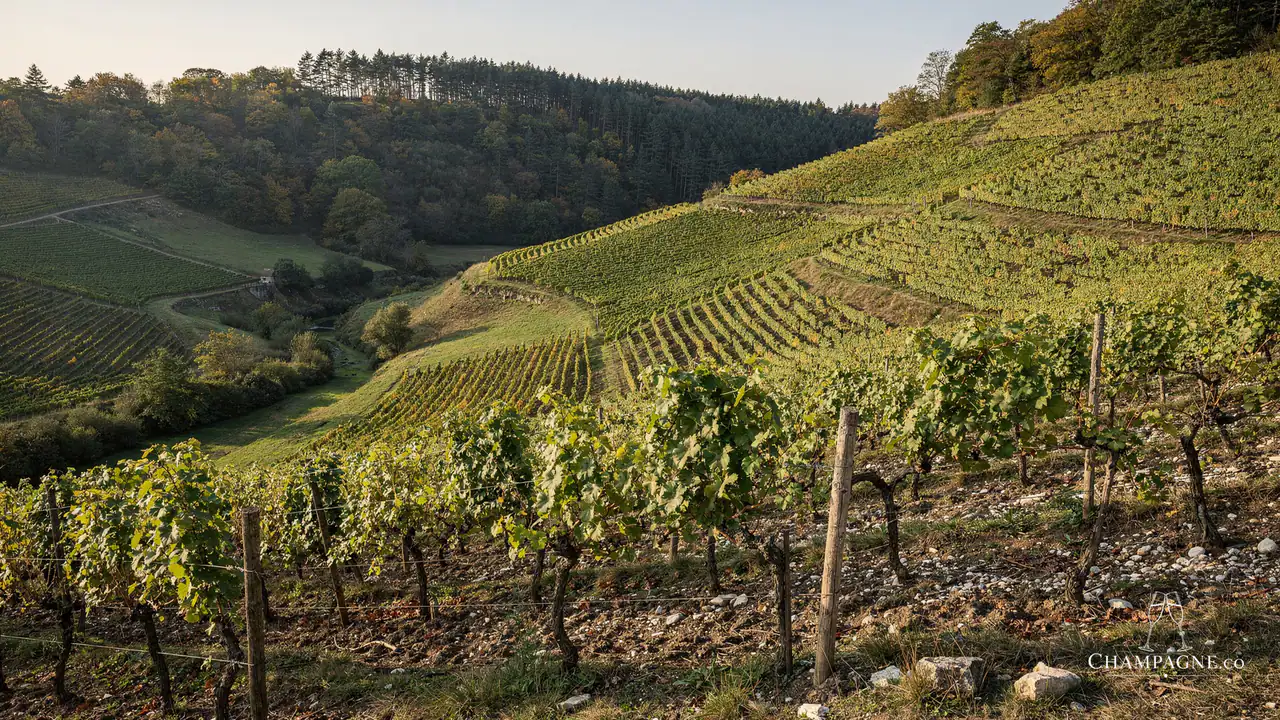
The domaine describes 23 contrées across its holdings, each with its own combination of exposure, slope and soil depth. The vineyards sit on Jurassic Kimmeridgian limestone and marl at the southern end of Champagne, often on steep hillsides around Les Riceys.
The viticultural programme combines soil work, grassing or sowing between rows, organic composts, and the exclusion of weedkillers and insecticides. HVE and Viticulture Durable en Champagne certification date from 2015. Biodiversity measures include orchards, truffle oaks, melliferous fallows and later mowing of grassed areas.
Vinification is organised parcel by parcel. Reserve wines are kept with attention to their vineyard and vintage origin, while several site-specific wines are handled as individual expressions rather than folded automatically into a house blend. The exact cellar programme changes with the wine and harvest.
Champagne.co analysis
Domaine Alexandre Bonnet is best understood as a Les Riceys estate first and a Champagne brand second. Its most distinctive feature is not simply Pinot Noir, because many Côte des Bar producers are Pinot-led. What sets this domaine apart editorially is the way one landscape is divided into 23 contrées and then expressed through three different appellations and several grape combinations.
The range also provides a clear progression in scale. Blanc de Noirs gives the broad estate view; Les Contrées narrows the focus to individual sites; Rosé des Riceys and Coteaux Champenois show what happens when the same village is interpreted outside sparkling Champagne. That makes appellation and site as important as cuvée name when reading the portfolio.
Buying guidance
Start with the Blanc de Noirs if you want the most direct introduction to the domaine's Pinot Noir and Les Riceys identity. Choose the Blanc de Blancs if your interest is the estate's work with historic white varieties rather than its dominant Pinot Noir theme.
Move into Les Contrées when site matters more than an estate blend. 7 Cépages is the obvious choice for drinkers interested in Champagne's historic grape diversity, while La Forêt Blanc de Noirs gives a more focused Pinot Noir parcel expression.
For still wine, treat Rosé des Riceys La Forêt and the Coteaux Champenois bottlings as separate purchases with different appellations and production methods. The repeated La Forêt name is a vineyard connection, not evidence that the sparkling and still wines are the same product.
Loading current Champagne range…
Spotted something wrong? Report a correction
Every report goes to a human review queue. Nothing on this page changes automatically.