Domaine Collet (René Collet)
Domaine Collet is a family grower in Fontaine-Denis-Nuisy, in the Côte de Sézanne. The modern domaine was established in 1973 by René Collet, although the family traces its winegrowing history through nine generations. Today the estate is associated with…
Editorial profile
Domaine Collet is a family grower in Fontaine-Denis-Nuisy, in the Côte de Sézanne. The modern domaine was established in 1973 by René Collet, although the family traces its winegrowing history through nine generations. Today the estate is associated with brothers Florent and Thomas Collet.
Current authoritative records describe a compact holding of roughly six to six and a half hectares. Comité Champagne lists the domaine at 6.5 hectares, while the current Association des Champagnes Biologiques record covers 6 hectares and identifies that certified area as 100% organic. The difference is best understood as a difference between estate and certification snapshots rather than as a contradiction to be artificially averaged away.
The vineyard is planted to Chardonnay and Pinot Noir. The organic-association record gives the certified area as 64% Chardonnay and 36% Pinot Noir, making Chardonnay the larger component while leaving Pinot Noir with a substantial role in the estate's blends and rosé.
Why this producer matters
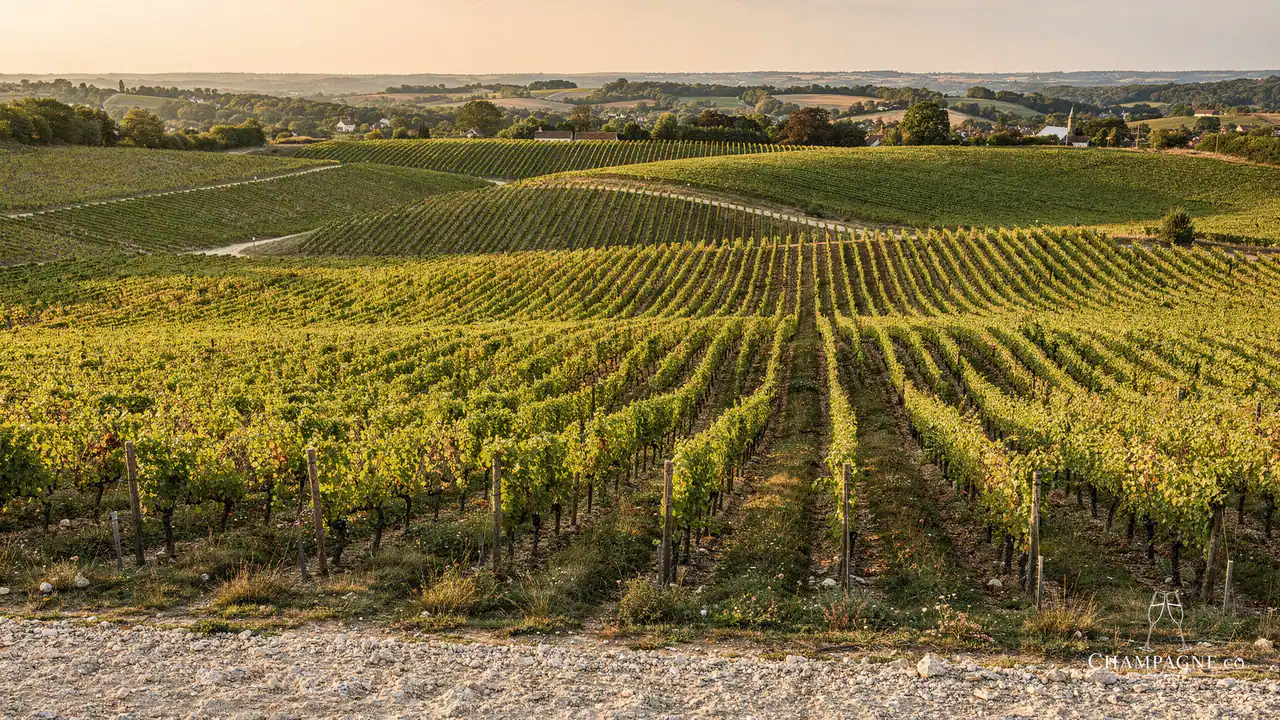
Domaine Collet is particularly interesting for the contrast within a very small vineyard. Current Comité Champagne material describes old Chardonnay and Pinot Noir vines spread across white chalk-rich soils and darker brown soils rich in flint. That chalk-and-flint opposition is not merely a background geological fact: it is reflected directly in the name of one of the domaine's current wines, Silex & Craie.
The estate is also a useful example of the newer organic generation in the Côte de Sézanne. Florent and Thomas Collet entered organic certification in 2020, with the first certified-organic harvest recorded in 2023. Their current vineyard work combines soil cultivation, managed vegetation, plant infusions and other low-input preparations without presenting the estate as biodynamically certified.
Vineyards and terroir
The domaine is based at Fontaine-Denis-Nuisy and farms a mosaic of parcels around the village. Comité Champagne currently records 6.5 hectares, while the organic certification record lists 6 hectares as fully certified. A 2026 organic-sector publication gives a closely related certified surface of 6.1 hectares, reinforcing that these figures are dated administrative snapshots rather than evidence of a materially different estate.
Chardonnay is the majority variety within the certified vineyard, at 64%, with Pinot Noir at 36%. The soils divide broadly between pale, chalk-rich ground and darker soils containing more flint. This gives the domaine two contrasting physical reference points within a compact area and helps explain the emphasis on parcel separation in both vineyard and cellar.
The brothers' farming is based on observation and preventive work. Current Champagne de Vignerons material describes soil cultivation, green work, herbal infusions and natural preparations. The aim is to manage individual parcels according to their needs rather than apply a single uniform treatment across the whole vineyard.
Winemaking and cellar approach
The cellar programme follows the same parcel-conscious logic. Florent and Thomas Collet keep lots separate where useful and employ both barrels and larger foudres for fermentation and ageing. The wines are given time before blending, and current trade material describes dosage as generally restrained.
Oak therefore has a practical rather than purely stylistic role: it allows separate lots and sites to be handled in vessels of different sizes before the final assemblage. Exact barrel proportions, reserve-wine shares, dosage and ageing periods vary by cuvée and release and should be read from the relevant bottle or current technical sheet rather than treated as permanent estate-wide specifications.
Champagne.co analysis
Domaine Collet's strength is the amount of contrast packed into a small estate. The vineyard is only around six to six and a half hectares, yet it combines two grapes, two clearly differentiated soil families and an organic programme recent enough that the transition remains part of the domaine's current identity.
That gives the range a logical internal structure. Nord Sud presents the blended estate, Rosé shifts the balance toward the red-grape side of the vineyard, and Silex & Craie isolates Chardonnay while explicitly connecting the wine to the domaine's two principal soil signatures. The use of barrels and foudres then gives the brothers enough flexibility to keep parcels distinct before blending.
For readers, the most useful way to approach Domaine Collet is therefore not as a producer with a large hierarchy of cuvées, but as a compact organic estate whose three current reference wines each illuminate a different part of the same vineyard picture.
Buying guidance
Start with Nord Sud for the broadest introduction to the domaine and its blended style. It is the most natural first bottle when the aim is to understand the house rather than one grape or one soil type in isolation.
Choose Silex & Craie if Chardonnay and the estate's chalk-versus-flint terroir are the main attraction. Its Blanc de Blancs, Extra Brut format makes it the most focused expression of that side of the vineyard.
The Rosé is the best third reference point, particularly for readers who want to see how Pinot Noir contributes within a Chardonnay-majority organic holding.
Loading current Champagne range…
Spotted something wrong? Report a correction
Every report goes to a human review queue. Nothing on this page changes automatically.