Domaine Vincey
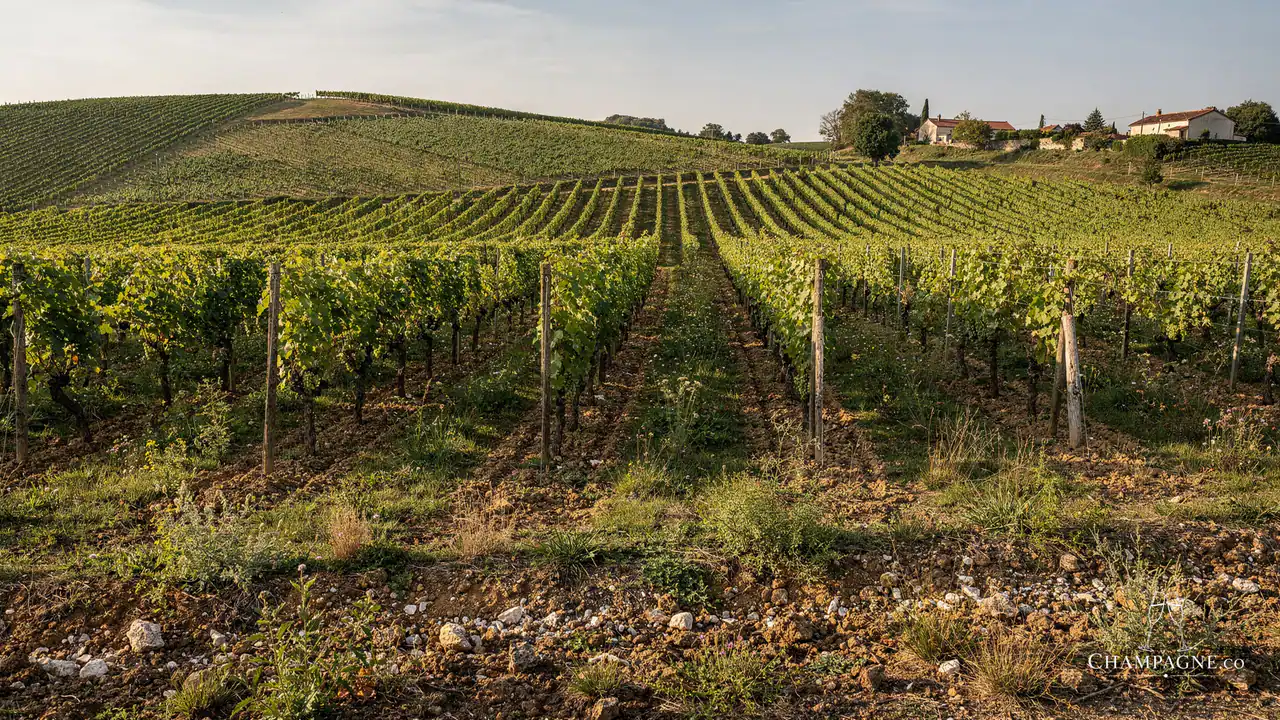
Domaine Vincey is a small grower estate based in Oger, in the Côte des Blancs, led by Marine and Quentin Vincey. The Association des Champagnes Biologiques currently records the domaine at 4–6 rue du Mesnil in Oger and lists seven hectares within its…
Editorial profile
Domaine Vincey is a small grower estate based in Oger, in the Côte des Blancs, led by Marine and Quentin Vincey. The Association des Champagnes Biologiques currently records the domaine at 4–6 rue du Mesnil in Oger and lists seven hectares within its organic programme.
The same current record gives a vineyard mix of 90% Chardonnay, 5% Meunier and 5% Pinot Noir, with organic-certification commitment from 2019 and the first certified-organic grapes in 2022. Chardonnay is therefore overwhelmingly dominant, but the estate should not be reduced to a blanket claim that every vineyard is Chardonnay.
Why this producer matters
Vincey is a useful example of the newer grower dynamic in the Côte des Blancs: a family vineyard base centred on Oger, a certified-organic programme and a range increasingly organised around village and named-site identity.
The agricultural picture is unusually well defined. The live organic-association record places the full listed seven-hectare surface in the programme. A 2025 Terres & Vins profile instead reports eight hectares and AB/Demeter certification since 2022, so the public estate-size statement uses the current seven-hectare ACB figure rather than combining conflicting totals.
Vineyard identity
Oger Grand Cru is the estate's clearest geographic anchor, while the contemporary range also reaches into neighbouring Côte des Blancs sites. Chardonnay dominates the vineyard mix, with small recorded proportions of Meunier and Pinot Noir.
This makes the domaine more interesting than a simple Blanc de Blancs shorthand suggests. Its Champagne identity is strongly Chardonnay-led, but the wider agricultural holding is more varied, and the wines increasingly distinguish village and parcel origins.
Farming and cellar approach
The clearest current farming chronology is organic: commitment from 2019, first certified-organic grapes in 2022, and the whole seven-hectare surface listed by the organic association within the programme. Recent specialist material also describes biodynamic farming.
In the cellar, recent independent estate profiles describe a gravity-led facility, a traditional press and oak fermentation. These are useful markers of approach rather than a licence to generalise every technical detail across every cuvée. Dosage, ageing, disgorgement, vessel and sulphur information can vary by wine and release.
Champagne.co analysis
Domaine Vincey's defining combination is Oger, certified-organic farming and increasingly precise site definition. The village wine gives the clearest frame; the named-site cuvées then narrow the view to individual places in Oger, Le Mesnil-sur-Oger and Chouilly.
That structure makes the domaine particularly useful for readers interested in how one grower interprets different levels of origin. It also rewards precision: the vineyard holding is Chardonnay-dominant rather than literally all Chardonnay, and current public records disagree on whether the estate totals seven or eight hectares.
The organic chronology is clearer than the surface discrepancy and can be stated with confidence: commitment in 2019 and first certified-organic grapes in 2022. Biodynamic certification is also reported in recent sector material, but the conflicting current surface records make conservative wording preferable to a single over-neat estate summary.
Buying guidance
Start with Oger for the clearest introduction to Vincey's home-village identity. Choose Le Grand Jardin or Coin Gris when you want a more tightly defined Oger site, and look to Chemin de Châlons or Auge to compare the domaine's work in Le Mesnil-sur-Oger.
Interlude suits buyers interested in the domaine's edition-based wines, but the edition number matters. Small-volume named-site releases can change with vintage and availability, so bottle-specific technical details should be read as properties of that release rather than assumed across the portfolio.
Loading current Champagne range…
Spotted something wrong? Report a correction
Every report goes to a human review queue. Nothing on this page changes automatically.