Dosnon
Dosnon is based in Avirey-Lingey in the Côte des Bar, where Davy Dosnon works a small vineyard base and supplements it with fruit from growers aligned with the domaine's approach. Current estate information places 2.15 hectares under direct work in…
Editorial profile
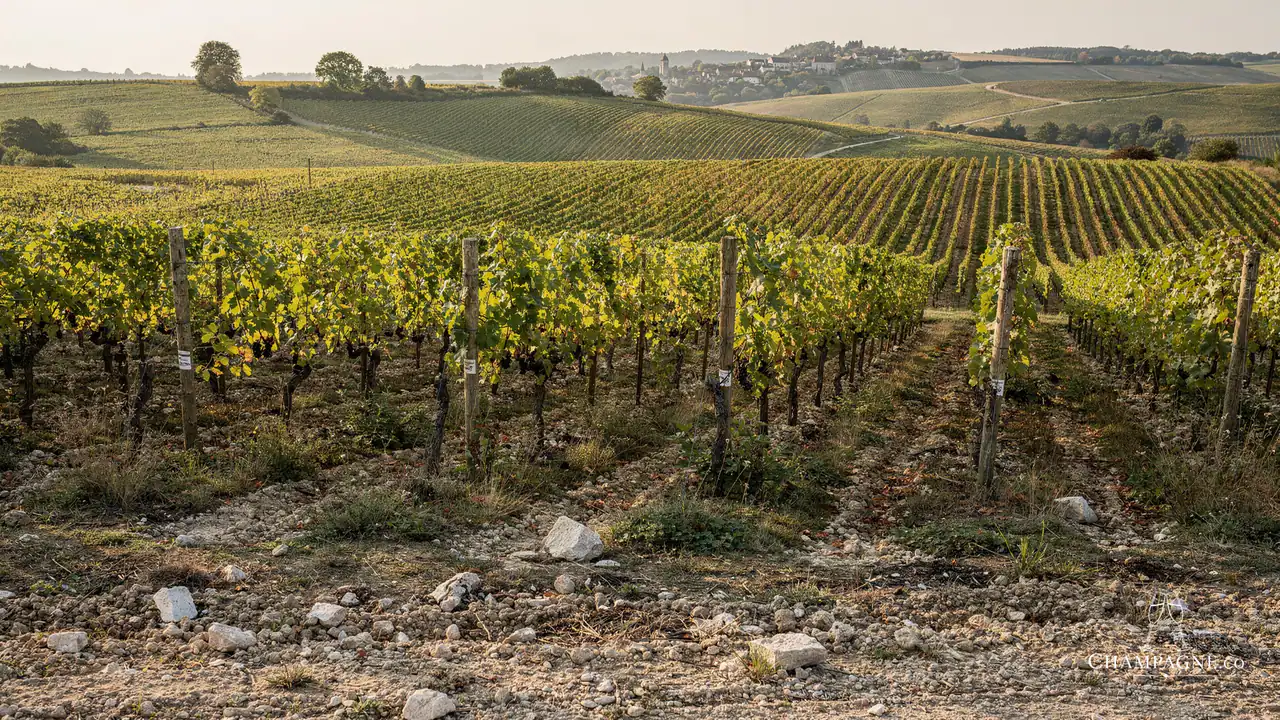
Dosnon is based in Avirey-Lingey in the Côte des Bar, where Davy Dosnon works a small vineyard base and supplements it with fruit from growers aligned with the domaine's approach. Current estate information places 2.15 hectares under direct work in Avirey-Lingey, Polisy and Urville, alongside roughly 3 hectares of grower supply. Keeping those two figures separate is important: the larger total is not a single estate-owned holding.
The local identity is strongly geological. Dosnon describes the vineyards as Jurassic slopes over Kimmeridgian limestone, with clay-limestone soils characteristic of this southern part of Champagne.
Why this producer matters
Dosnon combines a compact Côte des Bar vineyard base with a range that gives distinct roles to Pinot Noir, Chardonnay and Meunier. The wines are not built around a single grape or one generic house blend: current releases include a Pinot Noir/Chardonnay Brut Nature as well as mono-varietal Pinot Noir and Meunier bottlings.
The farming trajectory is also now clearly documented. The Association des Champagnes Biologiques records an organic-certification commitment from 15 February 2021, first certified-organic grapes in 2024, and a certified two-hectare scope planted to 65% Pinot Noir, 30% Chardonnay and 5% Meunier.
Vineyards and terroir
Avirey-Lingey is the domaine's centre of gravity, with additional directly worked vines in Polisy and Urville. Dosnon's own vineyard material describes grassed rows, soil cultivation, no chemical fertiliser and manual harvesting.
The combination of Kimmeridgian limestone and clay-limestone soils gives the estate a recognisably Côte des Bar frame.
Winemaking and cellar approach
Dosnon uses a traditional vertical press and places oak at the centre of important parts of its cellar work. The clearest technical evidence is best handled wine by wine rather than turned into an inflexible house formula.
For Alliae, for example, the current producer page specifies ten months of vinification and ageing in oak followed by 55 months on lees. Those figures belong to that cuvée's published specification and should not be projected automatically onto every Dosnon wine.
Champagne.co analysis
Dosnon's most useful organising idea is contrast within a small Côte des Bar operation. The domaine works just over two hectares directly, draws on additional grower fruit and uses its range to separate grape identities rather than obscure them behind one house style narrative.
The organic record adds a firm contemporary marker without needing exaggeration: commitment in 2021 and first certified-organic grapes in 2024 for the stated two-hectare scope. That scope should not be silently expanded to every grape entering the cellar from external growers.
Alliae also illustrates why release-bounded technical writing matters. Its 50/50 blend, oak period, lees ageing and zero dosage are meaningful facts precisely because they describe that wine; they are not evidence that every Dosnon cuvée follows the same recipe.
Buying guidance
For the clearest introduction to the range by grape, compare Récolte Noire with Récolte Blanche. Ephémère is the more unusual choice when you specifically want to explore Dosnon's Meunier expression.
Choose Alliae when the attraction is the Pinot Noir/Chardonnay blend and Brut Nature format. Its published ageing and dosage details make it a particularly well-defined bottle, but those specifications should not be carried over to other releases.
Loading current Champagne range…
Spotted something wrong? Report a correction
Every report goes to a human review queue. Nothing on this page changes automatically.