Dumenil
Champagne Duménil is an independent family grower based in Chigny-les-Roses on the Montagne de Reims. The family dates the domaine to 1874, and Frédérique Poret-Duménil represents the fifth generation at the estate.
Editorial profile
Champagne Duménil is an independent family grower based in Chigny-les-Roses on the Montagne de Reims. The family dates the domaine to 1874, and Frédérique Poret-Duménil represents the fifth generation at the estate.
Duménil farms 8 hectares, all in Premier Cru villages on the Montagne de Reims. The principal vineyard identity spans Chigny-les-Roses, Rilly-la-Montagne and Ludes, with Pinot Noir, Meunier and Chardonnay all represented. The range moves from multi-village Montagne blends toward Chigny-focused wines, old-vine Chardonnay and long-aged vintage Champagne.
A defining part of the house identity is its perpetual reserve. Michel Duménil began the reserve in 1996; it remains central to the estate's current reserve cuvée.
Why this producer matters
- A family domaine established in Chigny-les-Roses in 1874 and now led by the fifth generation.
- Eight hectares of Premier Cru Montagne de Reims vineyards.
- Meunier has a conspicuous role in the range alongside Pinot Noir and Chardonnay.
- The family's Chardonnay history in Chigny includes vines planted in 1969.
- A perpetual reserve begun in 1996 gives the range a direct link to Michel Duménil's cellar work.
- The estate reports Viticulture Durable and Haute Valeur Environnementale level 3 certification; these claims are distinct from organic certification.
Vineyards and winemaking
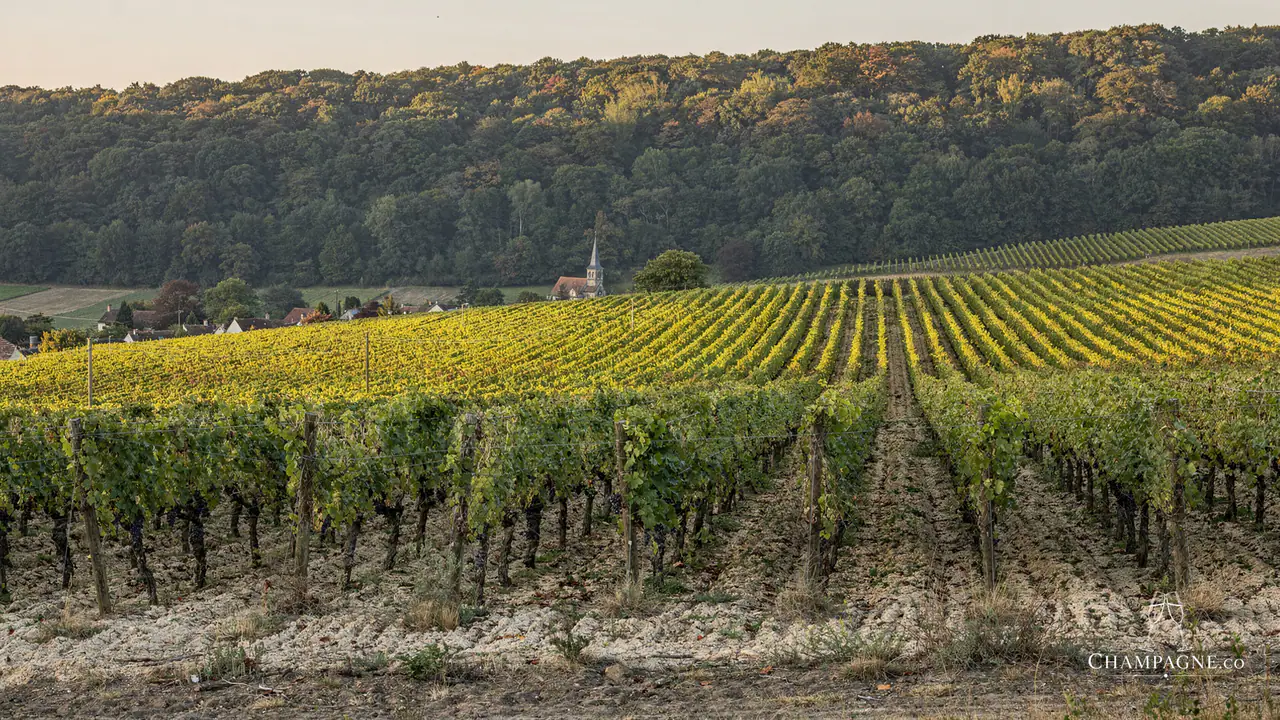
The vineyards sit on the Montagne de Reims around Chigny-les-Roses, Rilly-la-Montagne and Ludes. Duménil highlights the moderating effect of the Montagne and the importance of exposure, chalk and clay-limestone soils. Chigny is especially important to the estate's more site-specific wines.
In the cellar, the estate uses temperature-controlled tanks and works with first-press juice. The perpetual reserve provides continuity between harvests, while extended bottle ageing is used across the range. Duménil's environmental programme includes soil cultivation, reduced insecticide use and its stated Viticulture Durable and HVE level 3 certifications.
Champagne.co analysis
Duménil is most interesting as a compact Premier Cru estate whose range makes several strands of its history unusually easy to follow. Meunier remains prominent, Chardonnay has a documented family lineage in Chigny, and the perpetual reserve provides continuity across harvests. Rather than relying on a single prestige bottling to define the domaine, the range moves logically from broader Montagne blends to increasingly specific Chigny expressions.
That structure gives Duménil a recognisable identity within the Montagne de Reims: family continuity, three-grape flexibility and a willingness to give both Meunier and Chardonnay distinct roles alongside Pinot Noir.
Buying guidance
Noirs de Montagne is the natural starting point for readers who want the broader Montagne identity and Duménil's emphasis on Meunier. Histoire de Chardonnay and Les Pêcherines move the focus toward Chigny Chardonnay, while Réserve 27 is the most direct route into the estate's perpetual-reserve tradition. Nature suits buyers specifically looking for a zero-dosage expression, and Millésime is the more release-dependent choice for those interested in the estate's vintage programme.
Because blends and cellar durations can change between releases, vintage and technical figures should be understood as release-specific rather than permanent specifications.
Loading current Champagne range…
Spotted something wrong? Report a correction
Every report goes to a human review queue. Nothing on this page changes automatically.