Émilien Feneuil
Émilien Feneuil is a winegrower based in Sermiers, on the western side of the Montagne de Reims. His family had vineyards before he began bottling wine under his own name, and his first vintage as a producer was 2015.
Editorial profile
Émilien Feneuil is a winegrower based in Sermiers, on the western side of the Montagne de Reims. His family had vineyards before he began bottling wine under his own name, and his first vintage as a producer was 2015.
The estate is exceptionally small: independent reporting places it at 2.37 hectares. That scale matters because Feneuil’s identity is built around close attention to individual parcels rather than a broad house-style model.
Why this producer matters
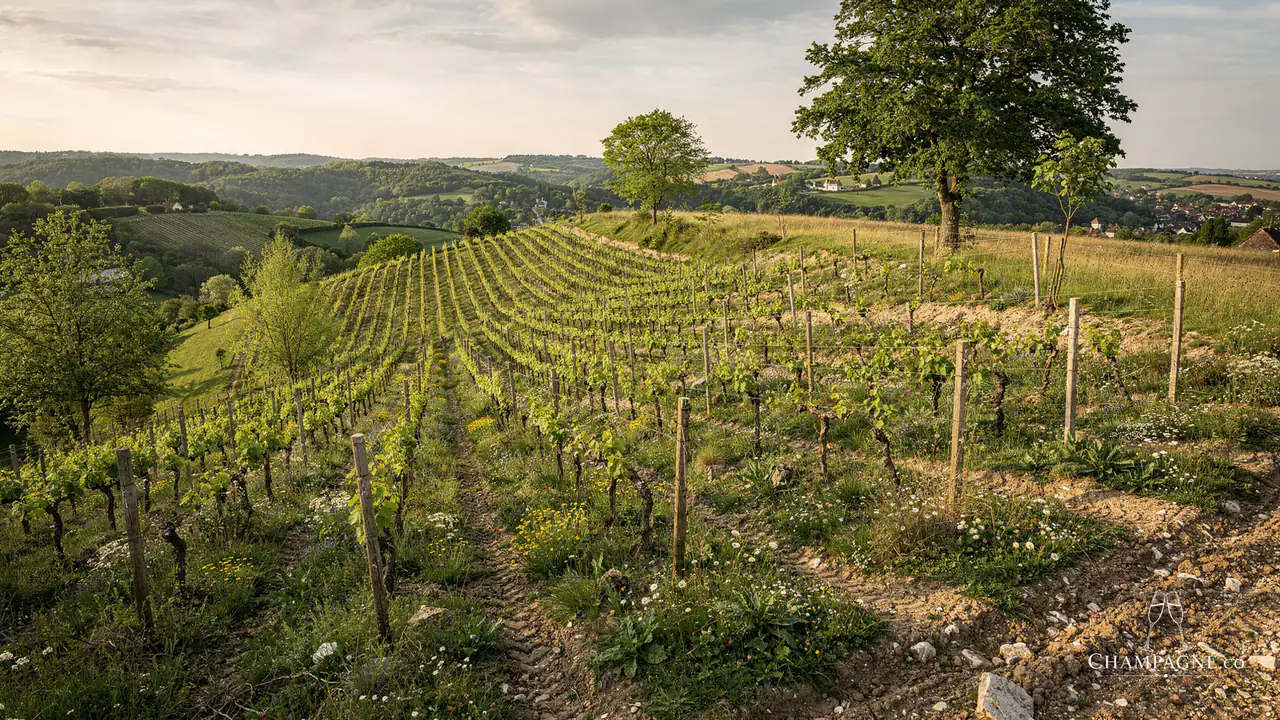
Feneuil belongs to the small group of Champagne growers whose farming is central to understanding the wines. His vineyards are notable for their biodiversity and for allowing substantial plant and tree life within and around the vines. The result is a producer whose identity is unusually tied to the vineyard as an ecosystem rather than simply as a source of grapes.
He is also significant for working across both Champagne and Coteaux Champenois. The still wines are not a side note: they form part of the same parcel-led exploration of grape variety, site and vintage.
Vineyards and farming
Sermiers is the producer’s home village, while independent current accounts also place his small holdings across nearby Chamery and Écueil. Chardonnay, Pinot Noir, Meunier and Petit Meslier all feature in the vineyard picture.
Feneuil stopped using conventional agrochemicals early in his return to the family vineyards and subsequently pursued organic farming. His vineyards have become particularly associated with permanent vegetation, spontaneous tree growth and an agroforestry-like approach.
Cellar approach
The wines are made on a small, parcel-conscious scale. Independent accounts of the domaine describe spontaneous fermentation and extensive use of older barrels, with a restrained approach to additions. These are best understood as features of the documented wines and vintages rather than immutable specifications for every future release.
Feneuil’s early vintages were made without a fully independent cellar infrastructure, using facilities shared with fellow growers. That history reinforces the domaine’s vineyard-first development: he spent years farming and selling grapes before beginning his own production.
Champagne.co analysis
Feneuil is best approached as a micro-domaine rather than as a conventional Champagne house. The important pattern is the relationship between a very small vineyard base, unusually biodiversity-conscious farming and a range capable of moving between sparkling and still wine.
That makes provenance more useful than hierarchy when navigating the wines. The individual cuvée name, vintage, appellation and site or variety are more informative than trying to identify a single flagship bottle. It is a producer whose catalogue rewards attention to exactly what has been bottled in a particular year.
Buying guidance
Availability is naturally limited. Check whether a bottle is Champagne or Coteaux Champenois, then pay close attention to the vintage and cuvée name: they carry much of the useful information about the release.
For a first encounter, a Champagne bottling gives the clearest introduction to Feneuil in the regional context. Buyers interested in the broader farming and parcel project should also consider the Coteaux Champenois when available, because the still wines reveal another side of the same small vineyard base.
Loading current Champagne range…
Spotted something wrong? Report a correction
Every report goes to a human review queue. Nothing on this page changes automatically.