Emmanuel Brochet
Emmanuel Brochet is a micro-grower based in Villers-aux-Nœuds, a Premier Cru village just south-west of Reims. French public records confirm an active vine-growing business created in 1997 at 7 impasse Brochet, and the French organic register lists…
Editorial profile
Emmanuel Brochet is a micro-grower based in Villers-aux-Nœuds, a Premier Cru village just south-west of Reims. French public records confirm an active vine-growing business created in 1997 at 7 impasse Brochet, and the French organic register lists Emmanuel Brochet in Villers-aux-Nœuds as a certified organic operator.
The domaine is built around a single vineyard, Le Mont Benoît, of roughly 2.5 hectares, planted to Meunier, Pinot Noir and Chardonnay. That gives the project an unusually concentrated identity: rather than assembling a house style from many villages, Brochet explores one small place through different varieties and bottlings.
Why this producer matters
Brochet offers a particularly clear example of site-led Champagne. Le Mont Benoît is not merely one parcel in a larger estate; it is the core of the domaine. That makes differences among his wines useful ways of looking at variety, position on the slope and winemaking within a tightly defined geographical frame.
The organic status is contemporary and verifiable: the French organic register currently lists the producer, and his UK importer records the viticulture as certified organic through Ecocert.
Vineyard and terroir
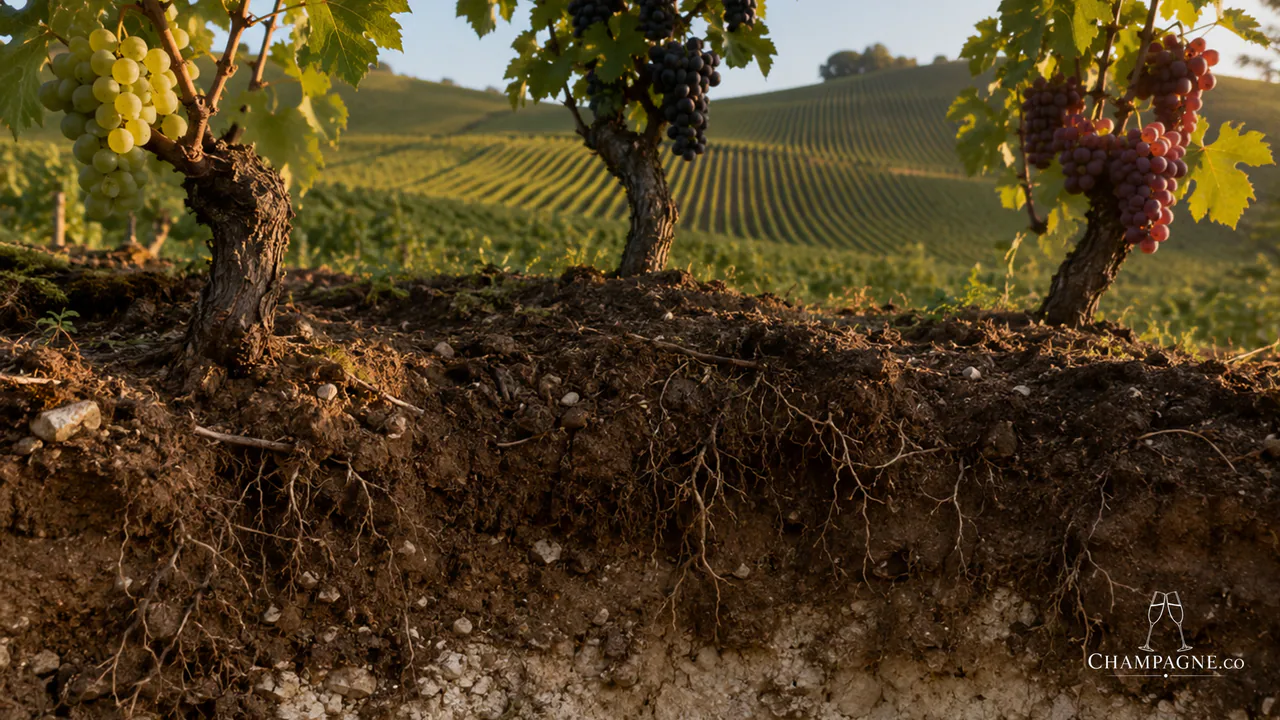
Le Mont Benoît lies in Villers-aux-Nœuds on the western side of the Montagne de Reims. The current importer profile describes the 2.5-hectare vineyard on clay-and-sand topsoil over chalk bedrock, on a gentle slope at roughly 90–150 metres of altitude, planted to the three principal Champagne varieties: Meunier, Pinot Noir and Chardonnay.
The small surface area is important to the domaine's character. Brochet can separate different parts of the slope and varieties without losing the coherence of a single-site project.
Winemaking and cellar approach
Brochet's wines are widely associated with barrel work and small-scale vinification, but exact blends, reserve proportions, élevage periods, disgorgement dates and dosage vary by release. Those figures should be read bottle by bottle rather than converted into permanent domaine rules.
Champagne.co analysis
Brochet's importance lies in concentration: one grower, one very small Premier Cru site and three varieties. That removes much of the geographical complexity found at larger houses and puts the focus on how a single vineyard can be interpreted in different ways.
For readers comparing grower Champagnes, this makes Brochet particularly instructive. Le Mont Benoît provides the broadest view of the site, while the variety-led bottlings narrow the lens.
Buying guidance
Start with Le Mont Benoît when available because it gives the clearest introduction to the domaine's central site and three-variety identity. The separately bottled variety cuvées, where encountered, are logical next bottles for readers interested in how individual varieties behave within the same small vineyard context.
Check the release identifier and disgorgement information when buying. Production is small, and technical specifications can change between releases; an older bottle should not be assumed to match the blend or cellar details of a newer one.
Loading current Champagne range…
Spotted something wrong? Report a correction
Every report goes to a human review queue. Nothing on this page changes automatically.