Esterlin
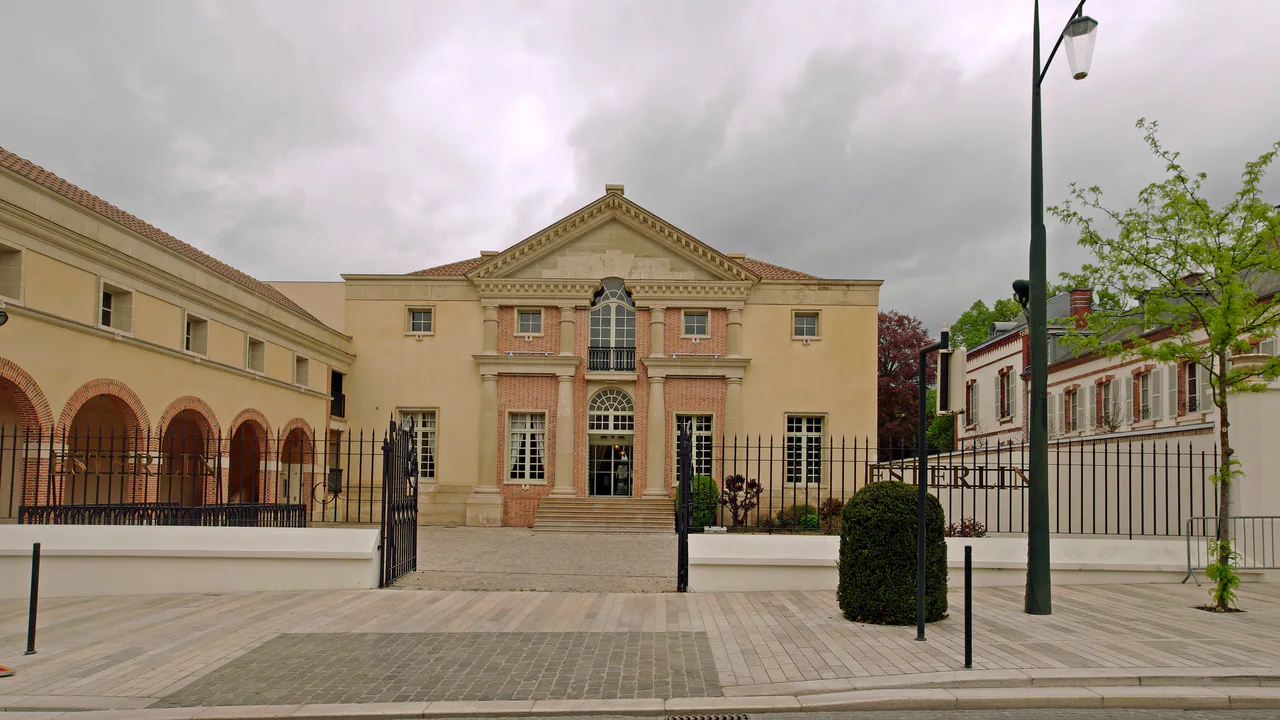
Champagne Esterlin is a cooperative producer headquartered at 25 Avenue de Champagne in Épernay. Its origins go back to February 1948, when three families from Mancy brought together 29 members farming 23 hectares to create a shared Champagne project. The…
Illustrative Champagne-region vineyard landscape shown on the Esterlin profile — not the producer's property.
Editorial profile
Champagne Esterlin is a cooperative producer headquartered at 25 Avenue de Champagne in Épernay. Its origins go back to February 1948, when three families from Mancy brought together 29 members farming 23 hectares to create a shared Champagne project. The cooperative has since expanded well beyond its original base south of Épernay into areas including the Coteaux du Sézannais and the Vallée de la Marne.
Today Esterlin reports close to 400 member-growers and 211 hectares supplying the cooperative. That scale makes it a useful example of the collective model in Champagne: many individual growers contribute fruit while the house provides a common winemaking, ageing and commercial identity.
Why this producer matters
Esterlin combines cooperative scale with an unusually visible Épernay address. Its importance is not simply the number of growers behind the label, but the breadth of vineyard origins available to its cellar team and the way a long-running reserve-wine system is used across part of the range.
The house also directly manages 12 hectares of vines, eight of them owned, alongside the much larger member-grower base. Esterlin states that more than 70% of the wider vineyard surface is certified Viticulture Durable en Champagne and/or Haute Valeur Environnementale, with a smaller area certified organic or in conversion.
Vineyards and sourcing
The cooperative describes 211 hectares spread across 52 communes. Its sourcing reaches from the slopes south of Épernay and the Mancy valley to the Sézannais and parts of the Marne valley, giving the cellar access to Chardonnay, Pinot Noir and Meunier from several distinct parts of the appellation.
This geographic spread is central to understanding Esterlin. Rather than presenting a single-village or single-terroir identity, the house works through blending across a broad cooperative vineyard base while also maintaining a small directly managed estate component.
Winemaking and reserve wines
A defining feature of Esterlin's current range is its perpetual reserve, initiated in 1972. Portions of successive harvests have been retained and incorporated into this reserve over time. The system is particularly visible in wines such as Brut Éclat and Ex-Soléra.
For the currently documented Brut Éclat release, the blend is 60% Meunier, 30% Chardonnay and 10% Pinot Noir, combining 70% wine from the 2019 harvest with 30% reserve wine from the perpetual reserve. That release was bottled in July 2020, disgorged in April 2025 and dosed at 7 g/l. These figures describe that specific release rather than a permanent formula for Brut Éclat.
The currently documented Ex-Soléra is likewise 60% Meunier, 30% Chardonnay and 10% Pinot Noir, but combines 60% wine from the 2013 harvest with 40% perpetual-reserve wine. It was bottled in July 2014, disgorged in June 2023 and dosed at 4.5 g/l. Esterlin states that both wines are made without malolactic fermentation.
Champagne.co analysis
Esterlin is best understood through the relationship between scale and continuity. Its cooperative structure gives the cellar access to fruit from dozens of communes, while the perpetual reserve begun in 1972 provides a long-running thread through part of the range. That makes the house more interesting than a simple high-volume cooperative description suggests.
The current portfolio also offers useful points of comparison within one producer: a mainstream three-variety brut, Chardonnay-led wines, a varietal Meunier, an explicit solera-based cuvée and mature dated bottlings. For readers exploring how cooperative Champagne can translate a wide vineyard base into different styles, Esterlin has a particularly legible range architecture.
Buying guidance
Start with Brut Éclat for the clearest introduction to Esterlin's contemporary house approach and its use of perpetual-reserve wine. Ex-Soléra is the more focused choice for readers specifically interested in that reserve system, while Pur Meunier offers a direct route into the grape variety that forms the majority of the currently documented Brut Éclat and Ex-Soléra blends.
The dated wines deserve release-by-release attention. Brut Nature 2009, Blanc de Blancs 2014 and Cléo Blanc de Blancs 2012 are identified by specific vintages, so buyers should distinguish the exact bottle offered rather than assume technical details from one release apply to another.
Loading current Champagne range…
Spotted something wrong? Report a correction
Every report goes to a human review queue. Nothing on this page changes automatically.