Étienne Calsac
Étienne Calsac is an Avize-based grower who created his domaine in 2010, initially working vines rented from his grandparents. Although Chardonnay is central to the estate, the range reaches beyond a conventional Côte des Blancs identity: Calsac works…
Editorial profile
Étienne Calsac is an Avize-based grower who created his domaine in 2010, initially working vines rented from his grandparents. Although Chardonnay is central to the estate, the range reaches beyond a conventional Côte des Blancs identity: Calsac works parcels in Avize and Grauves, Bisseuil in the Grande Vallée de la Marne, Montgenost in the Côte de Sézanne and Bligny in the Côte des Bar, and has also replanted historic Champagne varieties.
The result is a compact, site-conscious portfolio spanning Champagne and Coteaux Champenois. Current releases include L’Échappée Belle, Les Rocheforts, Rose de Craie, Clos des Maladries and Les Revenants, alongside a still white Coteaux Champenois from Petit Meslier.
Why this producer matters
Calsac is a useful reference point for the modern parcel-focused grower model because his range makes both place and grape material unusually explicit. Chardonnay connects much of the portfolio, but Bisseuil, Montgenost and the historic varieties broaden the story beyond Avize.
The domaine is also notable for treating Pinot Blanc, Petit Meslier and Arbane as working components of a serious parcel wine rather than as historical curiosities. That gives Les Revenants a distinct role within the range while preserving a clear separation from the Chardonnay-led cuvées.
Vineyards and terroir
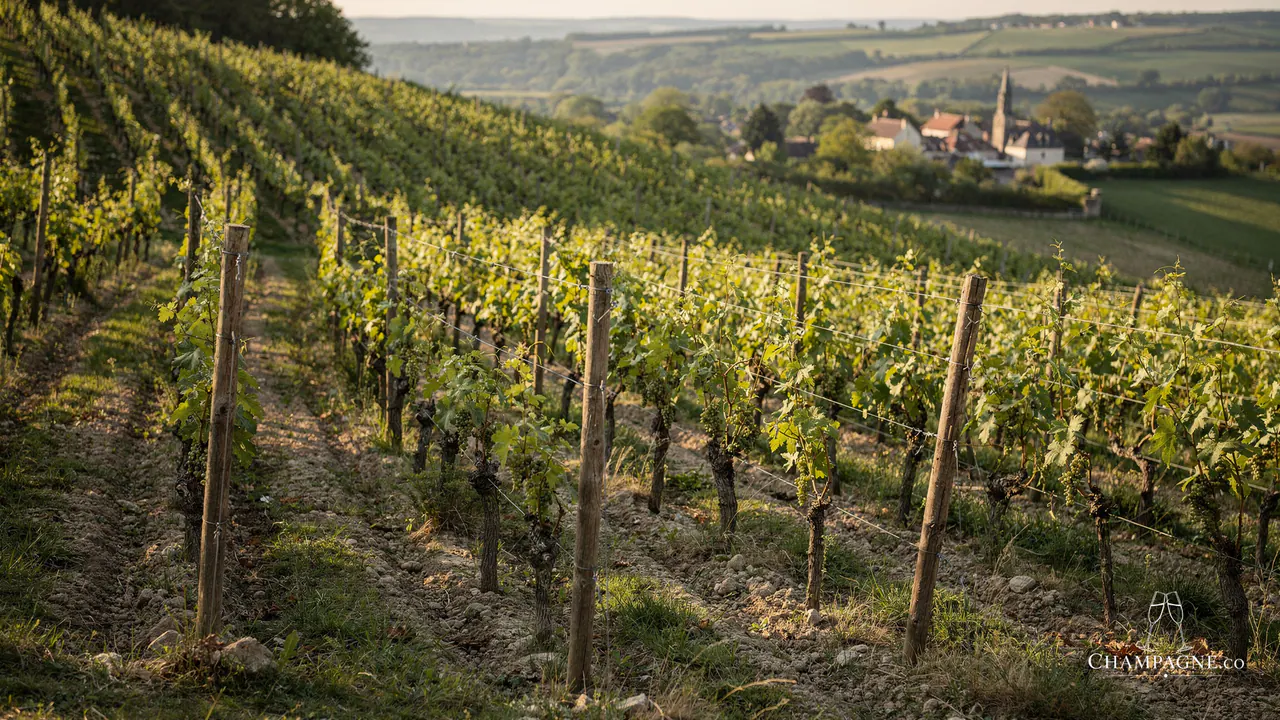
The domaine's current vineyard map crosses several Champagne sectors. Avize and Grauves provide Côte des Blancs material; Bisseuil brings a Grande Vallée de la Marne site; Montgenost represents the Côte de Sézanne; and Bligny extends the footprint into the Côte des Bar.
Les Rocheforts is a Chardonnay parcel wine from Bisseuil, on east-facing ground where chalk reaches close to the surface. Clos des Maladries is another Chardonnay parcel expression, this time from a south-facing chalk site in the Côte des Blancs where the soil is worked by horse. Les Revenants comes from south-facing clay-sandy soils over chalk in the Côte de Sézanne.
Winemaking and cellar approach
Across the current technical descriptions, Calsac repeatedly favours spontaneous fermentation, avoids filtration and fining, and uses both wood and stainless steel according to the wine. These practices are best understood cuvée by cuvée rather than as a rigid formula for every bottle.
For example, the current Clos des Maladries description specifies 100% Chardonnay, 30% wood vinification with the balance in stainless steel, and Brut Nature finishing. Les Rocheforts is also 100% Chardonnay but is split equally between barrel and stainless steel and finished Extra Brut. Les Revenants is fermented in 600-litre demi-muids, aged under cork and finished Extra Brut.
Champagne.co analysis
The most useful way to read Calsac is not simply as an Avize Chardonnay grower. His range is structured around contrasts: Avize and Bisseuil, chalk and clay-sand over chalk, Chardonnay and historic varieties, sparkling Champagne and still Coteaux Champenois. Those contrasts make individual sites easier to understand because the wines are not all forced into one house template.
There is also a coherent cellar logic without complete uniformity. Spontaneous fermentation and low-intervention handling recur, but vessel choice and dosage change with the cuvée. That makes release-specific technical detail especially important here: the identity comes from a family of related decisions rather than one fixed recipe.
Buying guidance
L’Échappée Belle is the natural starting point for understanding the broader Chardonnay side of the domaine. Les Rocheforts narrows the focus to Bisseuil, while Clos des Maladries is the more site-specific Côte des Blancs reference.
Readers interested in Champagne's less common permitted grapes should look to Les Revenants, but should check the exact release rather than assume its current 50/43/7 blend is permanent. The Petit Meslier Coteaux Champenois is a separate still-wine proposition and should not be confused with the sparkling Les Revenants cuvée.
Loading current Champagne range…
Spotted something wrong? Report a correction
Every report goes to a human review queue. Nothing on this page changes automatically.