Famille Delouvin
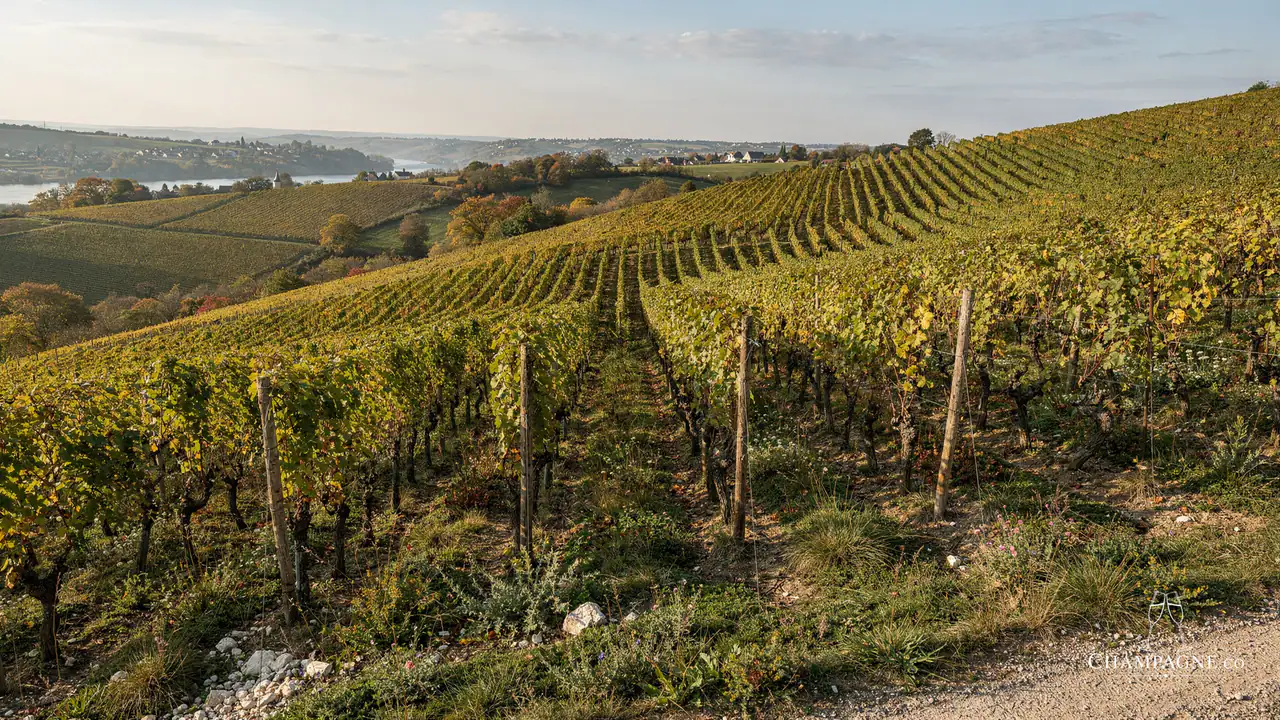
Famille Delouvin is the parcel-focused, old-vine and experimental range made within the Delouvin-Nowack family estate at Vandières in the Vallée de la Marne. It is not a separate unrelated domaine: the name identifies the branch of the family production…
Editorial profile
Famille Delouvin is the parcel-focused, old-vine and experimental range made within the Delouvin-Nowack family estate at Vandières in the Vallée de la Marne. It is not a separate unrelated domaine: the name identifies the branch of the family production where individual parcels, Meunier and Chardonnay, mature vines and less conventional cellar choices are given more space.
The estate deliberately distinguishes this from the more classical Delouvin Nowack line. Famille Delouvin may use spontaneous fermentation and small-barrel élevage for selected ripe old-vine lots, while other parcel wines remain on lees in stainless steel.
Why this producer matters
Famille Delouvin is useful because the difference between the two family labels is technical rather than cosmetic. Delouvin Nowack provides the more traditional Champagne framework; Famille Delouvin is where the estate isolates parcels, extends ageing, works with late disgorgement and explores still wine or experimental releases.
The family also maintains a perpetual Meunier reserve dating from the 1992 harvest onward, giving time as well as parcel origin an important role in the broader estate's winemaking.
Vineyard and cellar approach
The Delouvin estate is centred on Vandières, with current family vineyard work also associated with neighbouring Vallée de la Marne sites. Meunier and Chardonnay are particularly important to the Famille Delouvin programme.
Selected old-vine lots can undergo spontaneous fermentation and spend around nine months on lees in small barrels. Other parcels are raised in stainless steel. The estate disgorges by hand and states that even its younger Champagnes are released only after at least 36 months on lees plus three months under cork.
Champagne.co analysis
Famille Delouvin is best understood as the high-resolution side of Delouvin-Nowack. The interest lies in moving from the family's broad Vallée de la Marne identity toward individual parcels, older vines, longer ageing and occasional experiments.
The current range also makes chronology unusually visible. Bis Repetita is about extended cellar time, while L'Arpent Rouge and Les Chaillets focus more directly on place. The Coteaux Champenois releases then show the same vineyard material without secondary fermentation.
Buying guidance
Choose L'Arpent Rouge 2020 or Les Chaillets 2020 for current parcel Champagne. Look to Bis Repetita 2013 or 2015 if long lees ageing and late disgorgement are the priority.
For readers exploring the estate beyond sparkling wine, the Coteaux Champenois bottlings are the relevant route. Treat the Hors Piste wines as experimental releases rather than as the baseline Famille Delouvin style.
Loading current Champagne range…
Spotted something wrong? Report a correction
Every report goes to a human review queue. Nothing on this page changes automatically.