Francis Boulard et Fille
Francis Boulard & Fille is a small family grower based at Faverolles-et-Coëmy, with a vineyard base that reaches from the Massif de Saint-Thierry into the Vallée de la Marne and the Grand Cru village of Mailly-Champagne. The present domaine was created in…
Editorial profile
Francis Boulard & Fille is a small family grower based at Faverolles-et-Coëmy, with a vineyard base that reaches from the Massif de Saint-Thierry into the Vallée de la Marne and the Grand Cru village of Mailly-Champagne. The present domaine was created in 2009 by Francis Boulard, Jeanne Boulard and their daughter Delphine after the earlier family business was divided. Francis and Jeanne retired in 2018, and Delphine now leads the estate, with the next generation involved alongside her.
The domaine’s contemporary identity is closely tied to organic and biodynamic viticulture, parcel separation and low-intervention cellar work. Its current vineyard page records about 3 hectares, planted to roughly 40% Meunier, 30% Chardonnay and 30% Pinot Noir, with an average vine age of 35 years.
Why this producer matters
Francis Boulard was an early advocate of organic farming within the family vineyards. The estate dates the beginning of its organic work to 2000–2001, with Ecocert control and certification following in the 2000s. Today, the producer describes the vines as farmed organically and with biodynamic practices.
The significance of the domaine is not scale but definition. A compact vineyard is divided among contrasting sectors, and the wines are often organised around individual parcels, varieties or a perpetual-reserve concept rather than a broad house blend alone.
Vineyard and terroir
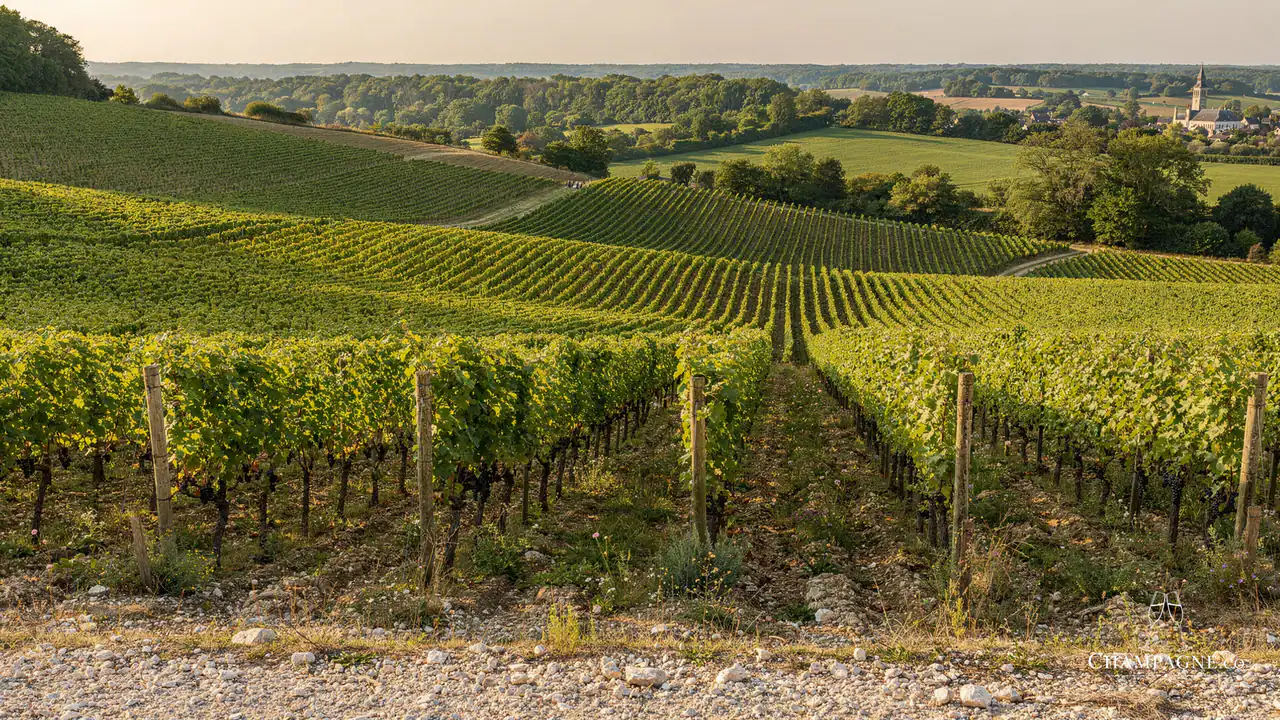
Most of the domaine’s vines are around Cormicy in the Massif de Saint-Thierry, where the producer identifies siliceous-calcareous soils. Additional holdings lie at Paradis in the Vallée de la Marne, at Cuchery and Cauroy-lès-Hermonville, and at Mailly-Champagne on the Montagne de Reims.
The estate records a predominantly east-to-north-east exposure for much of the vineyard, with southerly exposure in the Vallée de la Marne. Around two-thirds of the parcels are planted with massal selections. Cultivation includes natural grass cover and repeated light tillage through the growing season, while the producer describes biodynamic preparations as part of its disease-management approach.
Cellar and winemaking
The cellar is organised around parcel and varietal separation. Grapes are pressed soon after harvest, and the producer describes low sulphur additions to musts and spontaneous alcoholic fermentation with indigenous yeasts.
Fermentation and élevage can take place in a range of wooden vessels, including 20-hectolitre foudres, demi-muids and smaller oak barrels. The estate also states that malolactic fermentation is carried out and that wines may be aged on fine lees with bâtonnage. These practices provide a useful outline of the cellar approach, but exact élevage and dosage should still be checked cuvée by cuvée because the range is not technically uniform.
Champagne.co analysis
Francis Boulard & Fille is best understood as a small, farming-led domaine whose wines follow the structure of its vineyard. The Massif de Saint-Thierry is particularly important to its identity, but the holdings in the Vallée de la Marne and Mailly-Champagne prevent the estate from being reduced to a single terroir story.
The range also demonstrates several different ways of defining a grower Champagne: old-vine Chardonnay, a single-parcel vintage blend, Grand Cru fruit from Mailly and a perpetual reserve all sit within the same compact estate. That makes release-level detail especially important when comparing bottles.
Buying guidance
Les Murgiers is the most direct starting point for the house style and its Brut Nature approach. Buyers interested in Chardonnay can look to Les Vieilles Vignes, while Le Murtet and Grande Montagne provide more explicitly parcel- or origin-driven routes into the range. Petraea is the bottle to consider for the estate’s perpetual-reserve concept.
Because several cuvées are vintage-, parcel- or reserve-specific, check the exact current release before relying on blend, dosage or ageing figures from an older bottle. The producer’s current technical page is the best guide to those details.
Loading current Champagne range…
Spotted something wrong? Report a correction
Every report goes to a human review queue. Nothing on this page changes automatically.