François Secondé
François Secondé is a grower-producer based in Sillery, on the northern side of the Montagne de Reims. The domaine was founded by François Secondé in the 1970s and is now directed by Jérôme Groslambert. Its current vineyard covers 5.5 hectares in Sillery…
Editorial profile
François Secondé is a grower-producer based in Sillery, on the northern side of the Montagne de Reims. The domaine was founded by François Secondé in the 1970s and is now directed by Jérôme Groslambert. Its current vineyard covers 5.5 hectares in Sillery and neighbouring Grand Cru villages, planted roughly two-thirds to Pinot Noir and one-third to Chardonnay.
Sillery is the centre of gravity. The village is historically associated with both sparkling Champagne and Coteaux Champenois, and François Secondé’s present range reflects both traditions rather than limiting the estate to one category of wine.
Why this producer matters
François Secondé offers a compact, village-led view of Sillery. The estate’s vines average about 40 years according to the current producer record, and the domaine combines a Pinot Noir-led vineyard with Chardonnay and a range that separates Sillery, neighbouring Grand Cru sites and selected Premier Cru fruit.
The estate is HVE certified, and its current leadership continues a domaine established more than five decades ago. For Champagne drinkers, the interest lies in the way one small producer works across Brut, zero-dosage, single-origin and still-wine expressions without losing its Sillery focus.
Vineyard and terroir
The current vineyard totals 5.5 hectares in Sillery and nearby Grand Cru villages. Pinot Noir accounts for around two-thirds of the planting and Chardonnay for around one-third, while the average vine age is about 40 years.
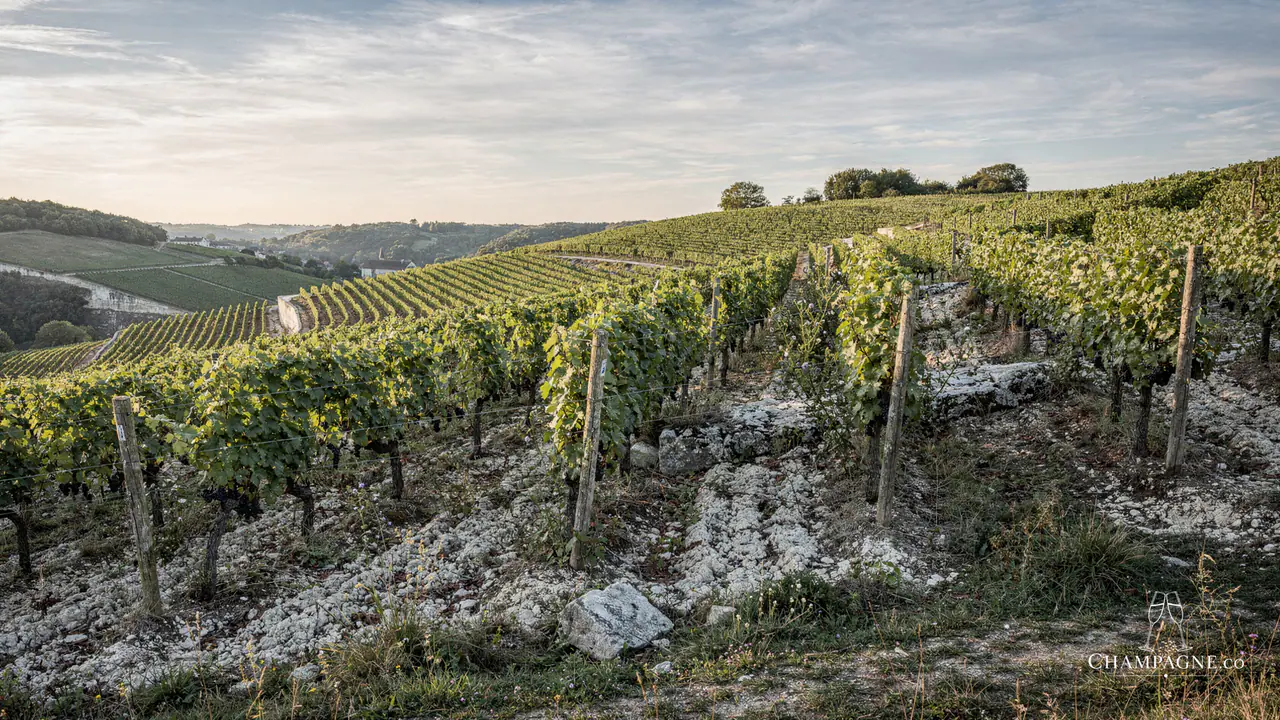
Sillery lies just outside Reims on the northern side of the Montagne de Reims. Chalk and calcareous soils underpin the local vineyard, and the relatively cool exposure is an important part of the village’s identity. François Secondé’s range uses this base both for blends and for wines that identify Sillery or another village directly on the label.
Cellar and winemaking
The range is sufficiently diverse that one fixed technical recipe would be misleading. François Secondé currently bottles conventional Brut, zero-dosage Champagne, Blanc de Blancs, Blanc de Noirs, village- and parcel-designated wines, rosé and Coteaux Champenois.
That means dosage, vintage, variety and élevage should be read wine by wine. The useful constant is geographical: the domaine repeatedly uses village identity and specific origins to organise the range.
Champagne.co analysis
François Secondé is most compelling when viewed as a Sillery specialist rather than as a producer defined by one winemaking fashion. Pinot Noir leads the vineyard, but Chardonnay has a clear role, and the range moves between blends, zero dosage, Blanc de Blancs, Blanc de Noirs and still wines.
That breadth makes geography more informative than style labels alone. Sillery remains the anchor, while Sermiers and Puisieulx show how the domaine extends that perspective into neighbouring crus.
Buying guidance
Brut Grand Cru is the most straightforward starting point for the estate. Zéro Dosage Intégral is the logical comparison for buyers interested in the effect of dosage. For a more origin-specific route, La Loge and the Sillery Blanc de Blancs focus attention directly on the home village, while Les Petites Vignes turns to Puisieulx.
Buyers interested in Champagne’s still-wine tradition should look for the Sillery Coteaux Champenois. Vintage, dosage and technical details should always be checked against the exact current release, particularly for the village- and parcel-designated wines.
Loading current Champagne range…
Spotted something wrong? Report a correction
Every report goes to a human review queue. Nothing on this page changes automatically.